

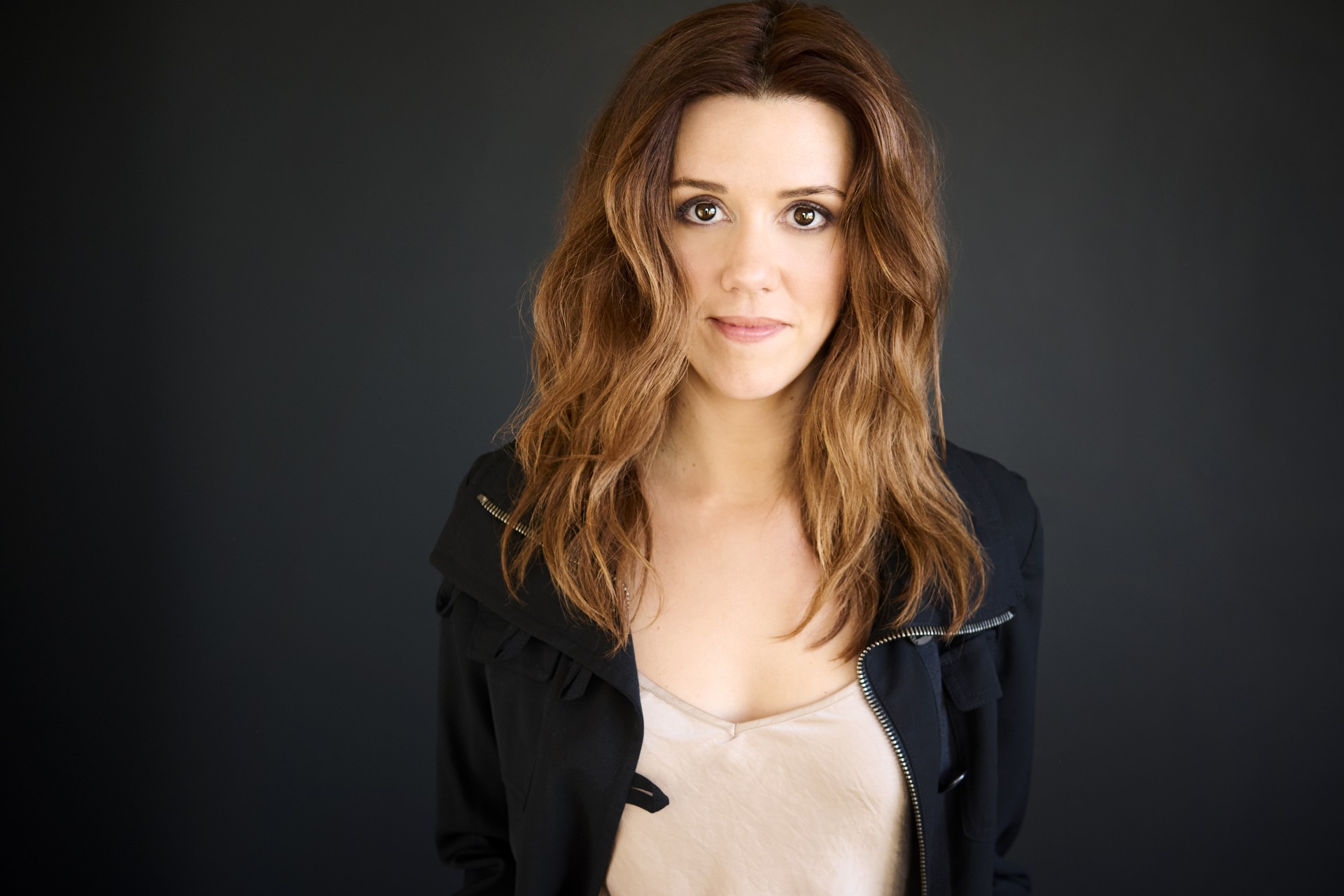
Ruth Goodwin
Toronto’s The Howland Company continues to remain one of Toronto’s most exciting and relevant independent theatre companies. It maintains a scrappy, collaborative spirit while producing at a high level, engaging audiences and creating opportunities for ambitious work for artists. Howland continues to select scripts that challenge performing artists and audiences. According to the theatre website, “it strives for innovation both on and off the stage.”
Its recent production of The Welkin underscored this vision of innovation.
Ruth Goodwin is one of Howland’s co-founders. We conversed via email recently. She studied at Kingston’s Queen’s University and also at Queen’s University in Belfast, Northern Ireland. She also went to École Philippe Gaulier to study clown last year. She says she’s always looking for new opportunities to learn and train.
The learning never stops for Goodwin. In a rather cheeky and candid email, she wrote: “Honestly, I feel like the day I complete my training as an artist will be my last day on earth. But I am reading a lot of Sylvia Plath as I prepare to play her in this show so she could be heavily influencing my response to this question.”
The reality behind Ruth’s statement is that the performing artist never stops learning. There’s constant and continual training.
She’s staying true to her mission to keep learning and growing as an artist in founding and building Howland. She says this mission has been among the most formative experiences of her artistic life. Howland started as a small group of artists who wanted to carve out a space in Toronto where they could have some autonomy over the stories they told.
Goodwin adds:
“From the beginning, Howland has been committed to ensemble-driven creation, risk-taking and to building processes that prioritize trust and curiosity.”
Ruth returns to the stage soon in the world premiere of Susanna Fournier’s take rimbaud, a co-production with Howland and Toronto’s Buddies in Bad Times Theatre, directed by ted witzel, Buddies’ Artistic Director. According to Goodwin, rimbaud is less a traditional narrative and more like a kind of smashing together of timelines, poets and impulses toward creation and destruction. It moves between 2014 Toronto and 1871 France, but also exists in this liminal, almost hell-like space where time folds in on itself.
There’s the utmost of praise from rimbaud’s cast for playwright Susanna Fournier. Ruth says Susanna is the backbone of the entire show. She’s one of the most exciting playwrights out there. Her work is fearless and deeply intelligent. Goodwin particularly admires Fournier’s relationship to the tension between structure and chaos, which is essential for rimbaud. She does an amazing job of creating space for these big existential ideas to live alongside very immediate, human moments.
Susanna brought rimbaud to Howland and Buddies years ago, according to Goodwin. From the beginning, the play was something both companies were taken with because it is technically a performance piece with real musicality. Goodwin was part of the majority of the workshop readings over the years. She also adds:
“When we took part in readings of the script, I just sort of felt that our jobs as actors were less about offering traditional feedback and more about ‘playing the notes’ together to give Susanna and ted the chance to hear the rhythms, textures, and overlaps of the language in real time. It’s a very specific kind of collaboration where embodying the work is sort of the feedback.”
It’s taken nearly ten years for rimbaud’s incubation period. Show director witzel said he’s always wanted the play to premiere at Buddies. Goodwin agrees with her director’s wish. Buddies feels like the right home because it has a legacy of championing bold and adventurous work, and rimbaud lives in that space. Fournier has written an intimate yet massive script. It’s unruly and immediate, and it breaks about every rule in the best way. That’s why Goodwin is thrilled the play will bring energy to both Buddies’ and Howland’s communities under witzel’s insightful direction.
The plot involves iconic poets Rimbaud, Verlaine, Sylvia Plath, and Sappho coming to life not as fixed historical figures but as people caught in cycles of making and unmaking, loving and failing. There’s a sloppy love triangle, an unfinished art film, and a constant sense that the world might already be over, or at least that the frameworks we’ve relied on to understand it no longer hold.
take rimbaud feels like a play for this moment for Ruth:
“It wrestles with questions of identity, authorship, transformation and mental health in a way that feels urgently contemporary. It’s also deeply concerned with ‘performance’ itself, like what it means to be seen, to ‘construct a self’, to repeat or inherit gestures that may not even feel like our own anymore.”
The play also incorporates an end-of-the-world atmosphere running through it, a brush with nihilism that many people are quietly grappling with right now. The play doesn’t shy away from that. It leans into the feeling that everything may have been said or done before, and asks: what does it mean to keep going anyway? What still matters?
As a performer in the show, Ruth believes that one of the central things she hopes audiences will leave with after seeing rimbaud is to sit inside uncertainty and join the actors as they question their inherited ideas about art and meaning. The play leans into nihilism and into that feeling that everything has already been done, but the discussion doesn’t stop there once the play concludes. rimbaud asks what it means to keep creating anyway, to keep reaching for connection even if the process and results are messy or incomplete.
Production dates for take rimbaud are May 6 – 23, 2026 at Buddies in Bad Times Theatre, 12 Alexander Street, Toronto.
To learn more about The Howland Company, visit: https://howlandcompanytheatre.com/
To learn more about Buddies in Bad Times Theatre, visit: https://buddiesinbadtimes.com/
.