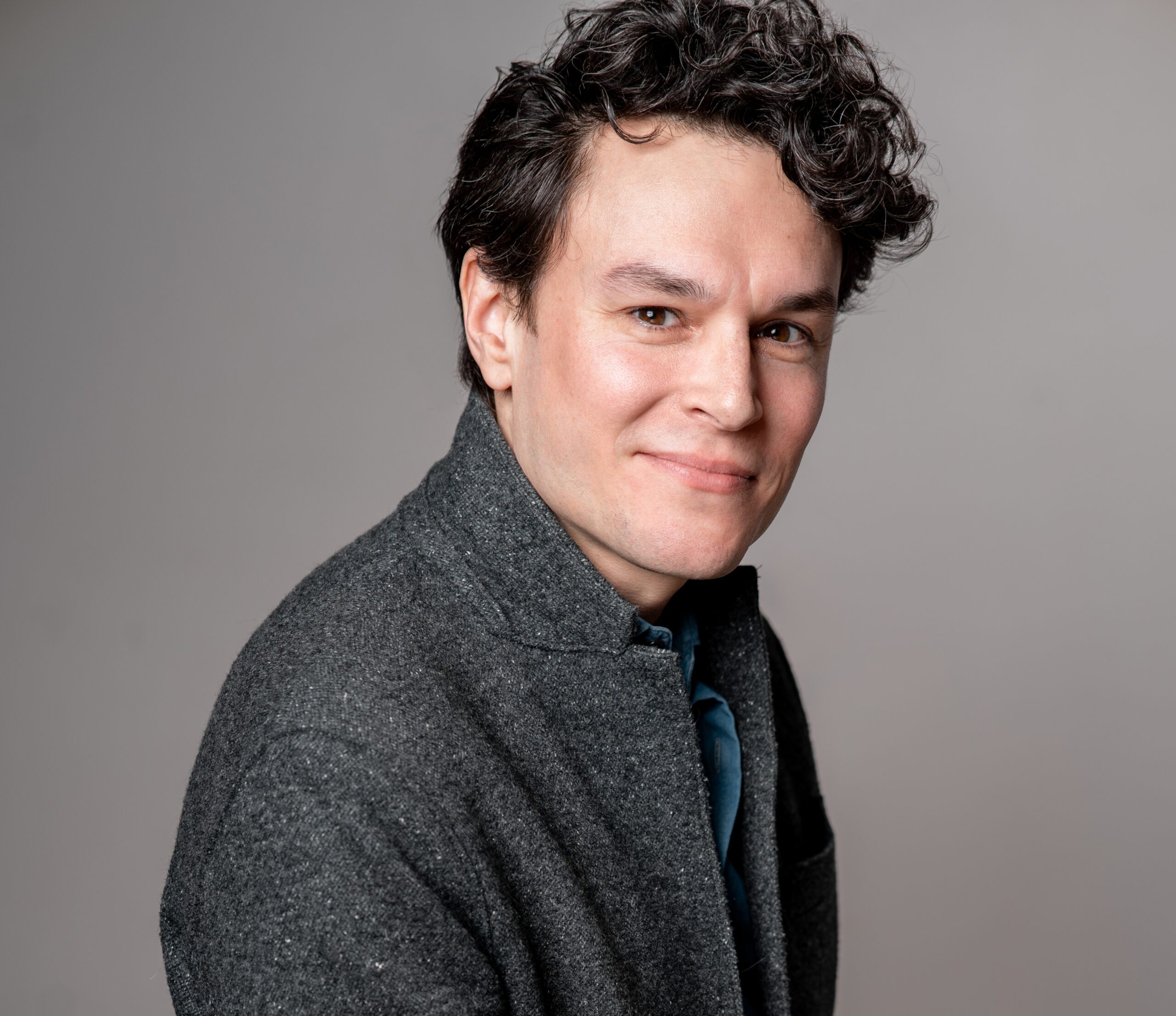

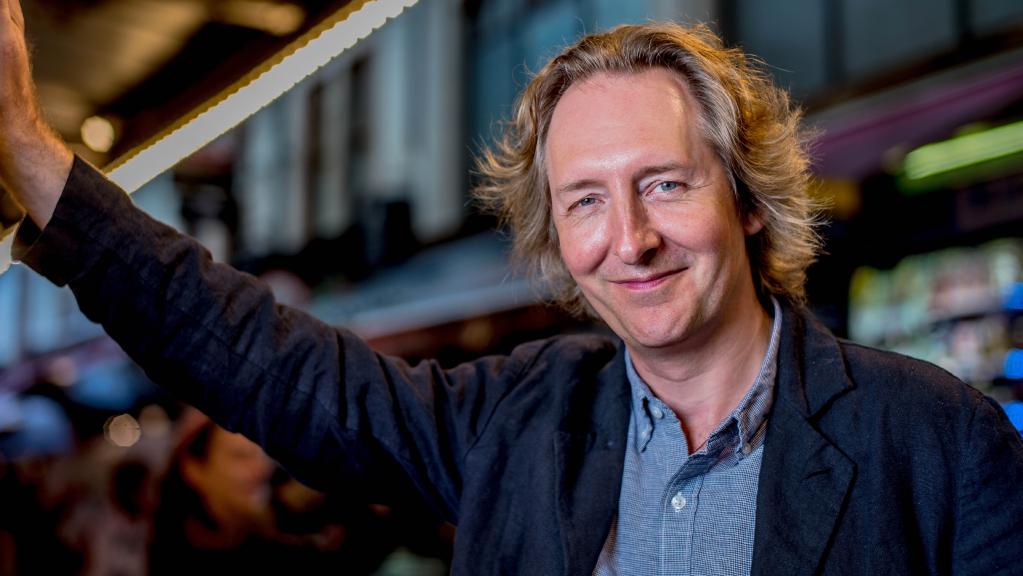
For Jonathan Church, theatre has been a lifelong passion and a calling. Now, as the new artistic director of the Stratford Festival, he hopes to honour its remarkable legacy while embracing new artistic possibilities, championing Canadian talent and taking the Festival’s s work to audiences worldwide.
I recently had the pleasure of sitting down with Jonathan for a fascinating conversation about his theatrical journey, his vision for the Festival and the exciting possibilities ahead.
Taking the artistic reins of the Stratford Festival is something of a dream come true. Though British, he has a Canadian connection through his Toronto-born mother, actress Marielaine Douglas. Visiting regularly since 2008, he has long admired the institution, its artists, its audiences and its distinctive approach to theatrical storytelling.
Succeeding Antoni Cimolino, whose tenure as artistic director began in 2012, Church inherits an extraordinary legacy and leads one of North America’s most distinguished theatrical institutions.
Church understands the responsibility but is equally excited by the possibilities.
“There is something quite unique in the world about Stratford,” he says. “There are some things you can bring to an organization, but also things an organization can teach you.”
That combination of experience, confidence and curiosity may well define his leadership.
A life in the theatre
Growing up in Nottingham, England, Church was immersed in theatre from an early age. His parents were both involved in the profession, and he describes himself as fortunate to have been encouraged to pursue his theatrical ambitions.
Academically, he admits, he was not conventionally gifted.
“I struggled with the discipline of school, but I was incredibly enthusiastic about the things I was interested in.”
He briefly considered a career in law after meeting a Canadian lawyer who handled his grandmother’s estate in Georgetown, Ontario. What appealed to him was the sense of service and community. But theatre ultimately won out.
Church grew up during the remarkable postwar British regional theatre movement, with institutions such as Nottingham Playhouse, Sheffield’s Crucible Theatre, and Manchester’s Royal Exchange within relatively easy reach.
Two figures particularly influenced him: Richard Eyre, whose adventurous programming at Nottingham Playhouse captured his imagination, and Clare Venables, the pioneering artistic director of Sheffield’s Crucible Theatre, where Church worked in the lighting department.
Venables believed passionately that theatre should serve its community while maintaining the highest artistic standards. Her combination of ambitious productions, educational programming and popular entertainment left a lasting impression.
“The social benefit of providing all of this to a community… I went, this is what I want to do,” he recalls.
Recognizing his enthusiasm and work ethic, Venables moved him into stage management, giving him the opportunity to observe rehearsals, assist her and eventually direct smaller productions.
“I dreamed one day of running a building,” he says. “So, the fact that I’ve been lucky enough to run a few is quite remarkable.”
Finding the right balance
Church went on to lead several important British theatrical organizations, including Chichester Festival Theatre, where he served as artistic director from 2006 to 2016.
His experiences taught him that every theatre must respond to the community it serves. His time in Birmingham, for example, required a very different approach from Chichester, whose audience was more established and consistent.
In Birmingham, the challenge was to appeal to a complex, multicultural city with vastly different audience demographics.
“One size certainly doesn’t fit all,” he observes.
That understanding will be important at Stratford, where audiences have come to expect an extraordinary range of programming, from Shakespeare and classical drama to contemporary plays, musicals and new Canadian work.
Church believes an artistic director must balance commercial realities with a willingness to take risks. While programming the Chichester seasons, he would often recall a quote from the late Laurence Olivier: choose three productions for the audience and one for yourself.
After all, no one can reliably predict what will become a theatrical success.
“Part of your job isn’t just to follow, it’s to lead,” he says.
For Church, that means continuing to challenge audiences with unfamiliar Shakespeare, European classics and new works, while ensuring that the Festival offers something for its audience’s varied theatrical appetites.
He is particularly enthusiastic about Stratford’s s four performance spaces, especially the thrust stages and their intimate relationships between performers and audiences:
“I adore large-scale work as much as I enjoy intimate studio work,” he says. “The palette here of the four venues is pretty unique in the world.”
Building on the legacy
Church speaks with considerable admiration for Cimolino’s leadership, particularly his “heroic” ability to preserve the Festival’s essential character through the challenges of COVID-19, financial uncertainty and social change.
He points to the continued strength of the repertory company, the development of ambitious new Canadian work and the creation of the Tom Patterson Theatre as significant achievements.
“Cimolino”, he continues, “also provided a strong financial foundation for the Festival’s future.”
Church intends to preserve those strengths while exploring new ways of working. Sometimes attracting the right artist means offering a shorter engagement rather than a traditional repertory production. Other productions may be developed with the intention of touring beyond Stratford.
“These are not departures from the Festival’s traditions,” he insists, “but necessary adaptations.”
The repertory company, Shakespeare, musicals, new Canadian work and the ambition to produce theatre on a grand scale must remain at the heart of the organization.
Taking Canadian theatre to the world
One of Church’s most exciting ambitions is to raise Stratford’s international profile.
“Sometimes Stratford’s described as the world’s best-kept theatrical secret,” he says. “I’d love to see more Canadian work crossing borders, whether that’s to America, the UK, Australia or elsewhere.”
He sees international exchange as a two-way opportunity: bringing exceptional international artists to Stratford while giving Canadian artists and productions greater exposure abroad.
He is also keen to explore the international repertoire, including playwrights such as Schiller, Brecht and Goldoni, whose work has influenced generations of theatre-makers.
For Church, international ambition and Canadian identity are complementary rather than competing priorities. He is equally committed to ensuring that Stratford continues to reflect the cultural diversity of contemporary Canada, particularly through new Canadian writing and opportunities for emerging artists.
His approach to building a company is similarly open. He favours maintaining a strong core of familiar artists while welcoming new performers, directors and playwrights.
Rather than a permanently fixed company, he describes an “exciting revolving door” through which artists bring new experiences and perspectives to Stratford.
He is acutely aware of the challenges facing arts education and training in Canada and believes the Festival has an important responsibility to help nurture the next generation of theatre professionals.
Looking ahead
When I asked Church what he hopes to accomplish over the next five to ten years, his answer was thoughtful and straightforward. His philosophy is to honour the past, celebrate the present and prepare Stratford for the future.
He plans to keep the Festival artistically adventurous, balancing popular productions with more challenging work, while giving Canadian theatre greater exposure internationally and building stronger connections with the local community.
What I find particularly refreshing about Church is that he isn't coming to Stratford with the intention of reinventing it just to leave his mark. He clearly understands what makes the Festival so special and recognizes that even the greatest institutions need to keep evolving.
And so, the enthusiasm of the young man who once knocked on Clare Venables’ door in Sheffield is still very much there. He remains passionate about what theatre can do for a community, bringing them together and opening audiences up to new experiences.
As he takes on this exciting new chapter, I get the sense that Church will wholeheartedly preserve everything we love about Stratford while ensuring there is plenty to look forward to in the season ahead.
The next act, it seems, is just beginning.