

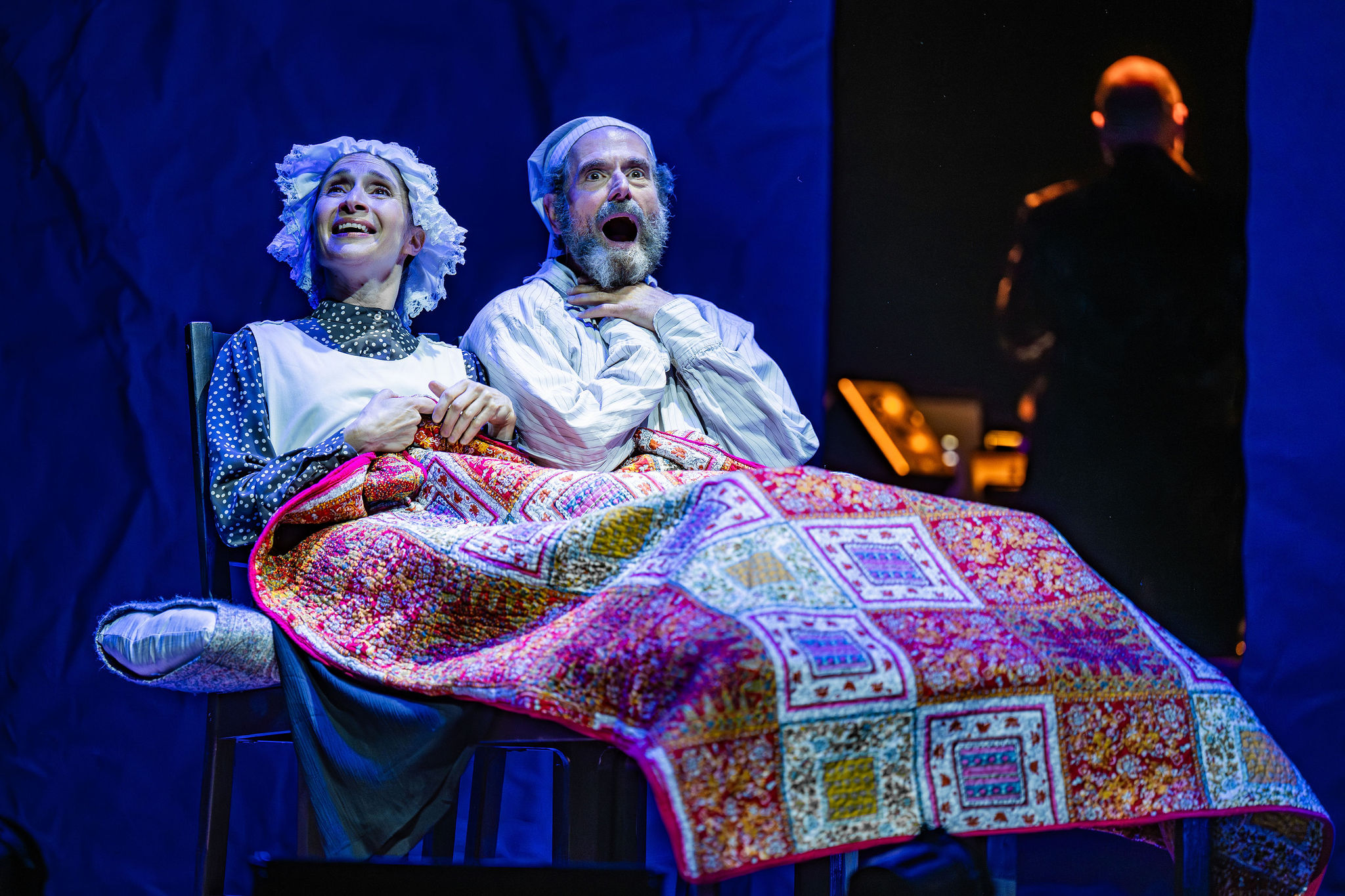
A revival of an iconic musical has to do more than trade on affection. It has to make a case for itself in the present. The challenge for any creative team is not simply to restage what audiences already know, but to uncover fresh urgency in material that risks feeling overly familiar and too set in its ways.
On opening night at Toronto’s Elgin Theatre, the Canadian company of Fiddler on the Roof in Yiddish finds that fresh urgency and delivers a production of humour, warmth and quiet heartbreak in the language these characters would most likely have spoken.
It is an affecting, musically rich revival that honours the familiar and well-known elements of the story. It also goes further. This Fiddler sharpens its emotional stakes even more thanks to the entire company, who appear to truly believe the meaning of the words they sing.
From its staging and vocal work to its storytelling, the opening-night production underscores the central theme of family and community even as persecution and upheaval threaten to tear them apart. Any hesitation about the Yiddish should quickly evaporate; English and Russian supertitles make the storytelling easy to follow while preserving this production’s distinct edge.
Set in 1905 in the fictional village of Anatevka, on the eve of the Russian Revolution, Fiddler on the Roof in Yiddish introduces Tevye, the faith-filled milkman at the centre of a community bound by tradition and threatened by change. Steven Skybell, reprising his role from the New York production, gives Tevye a lived-in authority, grounding the character’s humour and moral struggle. Around him are Golde (Tracy Michailidis) and their five daughters, whose romantic choices gradually test the family’s adherence to tradition.
The familiar plot still turns on arranged marriages, child defiance and the pressure of a world closing in. Yente’s matchmaking sets the first conflict in motion, but the deeper drama lies in how each daughter’s choice forces Tevye to renegotiate the beliefs that have ordered his life. The supporting cast is strong throughout: Theresa Tova gives Yente comic sharpness without reducing her to caricature. Joshua Kilimnik brings an appealing awkwardness to Motl, and Sayer Roberts and Joey Arrigo lend conviction to the suitors who complicate the household’s fragile sense of order. Isidora Kecman, Emma Burke-Kleinman and Alice Malakhov bring freshness and emotional clarity to the daughters, making their desire for change feel both credible and consequential.
Through all this upheaval, Tevye turns to God, looking upward periodically throughout the show, and asks for help understanding “what’s happening today as everything is all a blur” (as he sings in ‘Khavele’).
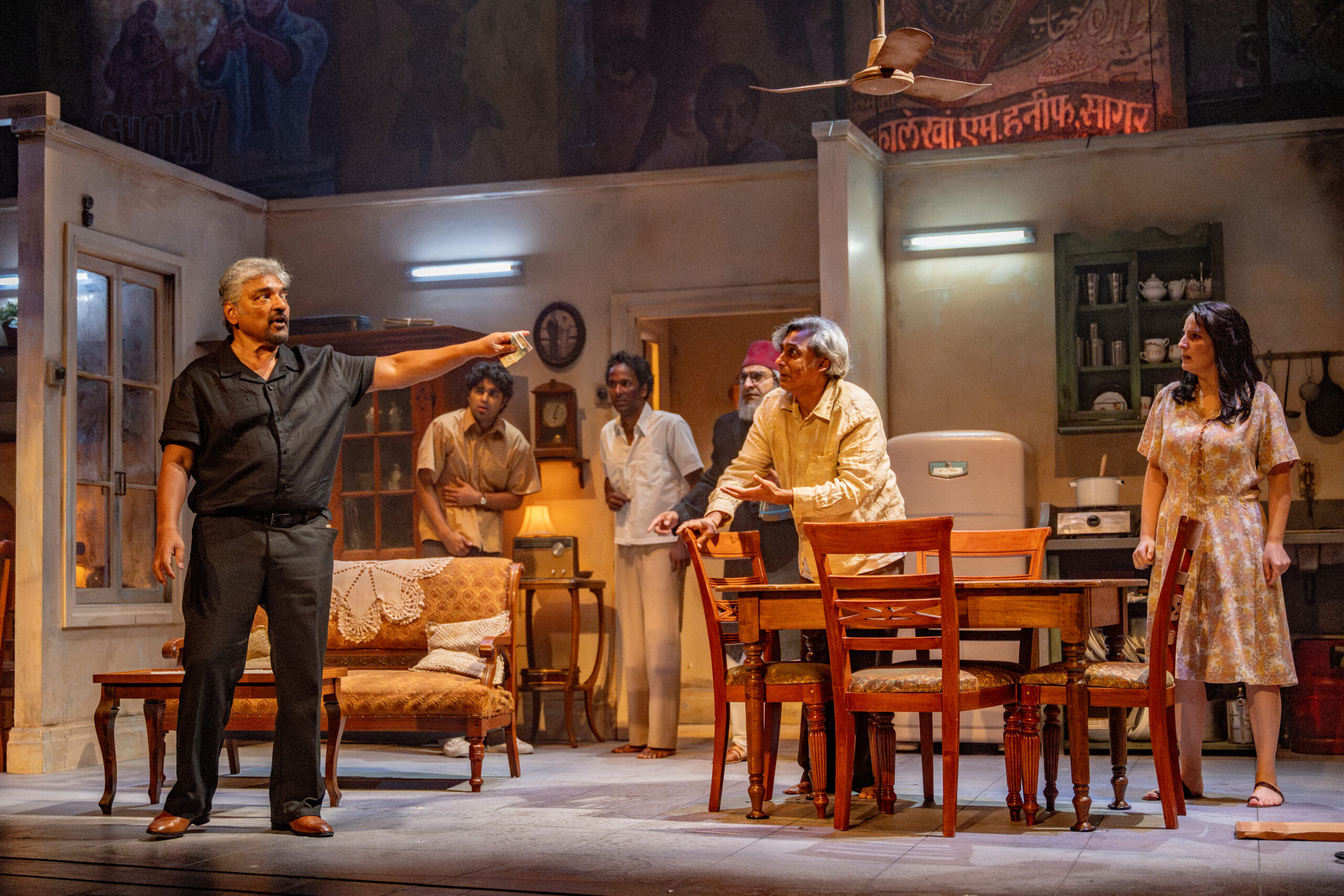
While it is Joel Grey whose name is credited as the director of the Toronto and New York production, this physical production and, in fact, the entire production was mounted by Staś Kmieć. Mr. Grey was not present in Toronto. Mr. Kmiec has a long history with Fiddler and this production, is responsible for all blocking and a sizeable amount of this interpretation, and has worked with and beyond the original by Jerome Robbins. There is a spare naturalism that suits the material. Beowulf Boritt’s set strips away ornament in favour of a parchment-like backdrop bearing the word Torah in Hebrew letters, a visual choice that suggests both tradition and fragility. The effect is echoed in Connor J. Lucas’s precarious Fiddler and in the placement of the orchestra behind the scrim, where Mark Camilleri’s musical direction remains clear and controlled. Dan Moses Schreier’s sound design keeps the balance between pit and performers finely judged, while Ann Hould-Ward’s costumes evoke early-20th-century Tsarist Russia without distracting from the drama.
Steven Skybell gives Tevye both vocal strength and emotional weight, sustaining the role’s humour and anguish without forcing either. Tracy Michailidis plays Golde with bracing wit and reserve, which makes the tenderness that surfaces in “Libst Mikh, Sertse?” (“Do You Love Me?”) even more affecting. As Leyzer-Volf, George Masswohl brings bruised dignity to a hard-working, lonely man who only wanted to have and be entitled to some happiness (as Tsatyl tells Motl).
Among the ensemble numbers, “Traditsye” (“Tradition”) establishes the production’s musical assurance from the outset, while “Shabes Brokhe” (“Sabbath Prayer”) is sung with spiritual warmth and blend. “Der kholem” (“The Dream”) provides one of the evening’s sharpest tonal shifts, with Gabi Epstein’s Frume-Sore looming grotesquely enough to make the sequence funny and faintly unsettling at once. Interestingly, the concept of the Dream was Kmieć’s as well.
The production suggests that classic musical theatre can still yield new meaning when approached with clarity, conviction and respect for the material’s enduring emotional truth.
Please see it.
Running time: approximately 3 hours with one interval/intermission.
The production runs to June 7 at the Elgin Theatre, 189 Yonge Street, Toronto. For tickets:
HAROLD GREEN JEWISH THEATRE COMPANY, ROSALIE AND ISADORE SHARP & GERALD SHEFF AND SHANITA KACHAN PRESENT
FIDDLER ON THE ROOF IN YIDDISH with ENGLISH SUPERTITLES
Book by Joseph Stein. Music and Lyrics by Jerry Bock and Sheldon Harnick
Yiddish Translation by Shraga Friedman
Directed by Joel Grey
Associate Director, Production Staging & Choreographer: Staś Kmieć
Associate Director: Merete Muenter
Associate Director/Supertitle Designer: Matthew ‘Motl’ Didner
Music Supervisor: Zalmen Mlotek
Music Director: Mark Camilleri
Orchestrations: Larry Blank
Scenic Design: Beowulf Boritt
Costume Design: Ann Hould-Ward
Lighting Design: Peter Kaczorowski & Ethan Steimel
Sound Design: Dan Moses Schreier
Hair & Wig Design: Tom Watson
Performers: Steven Skybell, Joey Arrigo, Nick Boegel, Emma Burke-Kleinman, Eric Dahlinger, Jesse Drwiega, Jamie Elman, Gabi Epstein, Michelle Heisler, Isidora Kecman, Joshua Kilimnik, Jeremy Lapalme, Connor J. Lucas, Alice Malakhov, George Masswohl, Tracy Michailidis, Teddy Moynihan, Igor Portnoi, Amy Rivard, Sayer Roberts, Lily Schnoor, Romi Shraiter. Ralph Small, Preston Vendramin, Theresa Tova