

Review by Guest Writer Keilantra Huang
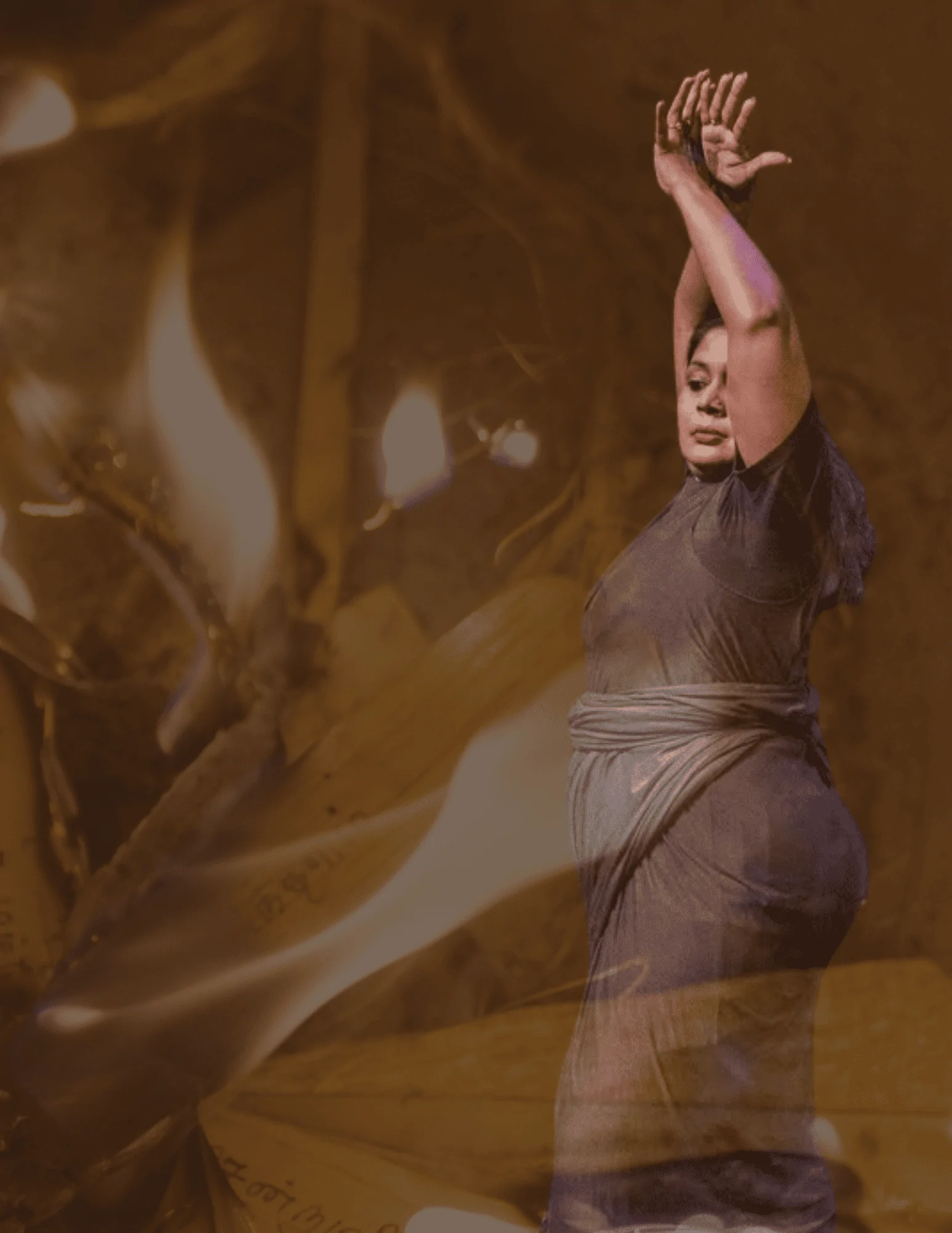
Created by award-winning Bengali-Canadian dancer Nova Bhattacharya and Tamil/Singhalese-Canadian neurologist and writer Suvendrini Lena, Tandava (தாண்டவம்) builds upon verses by the 6th-century Tamil poet-saint Karaikkal Ammaiyar who detailed the deity Shiva dancing on crematory grounds, surrounded by death and decay. While this subject seems heavy, especially as Bhattacharya and Lena make thematic connections to the Sri Lankan Civil War, the final note of Tandava (தாண்டவம்) is cyclical and uplifting. In affirming Shiva’s dance as a celebration of the natural order of death, Bhattacharya and Lena present a moving performance about the resilient spirit of grief and healing; they honour the lives, communities, and cultures lost during times of violence.
It was undoubtedly ambitious for Bhattacharya and Lena to weave together a centuries-old poem with modern history to a mostly unfamiliar audience. Yet, Tandava’s (தாண்டவம்) intertextuality emerges as one of its greatest strengths. In my viewing, I watched as several audience members admitted to walking in with zero prior knowledge of the source poem and being moved to tears by the end. I myself was struck by how impactful dance could be as a universal language, especially when imbued with universal themes of mourning and grief. These themes were expertly grounded by historical allusions (like the 1981 burning of the Jaffna Public Library), which connected personal mourning to collective cultural loss. And as these themes were further enhanced with props like ola leaf manuscripts, Tandava (தாண்டவம்) delivered a poignant dedication on cycles of destruction, renewal, and grief that echoes through generations.
However, perhaps the greatest factor for this performance’s success should be attributed to Bhattacharya’s magnetic performance. From watching her seamlessly shift from a joyful greeter before the show, to acting as a stoic narrator, to a fierce dancer, I was struck by her commitment to her various roles. She was truly the heart of the show.
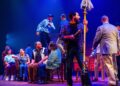
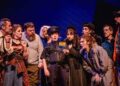
While the set design was austere, it also helped create a clear scaffolding that enhanced the narrative. Lighting-wise, the performance opens with a tranquil blue that floods the room, engendering the sense that we are in the unconscious, grounded by ancient texts. Later on, the second dominant colour, a striking red, emphasized the destructive burning of texts and culture, as well as the tension between dancers during moments to express fragility and powerlessness.
Similarly, the fluidity of the ambient dancing was occasionally interrupted by fragmented harsh stomps that demanded the audience to bear witness to the destructive nature of cultural loss.
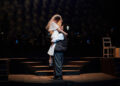
The unity between the dancers was further emphasized by the four thoughtfully placed crates, each at the vertices of the stage. During duets and trios, non-active dancers sat on the crates, looking inwards towards the dance, portraying a willingness to share in a narrative and history. While performing, the dancers showed masterful body control, with visible bodily isolation and extension. The choreography itself was also thoughtful and meaningful, as it was rife with moments where the dancers’ bodies both connected and created negative space, highlighting both unity and tension.
For all its strengths, Tandava (தாண்டவம்) does also show signs that it is still a work-in-progress. The opening starts off shaky, with a seemingly uncoordinated warm-up exercise that stumbled again when it was repeated at the end of the performance. More vitally, while the play is mostly comprehensible to non-Tamil speakers, audience members who only comprehend English certainly lose out on part of the artistic experience. For instance, music that mixed English and Tamil may be indecipherable to a speaker of only one language.
However, it is worth considering how much we are entitled to understanding art from other communities, especially if this was an intentional artistic decision. In my case, I don’t think this is fully a flaw, simply a personal regret that I was not able to fully engage with the piece. And even without the linguistic or cultural background, some audience members still broke down, describing that they had a “lump in [their] throat” while watching.
I hope that Tandava (தாண்டவம்) continues to succeed in its sharing of culture and history; it is a performance that is absolutely worth watching, even for the uninitiated, as long as one is willing to listen with open hearts.
Tandava / தாண்டவம் runs from August 8th to 9th at The Citadel: Ross Centre for Dance 304 Parliament St, Toronto, ON M5A 3A4. For tickets and inquiries, visit: https://summerworks.ca/show/tandava/.
Creator, Choreographer & Performer: Nova Bhattacharya
The production has now closed.