

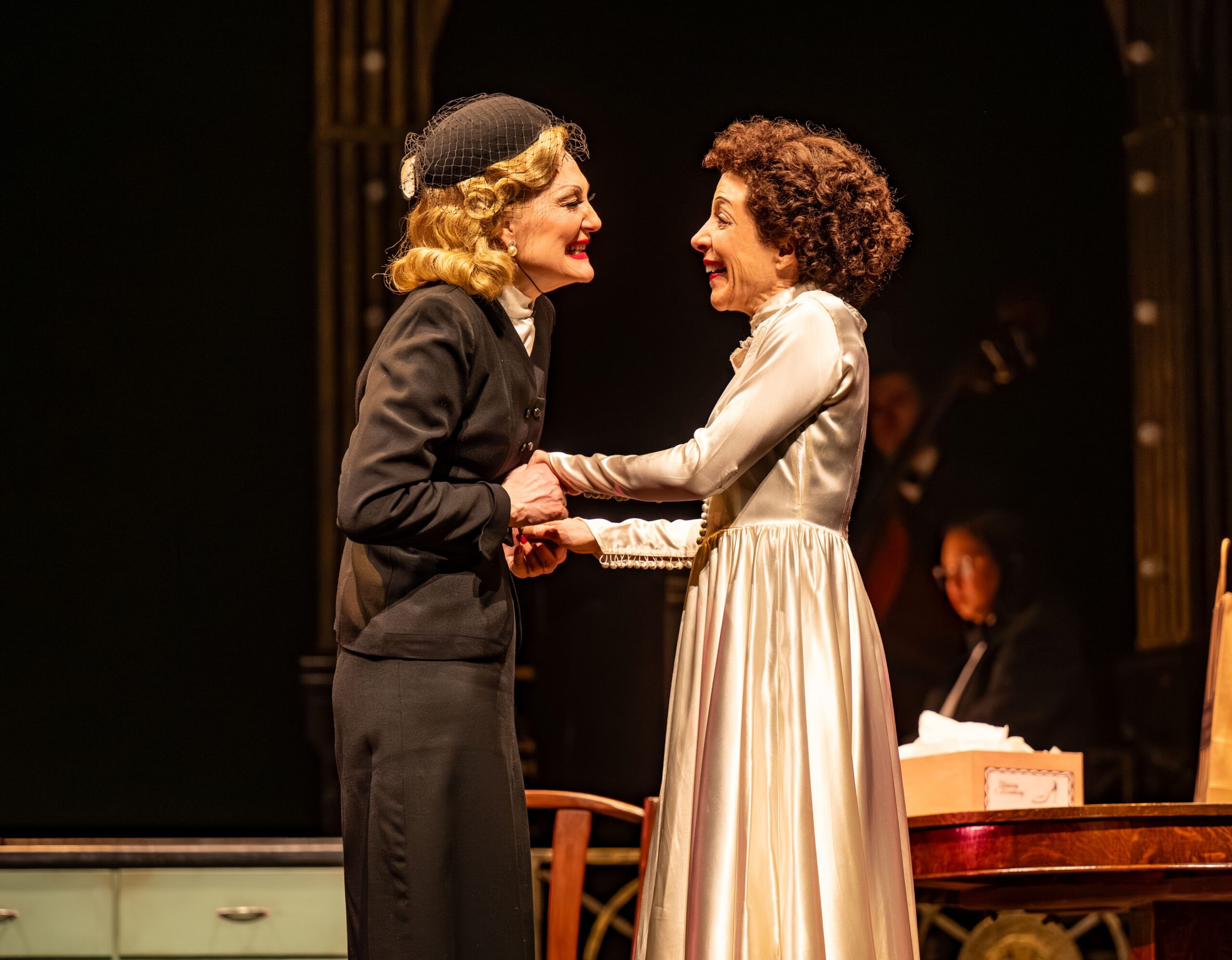
The story of Édith Piaf and Marlene Dietrich offers an engaging exploration of the true meaning of friendship. Originally written in German as Spatz und Engel (The Angel and the Sparrow), London, Ontario’s Grand Theatre production of PIAF/DIETRICH: A Legendary Affair presents the story of these two passionate cabaret chanteuses as a musical drama about the real-life, unlikely friendship between two music icons.
Beneath the hurt, torture, anger, friendship, and love, there is an abiding strength in a female relationship that resonates with truth for this appreciative opening-night audience.
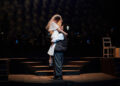
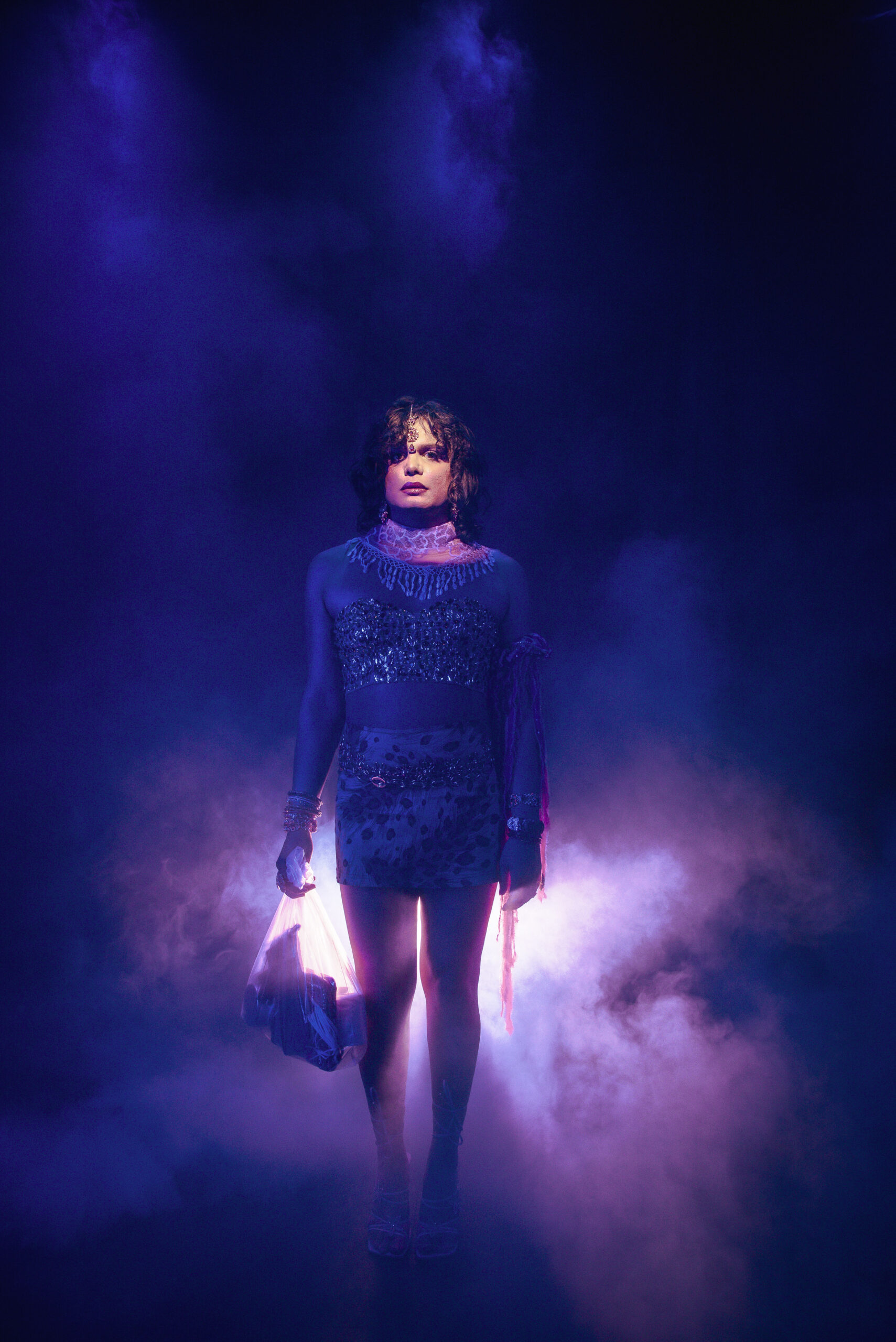
It’s 1948, three years after the end of World War 2. Édith Piaf (Deborah Hay) meets actress Marlene Dietrich (Terra C. MacLeod). Piaf is known to audiences for her raw, guttural passion in her songs, a quality that resonates with common folk. Dietrich is a striking beauty and German actress who is taking Hollywood by storm. At one point, when Marlene sings, designer Ming Wong’s costume selection shimmers brightly on stage, like an angel’s presence.
Dietrich recognizes musical genius in the petite, often dishevelled French woman dressed in black, whose vocal talents will astound anyone who listens. In seeking to introduce Édith’s great potential to English-speaking American audiences, Marlene takes the little sparrow under her wing, offering friendship, guidance and support as she continues to nurture the incredible singing voice.
What follows in Erin Shields’ adaptation of Sam Madwar’s translation of Daniel Große Boymann and Thomas Kahry’s imaginative and stirring script is the emotional upheaval of two women who reveal the complexities of what happens when the “perfect image is cracked behind to see what lies beneath” (as show director Rachel Peake says in her Programme Note).
Michelle Ramsay sublimely illuminates Lorenzo Savoini’s elegant set design with a sense of prestige and sophistication. It’s a setting of flash and glamour as Piaf and Dietrich travel the world. Ming Wong’s costumes are lovely re-creations of the 15-year period in which the story is set. A nod of appreciation once again to Sound Designer Emily Porter for paying careful attention to the appropriate balance between the four-piece orchestra and the singers. I can hear the consonants and syllables in each rendition of each song.
Director Rachel Peake and Music Director Mary Ancheta want audiences to witness both the good and the bad sides of Piaf and Dietrich. Édith and Marlene live their lives with gusto; they love, they fight, they don’t speak to each other, and yet somehow their friendship gives each of them the gift of shining a little brighter in song and dialogue.
On this opening night, the creative team has achieved its goal. In spades.
Rachel Peake’s direction remains polished, maintaining a consistent dignity and grace for these two women and their different backgrounds. Even as the audience witnesses the fall of Édith and Marlene’s careers (the former’s mental decline and the latter’s horrible accusations of being a traitor to Germany), Peake never allows the performances to become snivelling, whiny, and achy femme fatales. Instead, Peake’s vision is to bear witness to two women who fight hard, battle strong, and persevere with fervent zeal.
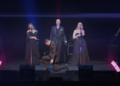
Music Director Ancheta captures the soaring highs and the toll of emotional lows across the twenty-some songs. Kudos for the attention to minute details in the gorgeous phrasing of “La vie en rose’, ‘Where Have All the Flowers Gone?”, ‘Non, je ne regrette rien’, ‘Lili Marlene’, and ‘Just a Gigolo’.
Deborah Hay and Terra C. Macleod connect kinetically through music and dialogue. Their Édith and Marlene remain present in the moment at all times.
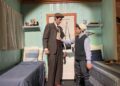
One striking element of Hay’s and MacLeod’s performances is the way their physical structures and frames convey a great deal about their characters or sustain interest in the plot. In Act One, Hay’s Piaf is compelling. The audience sees a hunched-over Édith wracked with pain and fighting with the medical team to continue giving her morphine. Solid supporting work by Eric Craig and Karen Burthwright, as part of Édith’s harried medical team, who waver and cave in on getting the singer more illegal drugs to maintain calmness in the thickening tension.
There’s a sultry, seductive allure in MacLeod’s Marlene, who carries the character with class and dignity each time she appears on stage. The upright posture commands attention each time she appears on stage, most notably when she seduces an uncertain yet inquisitive Édith in Act One.
In her Director’s Note, Rachel Peake says, “It’s always worth looking beneath.”
Good theatre must continue to allow its audiences to look beneath the surface and see very real people who are sometimes unlikely to be brought together.
When that happens, and the unlikely are brought together, and it clicks in the theatre, it makes for a memorable experience.
For that reason, please see PIAF/DIETRICH: A Legendary Affair.
Running time: approximately two hours with one intermission.
The production runs to March 7 on the Spriet Stage at London, Ontario’s Grand Theatre, Richmond Street. For tickets: grandtheatre.com or call the Box Office at (519) 672-8800.
GRAND THEATRE presents with special arrangement with the Segal Centre for the Performing Arts
PIAF/DIETRICH: A Legendary Affair by Daniel Große Boymann and Thomas Kahry
Adapted by Erin Shields from a translation by Sam Madwar
Based on a concept by David Winterberg
Directed by Rachel Peake
Music Director: Mary Ancheta
Choreographer: Genny Sermonia
Set Designer: Lorenzo Savoini
Costume Designer: Ming Wong
Lighting Designer: Michelle Ramsay
Sound Designer: Emily Porter
Assistant Director: Nicole Wilson
Intimacy Director: Siobhan Richardson
Stage Manager: Suzanne McArthur
Performers: Karen Burthwright, Eric Craig, Deborah Hay, Terra C. MacLeod