

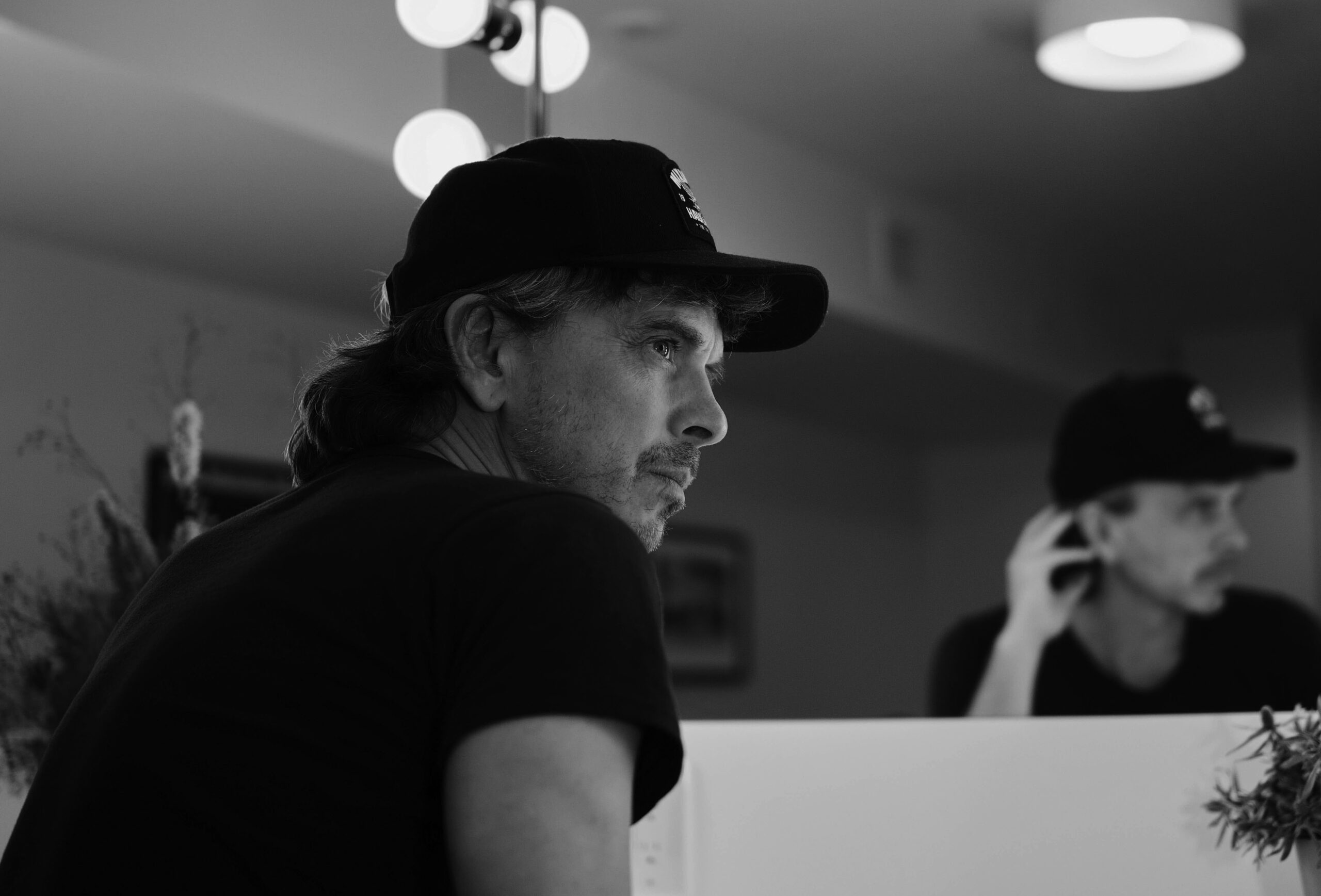
As a theatre director, Dylan Trowbridge continues to work with outstanding Canadian artists in several shows Our Theatre Voice has reviewed, ranging from the bold puppetry at Toronto’s Eldritch Theatre in Shakespeare’s Macbeth to Barrie’s Talk is Free Theatre (TIFT)’s hilarious La Bête by David Hirson and Mike Bartlett’s searing socio-comedy Cock.
Trowbridge directs TIFT’s production of Company (book by George Furth, music and lyrics by Stephen Sondheim) at The Theatre Centre, 1115 Queen Street West, Toronto, from January 15 to February 1, 2026.
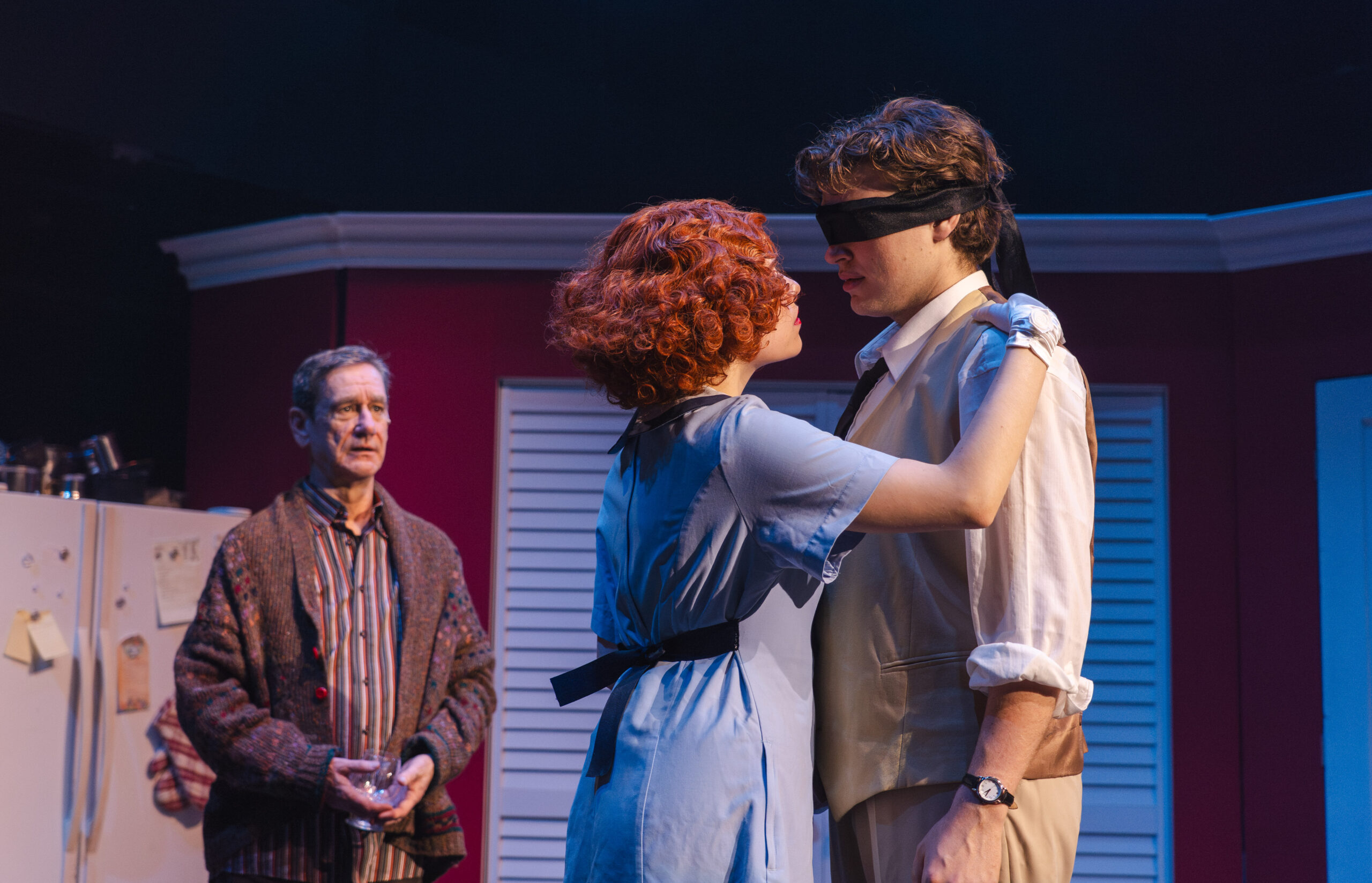
On the threshold of his 35th birthday, Bobby (Aidan deSalaiz) is coming to terms with yearning and commitment, and he contemplates marriage. But he is terrified of exposing himself to the pain and uncertainty of love. Fifty-six years ago, when Company premiered on Broadway, concepts of gender and sexuality were radically different. Gender expectations would have bound a 35-year-old man to deny complex feelings. Repression does not mean Bobby does not experience these emotional crises. He certainly does.
George Furth’s book is not naturalistic. The scenes are episodic and out of sequence. Over a series of dinners, drinks and even a wedding, Bobby’s friends–some of whom have happy marriages, others on the brink of divorce–explain the pros and cons of taking on a spouse. Through it all, Bobby wonders, “What do you get?”
While Trowbridge’s vision sets Company in the 1970s as the original New York production, he clarifies that his design team will deliberately avoid anything that looks like kitschy ‘70s. Instead, the creatives involved will strive for a universal, timeless visual aesthetic:
“I feel very strongly that the stakes of Bobby‘s crisis are much higher when the production is set in the 1970s. In 1970, the average life expectancy of an American man was 68 years old. And 90 to 95% of 35-year-old men were married. These given circumstances provide great urgency to Bobby’s existential reckoning.”
When he first encountered Sondheim’s work as an audience member in the ’90s, Dylan said it cracked him open because he thought he knew what musical theatre was:
“Witnessing works like Assassins, Merrily We Roll Along, and A Little Night Music radically redefined for me what [musical theatre] was capable of. There was a degree of difficulty to the material that was fascinating, intimidating and invigorating all at once.”
He continues further:
“As I’ve become more familiar with Sondheim’s work over the years, I’ve identified the two things that inspire me the most: The first is the obsessive nature of the music and lyrics.”
When the actors deliver the distinctive cadence, hyper-verbal elements, and complex nuances of Sondheim’s music, and tell Furth’s story with passionate vigour, the experience becomes the most thrilling theatre for Dylan, not only as director but also as an audience member. Trowbridge understands his audience because they, too, seek purpose and connection with one another, just as the characters do.
Dylan is inspired by a story’s capacity to ignite passion, purpose, and hope. In short, the one criterion he holds steadfast about a play he wants to direct?
“Does it have the capacity to make and to expose people to the pain, wonder and joy of being fully alive? Even for a moment.”
In Company, Trowbridge believes that Furth and Sondheim have created a story that speaks to this criterion:
“Bobby starts the play numb. He is going through the motions of being alive. Through this fragmented waking-dream of a journey, he arrives at the epiphany of being alive when he sings ‘Being Alive.’ ”
The other thing that inspires Trowbridge about Sondheim’s works, and Company in this context, is the masterful creation of tension through the use of paradox:
“All of his work is infused with characters, scenes and songs that feature the coexistence of opposites – Sorry/Grateful—Excited/Scared. While so many traditional musicals have characters break into song because they are overwhelmed by one singular emotion, in Sondheim’s work, it is the tension created by opposing internal needs that causes them to break into song.”
This tension of opposites is humanity and honesty, which resonate powerfully within him. People are complex and contradictory.
Does Company speak to the modern twenty-first-century audience?
Trowbridge believes so:
“According to Sondheim, the musical is about the challenge of maintaining relationships in an increasingly depersonalized world. Fifty-six years after its premiere, [‘Company’s] expression of urban loneliness is more potent than ever. The reason I believe the piece resonates so powerfully is that it offers no easy answers. It portrays love, precisely as it is–– messy, uncertain, painful–– but still the most magnificent thing about being alive.”
Company, however, is not a midlife crisis play. For Trowbridge, the story is fragmented like a broken mirror, and Bobby must reassemble the pieces. It is during the reassembling and navigating process that Bobby has a transformative epiphany, and the audience can witness this internal, subterranean existential quest in musical numbers such as ‘Someone is Waiting’ and ‘Marry Me a Little’.
While humans and artists do think about getting older, Dylan believes we get to be alive only once. For him, that becomes his greatest inspiration as an artist and is a foundational concept for every play he directs. Trowbridge quotes a line that he loves and comes back to constantly from Canadian author/poet Al Purdy:
“What the hell do we do with this brief little life of ours. And it is bloody brief.”
As we conclude our email conversation, Trowbridge makes the following connection to understanding Bobby:
“[His] 35th birthday incites a sudden, urgent, visceral waking dream… Through this process, Bobby summons the courage to expose his heart to the pain, joy and wonder of being alive. It is about coming to life.’
That’s why the final song of the show ‘Being Alive‘ hits the right note emotionally.
And that’s why Company remains one of my favourite musicals.
Please check the website: https://www.tift.ca/shows/company to read more, to purchase tickets, and to see the cast and creative team. There’s another reason why you should see the show.