

At first glance, the title Make Banana Cry might lead one to consider all kinds of connotations.
According to the press release, the word ‘banana’ isn’t just slang. It’s a symbol of the performance, erasure and reclamation of self. While I consider this understanding, another comes to mind. Please be aware that I mean no intentional disrespect that unjustly conveys and suggests erasure; however, this powerful opening-night production of Make Banana Cry makes me mindful of not wanting to think about this understanding that has long been around:
“A banana’s covering is yellow skin, a horrific and ugly term that has been used within a colonial, patriarchal understanding hellbent on the destruction of a human people, whether emotionally or physically.”
Therefore, this unnerving and discourteous understanding, which has been present in my experience, becomes a troubling wake-up call for all of us to consider the impact of the words we have used for a long, long time. It’s sad. It’s understandable that these horrific understandings can make a people cry.
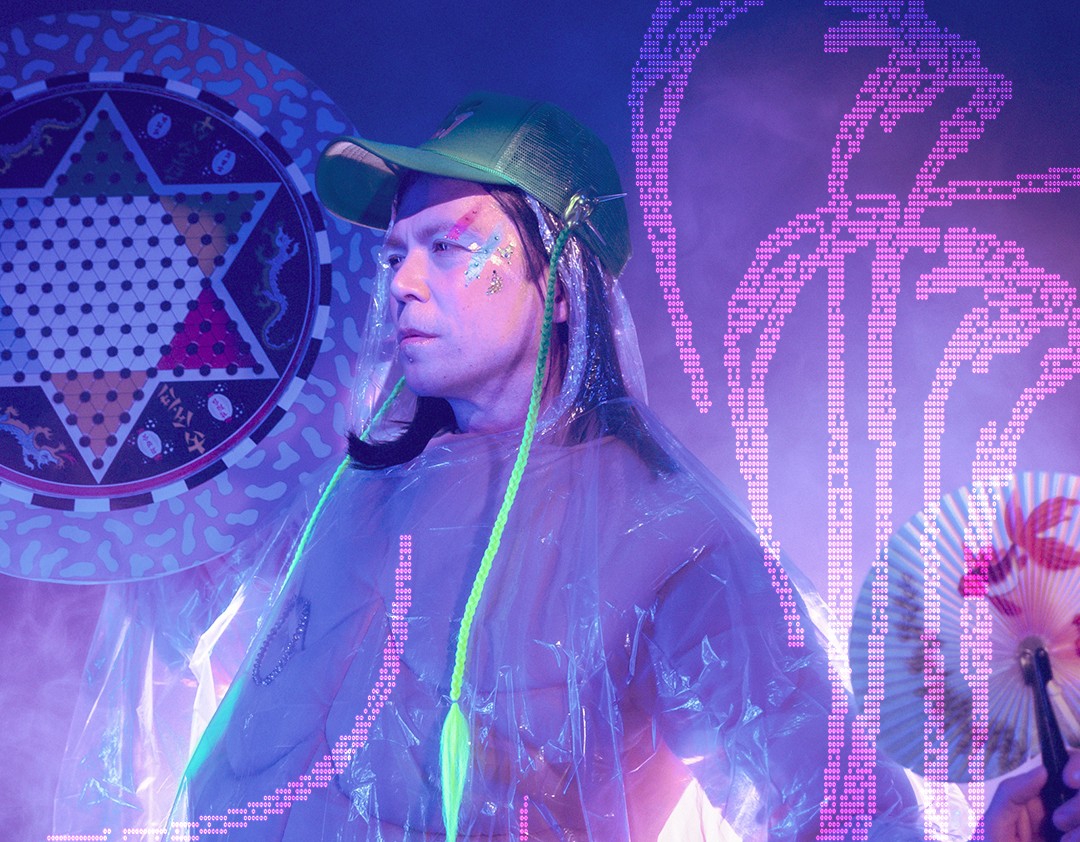
Setting Make Banana Cry in a fashion show environment becomes darkly satirical and radically observant. An excellent choice by the creative team of Dominique Pétrin, Emerson Kafarowski, Romane de Montgrand and Öyku Önder who visually stage and highlight how the Western understanding of the term ‘fashion show’ conveys the idea that models become whoever the patriarchal consumer wants them to be.
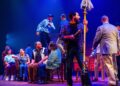
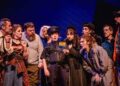
The creative team’s choices to have these six brave, daring and radical East Asian artists don outlandish costumes and clothing, surrounded by kitschy souvenir items Western people would bring home, and underscored by selections of music that aim to tell Westerners what it means to be ‘Asian’, become humourously stark and frighteningly horrific in becoming what the patriarchal consumer believes to be Asian. The hard-hitting truth is that we Westerners do not know what it means to be Asian, but we have been unjustly conditioned to believe we do.
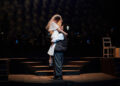
While there are raucous moments of laughter as the six artists play to the audience for certain gimmicky shtick, what becomes fascinating are the moments of quiet introspection on stage when the artists sit in silence for a few minutes. From a Western perspective, it might feel uncomfortable to watch the artists (in various stages of undress) sitting silently, being who they are and where they are in that particular moment. But for the artists, the silence is not uncomfortable. It’s an opportunity for them to be comfortable in who they are as humans.
Pétrin, Kafarowski, de Montgrand and Önder terrifically highlight the visually enchanting element of these six East Asian artists as they run the catwalk, snaking up and down in a U-shaped format. Ironically, the catwalk has swastikas on the floor, a symbol that, at first, makes me do a double-take for the connotation I know. A quick bit of online research on the meaning of the swastika clarifies it as “an ancient symbol in the form of an equal-armed cross with each arm continued at a right angle, used especially in South Asia as a symbol of good luck or spirituality.” Again, something which I did not even consider.
Stephen Thompson’s sound design gives me goosebumps when the show begins in pitch-blackness, and the sound of an approaching helicopter grows louder and louder. Thompson’s selection of songs that incorporate the uncomfortable, changing ‘Asianness’ remains appropriate and a propos. While I did not recognize several of the musical selections, certain sections of songs are uncomfortable to hear, ranging from the opening of ‘Miss Saigon’, where Jonathan Pryce played an Asian character, to Disney movie music selections – “We Are Siamese’ to The Vapor’s “Turning Japanese’.
These six uber-talented performers confront this dual understanding of the title’s meaning with professional dignity and tremendous respect for themselves and who they are as artists and as human individuals. At the top of the show, they have the catwalk model walk down perfectly: arms outstretched and pointed, turning sharply at 90 degrees when required.
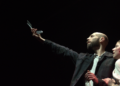
As the performance continues, the six artists showcase their physical choreographed movements, at times with abandoned, free-flowing, arms-flailing motion. What’s magnificently impressive are the quick costume changes, done in mere seconds, and the multitude of props that serve many purposes. I can’t even begin to imagine the precise order for the costumes and props at the top of the show versus the ending when everything is everywhere.
Make Banana Cry becomes radically observant and thought-provoking theatre. The number of people who remained in the auditorium after the opening-night curtain call indicates that a positive, impactful discussion began.
It’s a discussion about the teaching of the truth of history that deserves to continue long after.
Running time: approximately one hour with no interval/intermission.
Make Banana Cry runs to January 17 at Buddies in Bad Times Theatre, 12 Alexander Street, Toronto. For tickets: buddiesinbadtimes.com.
BUDDIES IN BAD TIMES and TORONTO DANCE THEATRE present
MAKE BANANA CRY
Choreographers and co-creators: Andrew Tay and Stephen Thompson
Visual Installation: Dominique Pétrin,
Production: Romane de Montgrand
Technical Director: Emerson Kafarowski
Lighting Design and Tour Technician:
Head Technicians: Van Ward, Darren Shaen, Mojo Boble, Antel Kollengerg
Wardrobe Technician: Mackenzie Mccallum-Mallory
Crew: Zoe Daca, Kit Norman, Mike Dowdall, Nate Gurarie, Mackenzie Mccallum-Mallory
Performers: Cynthia Koppe, Francesca Chudnoff, Hanako Hoshimi-Caines Sehyoung Lee, Winnie Ho, Stephen Thompson