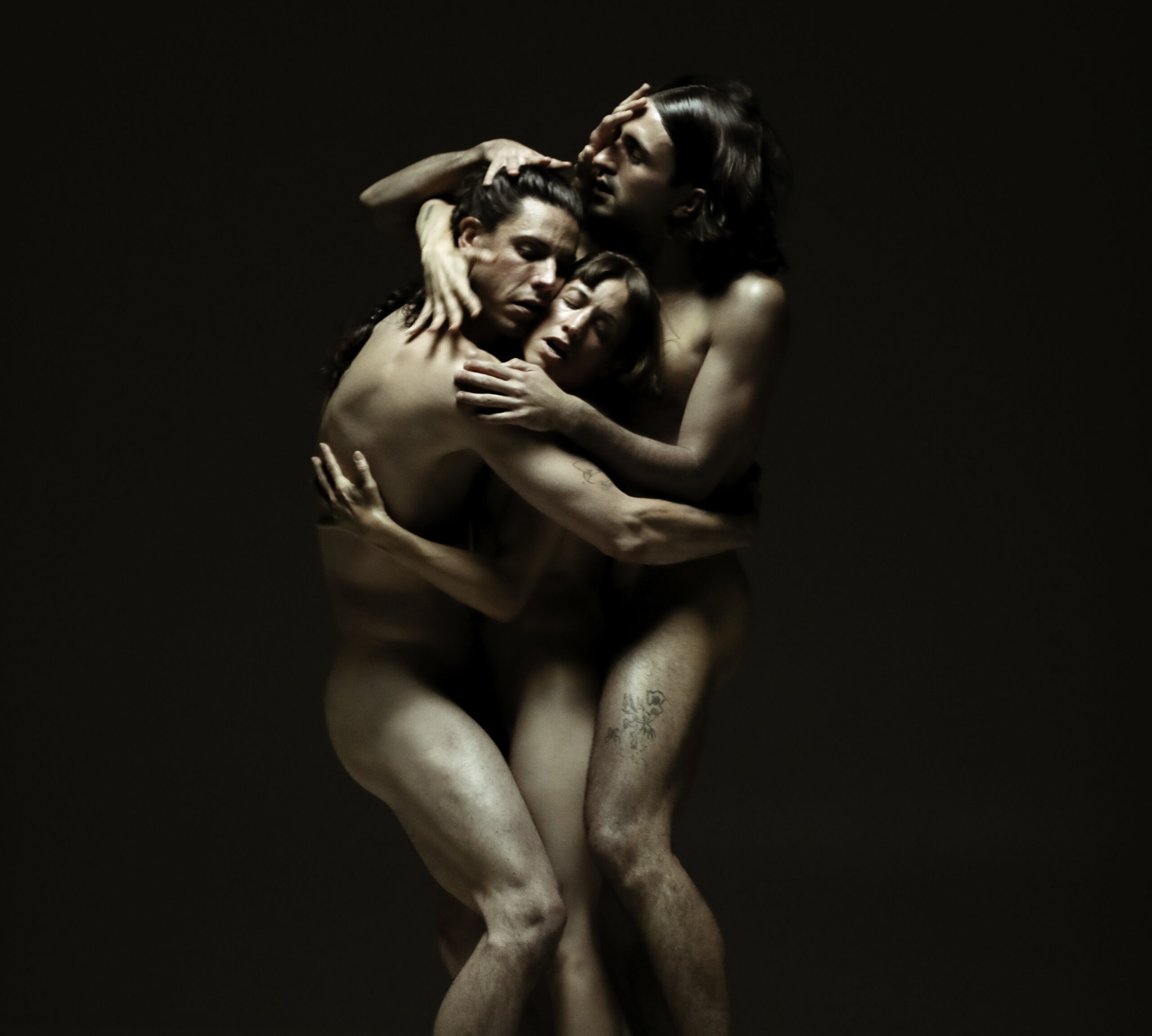


Matthew Mackenzie’s Strife, set in Alberta’s oilsands, examines themes of healing and resilience within Indigenous culture. The narrative addresses identity activism as a significant element; nonetheless, grief is reframed following the death of Nathan—brother to oil patch worker Monique (Teneil Whiskeyjack) and partner to Sarah (Grace Lamarche)—whose absence continues to impact their lives four months later. Nathan was pursuing a Master’s degree, and Indigenous Studies professor Eleanor (Valerie Plance), who was among his instructors, had appointed him as a Research Assistant.
Monique and Sarah navigate their mourning in distinct ways. Eddy (Jesse Gervais), Nathan’s friend and Monique’s partner, shares in their sorrow. Andrea (Michaela Washburn), Monique’s therapist employed by the oil company, faces the decision of whether she is ready to return to work at the oilsands after losing her brother.
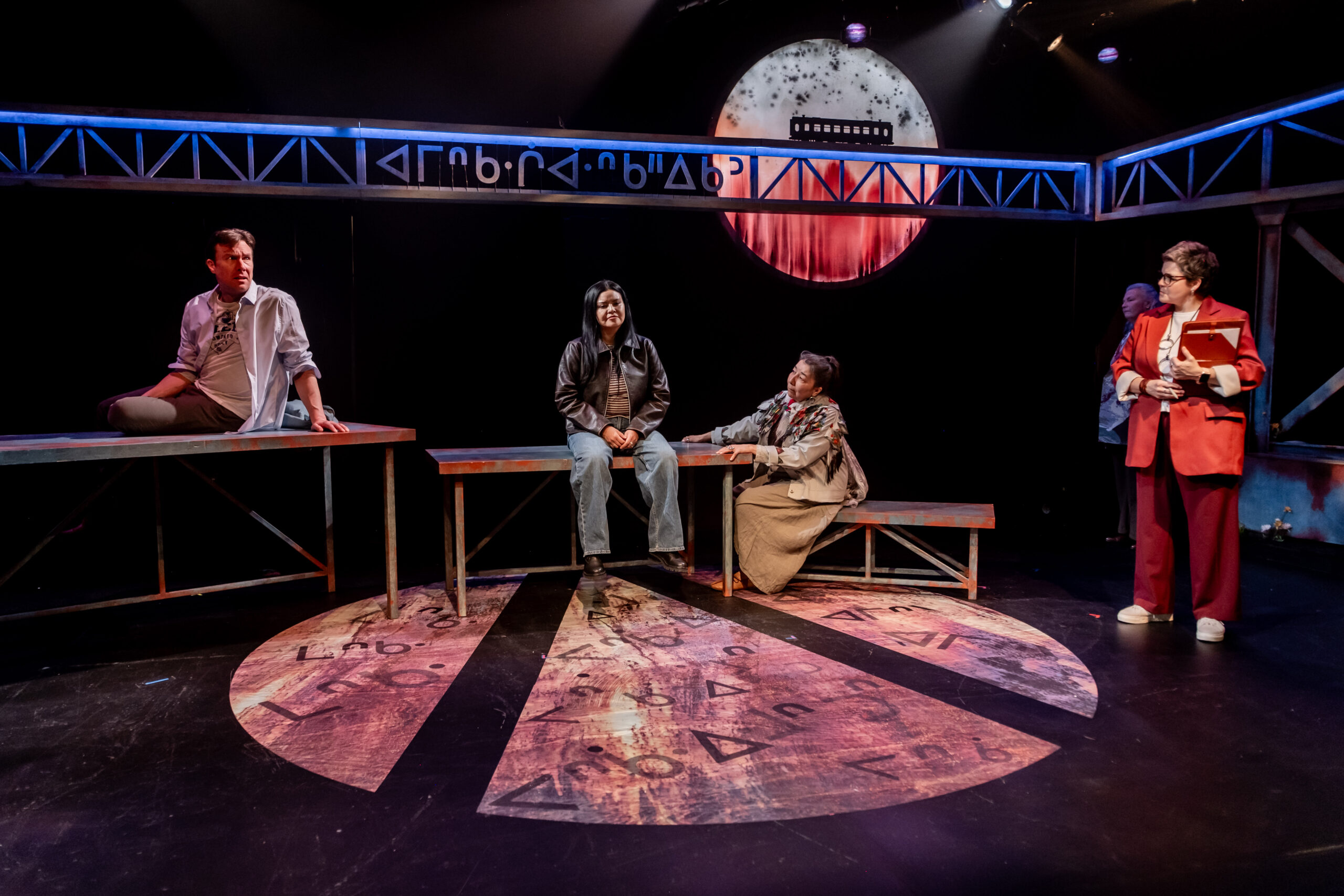
Tarragon’s Extraspace is a good choice for staging the production. Its intimacy brings the audience close to the vastness of the oil sands. Set Designer Jackie Chau’s design of girders surrounding the stage, with an offstage streetcar in the distance, perfectly suggests the expansive nature of the oil sands. Individual tables are easily moved to create various settings. Za Hughes’ silhouetted lighting encapsulates the haunting atmosphere of the characters as they deal with their individual emotional losses. There is a moment when the characters enter bearing pre-light candles as part of Nathan’s celebration of his life and activism. The effect of the candles in the darkness is etched in my mind even a few days later. Richard Feren’s sound design is tightly executed when required. Chau also selects costumes that faithfully reflect the individual, unique nature of the characters. Teneil Whiskeyjack becomes a striking pillar of strength at one point, as Hughes’ lighting beautifully highlights her physical stance.
What intrigues most about Strife is the introduction of Great Grey Owl (Tracey Nepinak). In Indigenous and First Nations cultures, the owl represents wisdom and understanding, which assist others on a spiritual journey of healing and wellness of grief as they return to the community. Nepinak never leaves the stage. She provides an anchor in the production, and I kept looking over to watch her for a few seconds. Her regal presence, marked by grace and poise, continues to be strongly felt throughout, in her silent watching over unfolding events.
This production offers significant opportunities for healing and wellness, particularly as it examines the complexities inherent in the contrast between what is articulated and what is enacted.
Yvette Nolan demonstrates a thoughtful approach as director, navigating the intricacies involved in pursuing truth. The narrative presents six distinct characters, each contributing necessary context to the discourse on authority and reconciliation within Indigeneity.
The central question persists: who possesses the legitimacy to speak as an authority? Each character’s perspective is valuable and deserves attention.
Teneil Whiskeyjack provides a compelling portrayal of Monique, marked by strength and consistency, enhanced by Jackie Chau’s costume design. Whiskeyjack’s interactions with Andrea, played by Michaela Washburn, serve as pivotal moments that reveal insight into trauma and healing. Washburn’s performance as Andrea conveys authenticity and empathy, drawing from her experience with trauma in clients beyond Monique. Valerie Planche’s depiction of Eleanor, a university professor, initially appears abrupt, possibly due to shared emotional loss. However, Planche’s Eleanor initiates the exploration of identity, community, and economic prosperity amidst the environmental consequences of the oilsands.
Grace Lamarche stands out as Sarah, convincingly expressing grief for Nathan through subtle, restrained emotion. Similarly, Jesse Gervais portrays Eddy with determination, rooted in his relationship with Nathan and activism. Gervais ensures Eddy’s compassion for Monique remains evident, especially in their hopeful and trusting conversation toward the play’s conclusion.
A pre-show Tarragon talk, moderated by Associate Artistic Director Jeff Ho, included an insightful discussion with playwright Mackenzie and director Nolan, providing relevant background for attendees.
During the talk, I raised a question about survival—a theme explored in my undergraduate Canadian Literature coursework years ago—regarding its relevance to Strife. Director Nolan responded enthusiastically to my reference to Margaret Atwood’s textbook Survival. Nolan introduces the concept of ‘survivance’. This term, defined as “a survival outside survival” and “the vitality of it all”, underscores the importance of vitality in Indigenous and First Nations culture as a foundation for acceptance and reconciliation.
Continued engagement and learning about Indigenous culture remain essential.
Strife is definitely worth a look.
Running time: approximately 90 minutes with no intermission.
Strife runs to April 26 in the Extraspace at Tarragon Theatre, 30 Bridgman Avenue, Toronto. For tickets: (416) 531-1827 or visit www.tarragontheatre.com.
PUNCTUATE! THEATRE PRODUCTION in association with TARRAGON THEATRE presents
Strife by Matthew Mackenzie
Directed by Yvette Nolan
Associate Director: Michaela Washburn
Set, Costume and Props Design: Jackie Chau
Composer and Sound Designer: Richard Feren
Lighting Designer: Za Hughes
Consulting Elders: Jo-Ann & Jerry Saddleback
Stage Manager: May Nemat Allah
Producer: Andy Cohen
Performers: Jesse Gervais, Grace Lamarche, Tracey Nepinak, Valerie Planche, Michaela Washburn, Teneil Whiskeyjack