
Canadian world premiere at Port Hope’s Capitol Theatre examines memory, sacrifice and theatrical truth.
A new, rich stage adaptation of Farley Mowat’s wartime memoir And No Birds Sang will receive its Canadian world premiere at Port Hope’s Capitol Theatre, bringing one of the country’s best-known literary voices into an intimate theatrical setting closely connected to his later life.
Mowat, who was born in Belleville and died in Cobourg in 2014 at the age of 92, is buried in Port Hope. The production places his account of military service during the Second World War before audiences in the Sculthorpe Theatre, the intimate upstairs performance space at the Capitol.
Developed through the Capitol’s 2024 Creators’ Unit, the adaptation is written by Canadian playwright Dave Carley, founder and curator of the 10-Minute Play component of the Port Hope Festival of Arts. Carley, whose plays have received more than 500 productions in Canada and abroad, has adapted Mowat’s autobiographical account of his service with the Hastings and Prince Edward Regiment, known as the Hasty P’s.
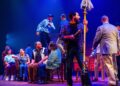
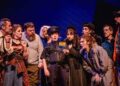
The production is directed by Rob Kempson, the Capitol Theatre’s artistic director. Kempson said the staging will use live music, Foley sound and movement to support the storytelling, with the creative team focusing on the emotional and theatrical dimensions of Mowat’s wartime experience.
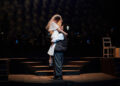
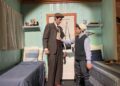
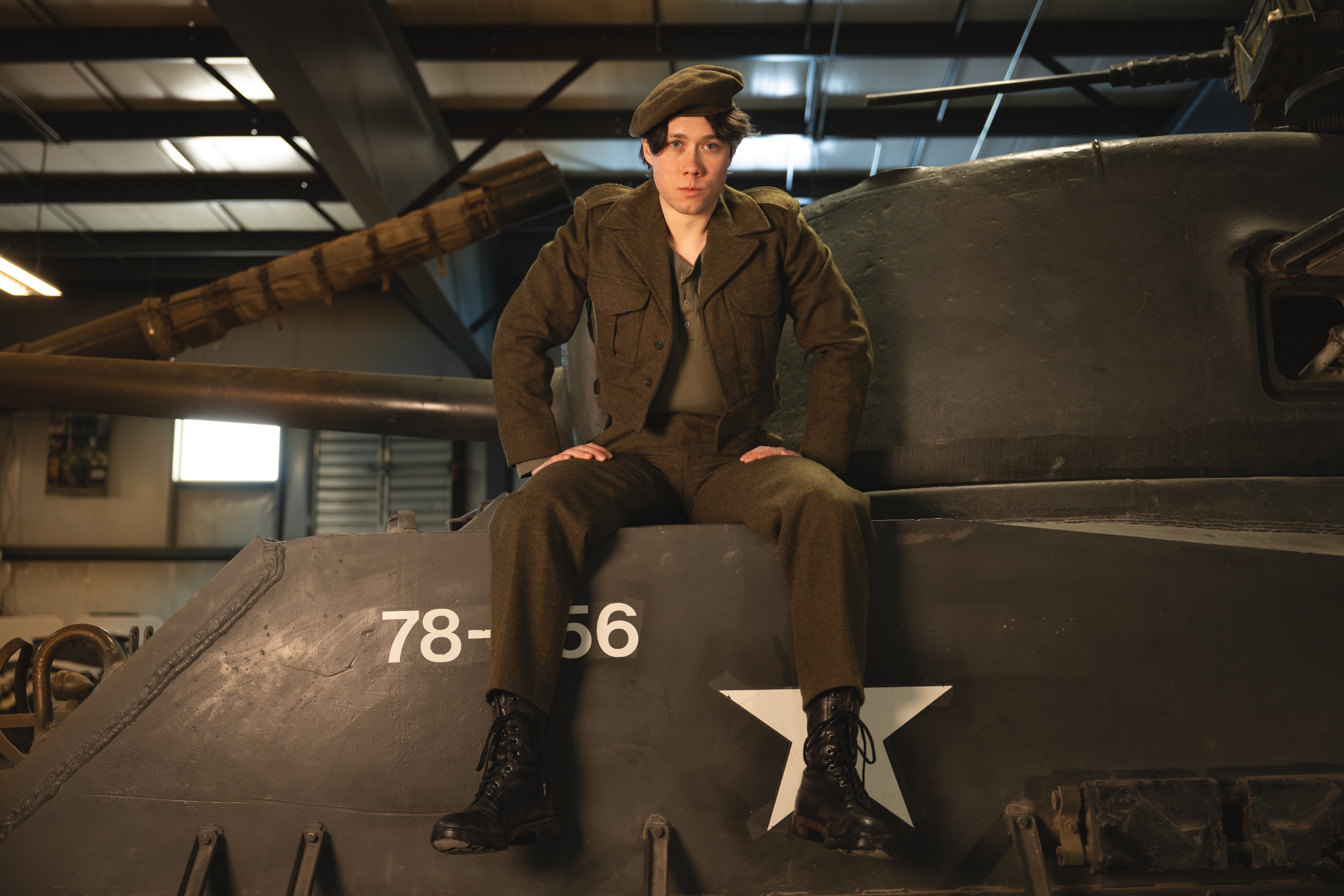
Aaron Macpherson, who was last seen at the Capitol in Prairie Nurse, will play Mowat. The three-person cast also includes Daniel Reale as Kelly and others, and Mayson Sonntag as Doc and others.
And No Birds Sang, first published in 1979 and revised in 2012, traces Mowat’s transformation from a young soldier leaving for war to a veteran confronting the loss of friends in combat. The memoir has also attracted scrutiny over questions of historical accuracy, including details that have been challenged by historians and readers. Those questions are part of the material the creative team is navigating in rehearsal.
Carley, Kempson and Macpherson said the production is less concerned with documentary reconstruction than with how memory, trauma and storytelling shape a theatrical account of war. Kempson described the central question as how to honour the story without simply recreating it.
“How do we honour the retelling of this story without recreating it?” Kempson asked during an early-period conversation about the production.
Carley says the adaptation requires him to balance Mowat’s published words with the needs of the stage. Some details in the memoir may not align precisely with the historical record, but he said the work remains rooted in the larger emotional experience of war and remembrance.
Kempson framed the distinction as one between factual precision and emotional truth. “In retelling something that is the retelling of something of someone’s version of events, we don’t owe anything to the truth,” he said. “We owe the honouring of something — the honouring of human sacrifice, the honouring of all those men who went to war, the honouring of the women who went to war and stayed behind to make other things happen.”
In rehearsal, the team has been exploring how to make that approach visible on stage. Kempson said early work has included experimentation with sound, including the use of piano, guitars and violins as part of the live performance environment. The goal, he says, is to tell the story through text, movement and the visible creation of sound in the theatre.
Macpherson believes the role requires tracking Mowat’s changing perspective as the character moves from an early idea of war toward the realities of combat and personal loss. While he jokingly says at first: “I have a lot to say in the sixty-some pages of script; I talk a lot,” he counters with “Finding those [truthful] moments will be a slap in the face of reality,” he said.
The rehearsal period is also expected to shape the final rhythm of the production. Carley says his work at this stage involves moving scene by scene through the script to identify what may need adjustment. Kempson adds the challenge will be finding the balance between experimentation and the point at which decisions must be fixed for performance.
For Macpherson, the production’s impact depends on what audiences carry with them after the performance. “My job as an actor and storyteller is to leave the audiences with the feelings of respect, awe and patriotism,” he said. “And yes, there will be shock and fear as well in hearing about the losses and what Mowat and his friends stood up against and for.”
The choice of venue is central to the production’s scale. Although the memoir addresses the vast experience of war, Carley’s adaptation focuses on relationships among soldiers, family members and those at home. Kempson says the intimacy of the Sculthorpe Theatre is expected to support that approach.
Kempson compared the production’s theatrical treatment to an Impressionist painting, suggesting that the aim is not to reproduce every detail literally but to create an emotional understanding of the subject. He says: “Theatre is the greatest hits of real life; it is not real life.” In that sense, the Capitol production presents And No Birds Sang as an interpretation of Mowat’s wartime memory through Carley’s adaptation and the work of a three-person telling.
Performances of And No Birds Sang run Aug. 14 to Sept. 6, 2026, in the Sculthorpe Theatre at Port Hope’s Capitol Theatre, 20 Queen St.
Tickets are available at https://capitoltheatre.com/events/farley-mowats-and-no-birds-sang or by calling 905-885-1071.