

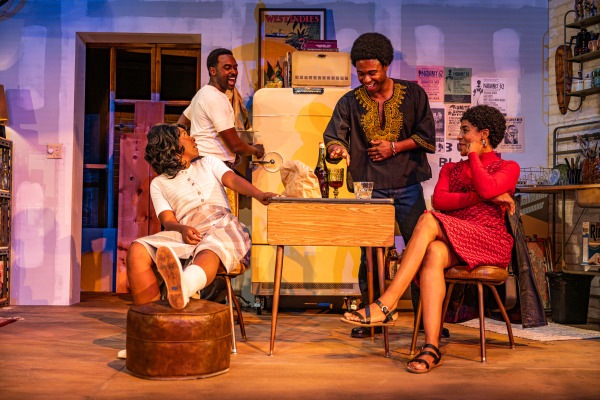
Alice Childress’s Wine in the Wilderness examines identity, perception and the tension between how people see themselves and how others define them. In his programme note, director Jordan Laffrenier emphasizes Childress’s refusal to idealize the people she knew, an approach that gives the play its candour and complexity.
Set in Harlem during the unrest of 1964, the play asks its artists to portray recognizable people amid circumstances that sharpen questions of class, race and representation.
Laffrenier’s clear, restrained direction allows those tensions to emerge through the ensemble’s sharply differentiated character work.
Scott Penner’s expansive set convincingly fills the Berkeley Street stage with the details of an artist’s apartment, including floor-to-ceiling windows. Daniel Bennett’s lighting traces the fading daylight and the onset of evening, while Olivia Wheeler’s understated sound design supports the scene without calling attention to itself.
The action unfolds in the apartment of painter Bill Jameson (Mazin Elsadig), who is completing a triptych on Black womanhood titled Wine in the Wilderness. The first two canvases depict a child and an idealized young woman. For the third, Bill seeks a model he regards as undereducated and defeated—a reductive conception that establishes the play’s central conflict.
Bill’s visitors represent different experiences of the surrounding upheaval. Oldtimer (Andrew Moodie) arrives with goods taken during the looting. Sonny-Man (Jamar Adams-Thompson) and his wife, Cynthia (L.A. Sweeney), bring Tommy (Virgilia Griffith), whose apartment has burned down, believing she is a good fit for Bill’s unfinished portrait. They do not tell her the purpose of the visit.
The ensuing attraction between Bill and Tommy is complicated by the concealed reason for her presence and by Bill’s assumptions about her life.
Moodie gives Oldtimer an effective comic rhythm, then handles the character’s accidental disclosure of Bill’s intentions with sufficient gravity. The revelation shifts the production from social comedy toward a more pointed reckoning with prejudice and self-definition.
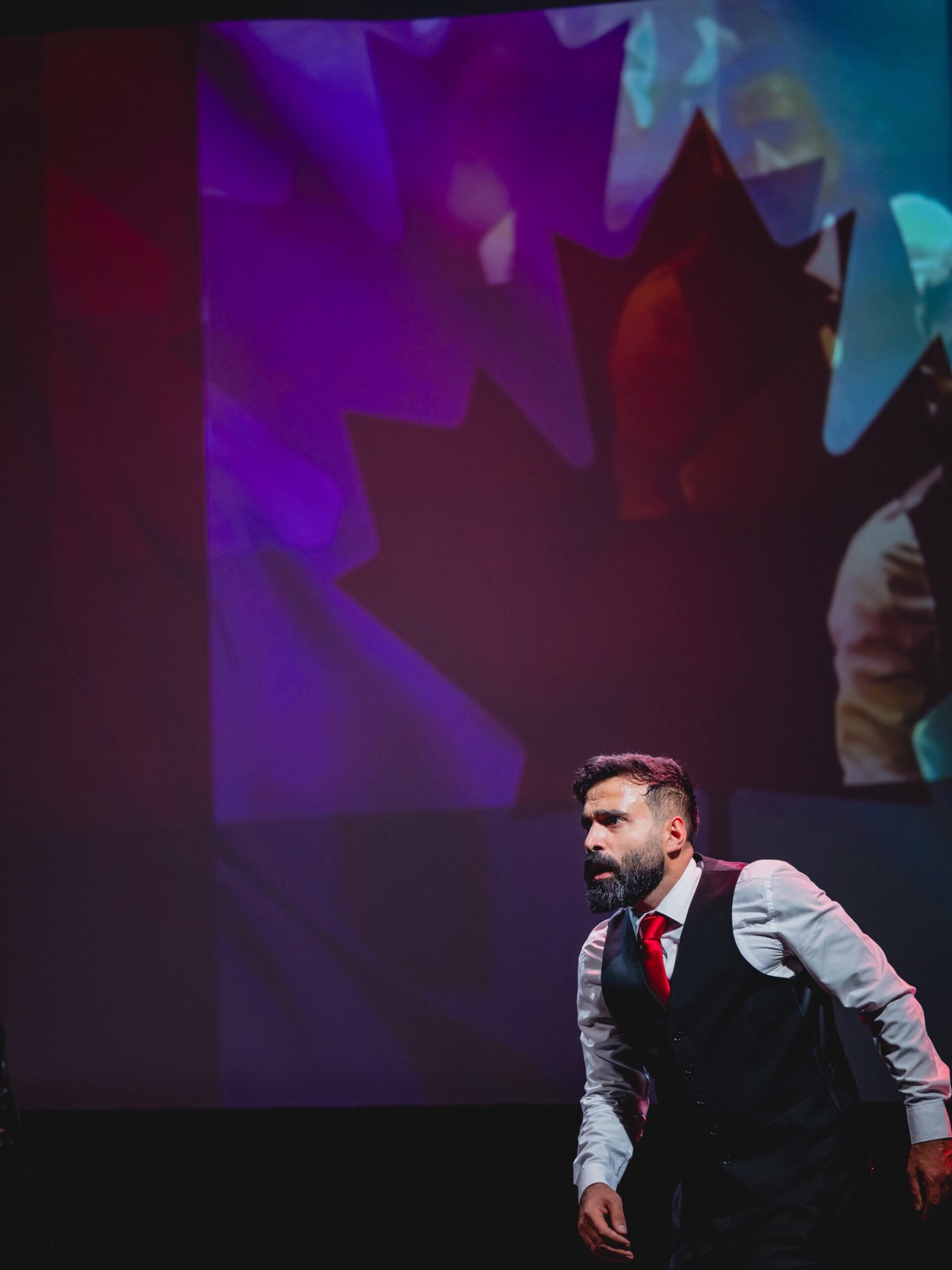
Elsadig presents Bill as assured, articulate and committed to his work, while gradually exposing the condescension beneath that confidence. The performance makes Bill’s artistic idealism and his patronizing view of the prospective model uneasily compatible, giving the character’s eventual confrontation with the truth its force.
Griffith gives the production its strongest performance as Tommy, combining directness, wit and composure without reducing the character to a symbol.
In scenes where Cynthia advises Tommy how to conduct herself before Bill, Griffith registers the limits of that prescriptive thinking while keeping Tommy’s response grounded. When Tommy sits for the portrait, her poise alters the balance of the room. Griffith makes clear that Tommy is more perceptive and informed than Bill has assumed, letting Childress’s critique emerge through performance rather than declaration.
The production’s emphasis on who has the authority to define another person gives Childress’s 1969 play continuing relevance without requiring a forced contemporary parallel.
Wine in the Wilderness remains most persuasive when it lets its characters contest the images imposed on them.
As Laffrenier notes in the programme, the Harlem unrest functions not merely as background but as a context in which Black characters assert their own definitions against those placed upon them.
The result is a measured production that gives the play’s debates about identity, class and representation room to unfold, led by Griffith’s precise and assured performance.
Running time: approximately 85 minutes with no interval/intermission.
The production runs until October 11 at the Berkeley Street Theatre, 26 Berkeley Street, Toronto. For tickets: canadianstage.com, call (416) 368-3110 or boxoffice@canadianstage.com.
CANADIAN STAGE presents
Wine in the Wilderness by Alice Childress
Directed by Jordan Laffrenier
Set and Costume Design: Scott Penner
Sound Design: Olivia Wheeler
Lighting Designer: Daniel Bennett
Performers: Jamar Adams-Thompson, Mazin Elsadig, Virgilia Griffith, Andrew Moodie, L.A. Sweeney