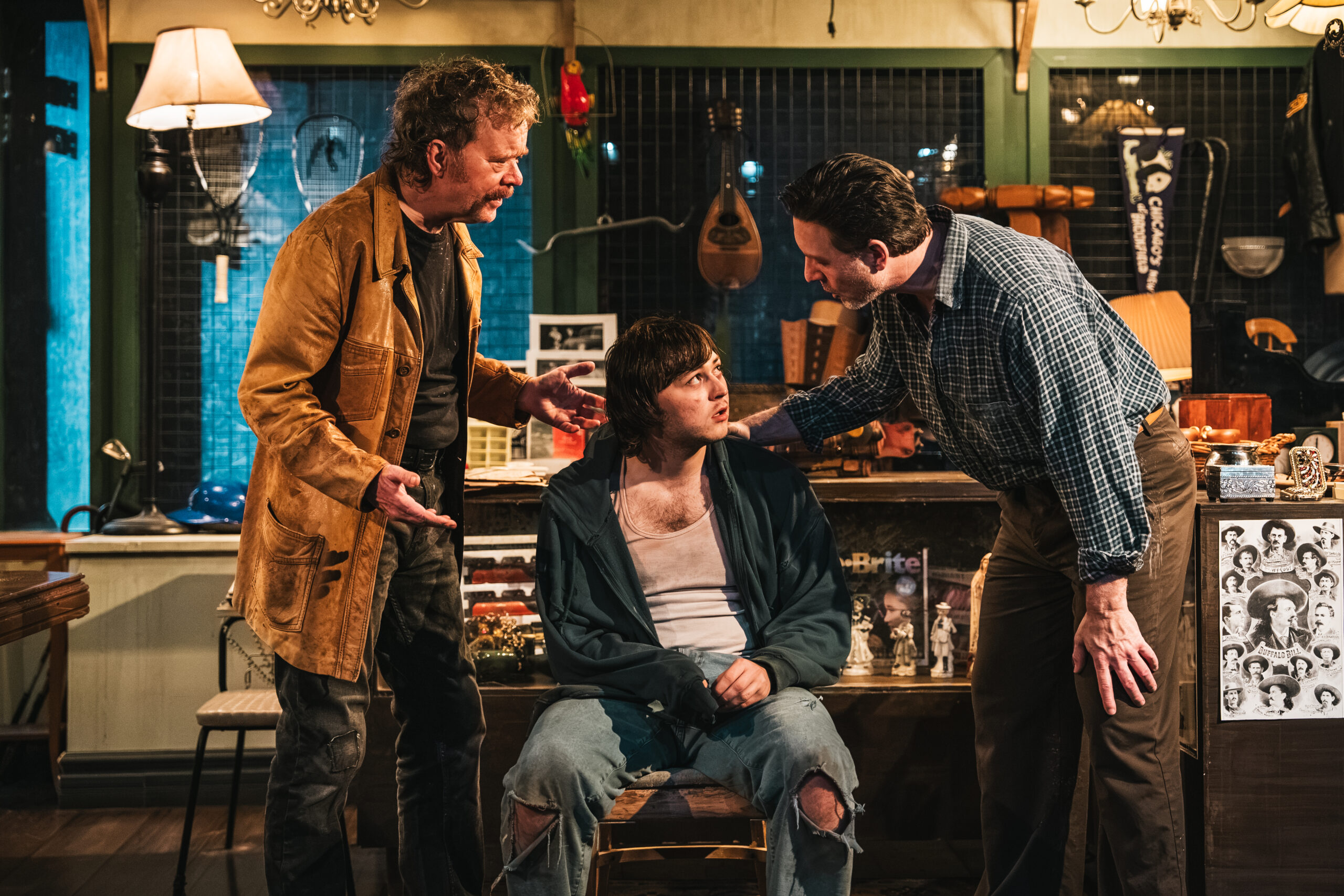


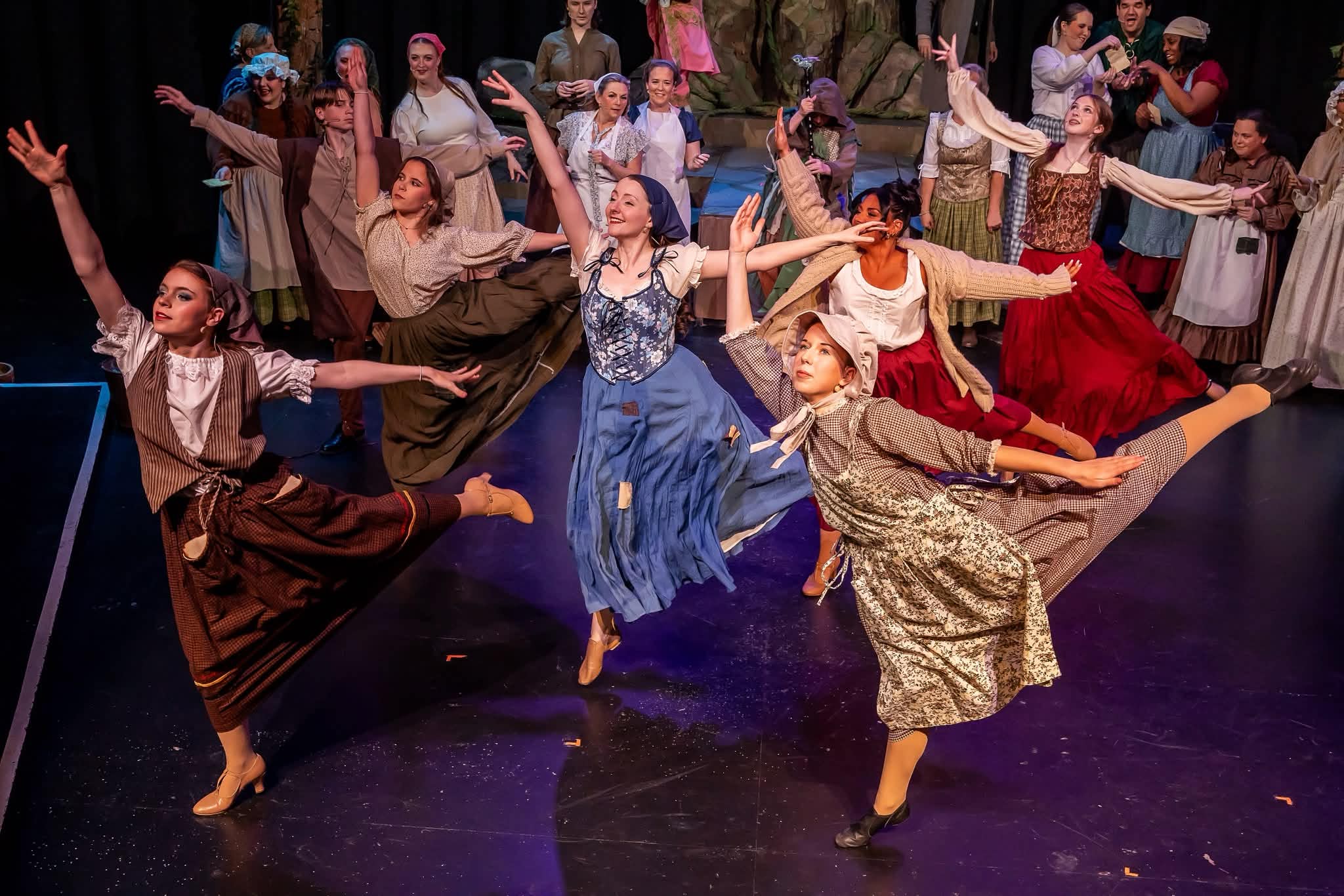
Queensville Players brings the familiar magic of Rodgers and Hammerstein’s Cinderella to Keswick’s intimate Stephen Leacock Theatre in a charming, family-friendly production that offers younger audiences a welcome introduction to musical theatre.
Featuring a cast of 28, the production also has nostalgic appeal for Baby Boomers who remember the 1965 television adaptation starring Lesley Ann Warren. The musical’s enduring songs and familiar fairy-tale story continue to offer audiences an opportunity to rediscover this much-loved classic.
The 2013 Broadway production was a revised version of Rodgers and Hammerstein’s musical. Hearing these familiar songs again evokes memories of a different time and place, demonstrating the enduring emotional appeal of Rodgers and Hammerstein’s music.
Ever since her father’s death, Ella (a terrific-sounding Rebecca Rodley) lives with her wicked stepmother, Madame (a delicious, over-the-top Felicia Chesterton), and her two horrible stepsisters, Charlotte (Meredith Mullen) and Gabrielle (Alyse Squirrell). They tease Ella mercilessly because she sits by the fire all day. They call her Cinderella.
The parallel story follows Prince Topher (Johnny McGroarty), short for Christopher. Topher is the nice guy who wants to do what is right in honour of his parents, the King and Queen, who have passed away. Topher and Ella meet one day, and their attraction is immediate, setting the familiar fairy-tale romance in motion. As in all storybook musicals, the young lovers are thwarted at every turn, leaving audiences wondering whether they will ever be together. By the end of the musical, the lovers are together, the obstacles have been overcome, and everyone lives happily ever after.
I don’t want to give away too much of the plot or the characters because that’s part of the fun of rediscovering the musical.
Mark Forrester’s set design of a storybook tree sits prominently centre stage. Arin Hincer’s costume designs are fine recreations of colours and fabrics. Neil Shanks-Marshall’s lighting continues to build intensity in each scene. Camille Dziewurski’s diligent work as choreographer ensures the dance movement fits the intent. The ballroom dancing is quite lovely to watch. Although the programme does not identify a Sound Designer, credit is due to Mic Sound Operator Mark Forrester and Music Sound Operator Vincent Yau for ensuring that the lyrics remain clearly audible throughout the solo, duet and full-company numbers.
Credit is also due to Music Director Doug Hammond for ensuring that the recognizable songs from the 1965 television adaptation still strike an emotional chord between the two young lovers. Two moments include Act 2’s ‘Do I Love You Because You’re Beautiful?’ and Act 1’s ‘Ten Minutes Ago’.
Rebecca Rodley sings with an angelic quality, capturing Ella’s innocence and youthful spirit. Her moments with Jennifer Briggs-FitzGerald’s Marie, who also sings beautifully, are among the show’s highlights, most notably in ‘Impossible’ and ‘It’s Possible’. As the wicked stepsisters, Meredith Mullen and Alyse Squirrell become comic foils to Rodley’s Ella. However, their exaggerated squeals occasionally become painfully loud through the microphones, overwhelming the dialogue and comic effect. Greater vocal control would make their performances even more effective. McGroarty’s Topher is dashing and debonair, his immediate attraction to Ella providing a winsome reminder of the joys of young love.
Michael Winn Johnson directs with purpose to ensure audience enjoyment. He maintains a lively pace so interest in the story doesn’t wane. At the performance I attended, that didn’t happen. There were many young children in the audience, and from their excitement at intermission, they followed the story intently.
Johnson also deserves credit for coordinating the movement of 28 performers on and offstage without disrupting the production’s flow.
But one theatrical issue deserves attention, particularly because community theatre companies should be mindful of maintaining the visual integrity of their productions.
Queensville Players has worked diligently to establish an enchanting storybook atmosphere. However, backstage crew members dressed in black and wearing headsets during scene changes disrupt the theatrical illusion. A possible solution would be to incorporate the crew into the visual world of the production through appropriate costumes or, alternatively, to reconsider how scene changes are executed so that the transitions become less conspicuous.
In his Director’s Note, Johnson writes that he is new to Queensville Players, and he is thrilled to share Cinderella’s story with audiences. He expresses admiration for the company’s dedication and commitment to presenting a production that appeals to families and the wider arts community.
Queensville Players’ Cinderella offers an enjoyable afternoon or evening of family theatre. With attention to the visual distractions during scene changes and some refinement of the vocal amplification, the remaining performances could become an even more satisfying theatrical experience.
Running time: approximately two hours and 10 minutes with one intermission.
The production runs to November 29 at the Stephen Leacock Theatre, 130 Gwendolyn Blvd. Keswick. For tickets: queensvilleplayers.ca.