

While I have no educational background or training in opera, my review will comment on the production elements.
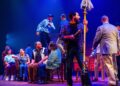
A brooding and spectacular production of ‘Pelléas and Mélisande’ is now playing at the ever-elegant Koerner Hall in Toronto.
Debussy’s impressionistic opera is staged by Opera Atelier along with Artists of Atelier Ballet and Tafelmusik Orchestra – a coalition that has created several highly regarded productions, including last year’s ‘The Magic Flute.’
Claude Debussy’s only complete opera has been widely considered original or even revolutionary. Unlike Mozart’s ‘The Magic Flute’, which roars with colour and sound, charging out at the audience, Pelléas and Mélisande, with its dreamlike imagery, draws the audience in to the mysteries. Director Marshall Pynkoski, with his opening remarks, hoped the audience would leave the theatre with more questions than answers – he got his wish.
The overarching plotline is not difficult to follow – it is the undercurrent of unreality and dreamlike mystery that makes up the hidden section of the glacier.
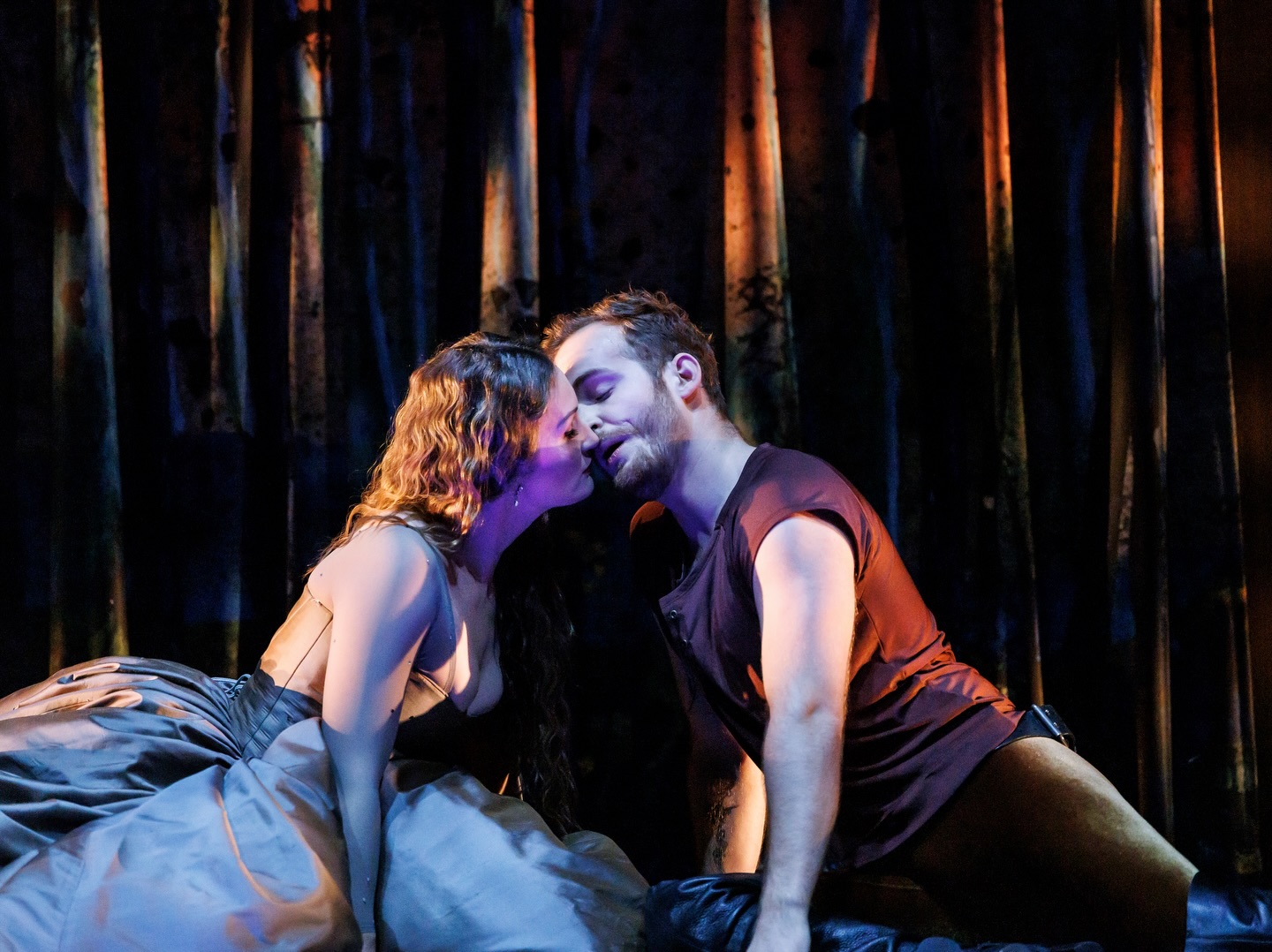
The widowed prince Golaud (strikingly played by Douglas Williams) finds himself lost in a strange forest where he meets the beautiful Mélisande, equally lost. In a letter to Golaud’s mother, he describes his adventures and his marriage to Mélisande (Meghan Lindsay) and asks for preparations for his homecoming. Here come our questions – married alone in a forest? Married to someone he knows nothing about?
Settling at home, Golaud suspects his younger half-brother, Pelléas of intimacy with Melisande. He awakens from a dream-like state and learns that Melisande has lost her ring, and he rages and sends her to search for it.
Various events mark changes in the household, both negative and positive. Golaud’s jealousy grows to the point of violence, and tragedy ensues.
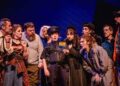
Williams, Lindsay and Antonin Rondepierre as Pelléas carry much of the load, and their skills are remarkable. As mentioned, this opera is not filled with highlight arias or extensive audience-favourite trills – the brooding subtlety of Debussy’s work is underscored beautifully by this cast.
The ever-popular Measha Brueggergosman-Lee highlights the strange scene in which she reads aloud the curious letter from Golaud. Another wonderful performance comes from Cynthia Akemi Smithers playing Golaud’s young son Yniold. Her acting range takes her from the bright athletic boy to a tragic victim of her father’s bitterness.
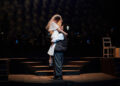
Mystical elements are ever-present in Gerard Gauci’s enigmatic set design. Towering ramps, dark projections and symbolic surprises underscore an ambiguous reality. Melisande’s hair, falling from a tower, sparkling dust, was astounding.
The potent leadership of David Fallis as conductor of Tafelmusik Orchestra has been consistent over the years. The inclusion of period instruments enriches both the sound and the experience.
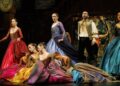
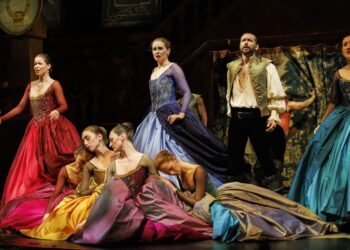
The Atelier Ballet also enriches the production. Much like a Greek Chorus, Jeannette Lajeunesse Zingg’s choreography responds to dark events and often manipulates the movement of actors. Michael Gianfrancesco’s design of darkish crinoline on the dancers consolidates the mournful mood.
In the program, it was notable to see remarks by Bertrand Pous, the Consulate General of France in Toronto. He comments on the Consulate’s partnership with Atelier and, in particular, Atelier’s embracing of Antonin Rondepierre, a French national. Such international connections can only enrich the theatre community.
Debussy’s opera asks an audience to look inward, and we may come away with the aforementioned ‘questions.’ Along with that, though, we come away with a gorgeous evening of music and drama.
‘’Pelléas et Mélisande’ by Claude Debussy
Performers: Measha Brueggergosman- Lee, Parker Clements, Meghan Lindsay, Antonin Rondepierre, Phillipe Sly, Cynthia Akemi Smithers, Douglas Williams.
Also: Artists of Atelier Ballet, Tafelmusik Orchestra.
Director: Marshall Pynkoski
Conductor: David Fallis
Choreographer: Jeannette Lajeunesse Zingg
Set design: Gerard Gauci
Costume design: Michael Gianfrancesco
Runs through: April 19, 2026.
Tickets: operaatellier.com