
*All profiles are compiled by Joe Szekeres
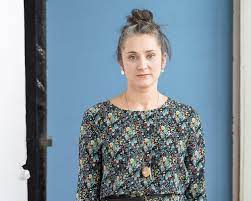
Hannah Moscovitch
I have either read or heard of Hannah’s name over the years in the entertainment section of the newspaper (is there such a section anymore?) or in discussion with others who have a keen interest in Canadian theatre. When I sat on play reading committees for various amateur theatre groups years ago, I can’t recall if I had read anything by Hannah or not.
After reviewing two extraordinarily fine productions of her plays ‘Sexual Misconduct of the Middle Classes ‘and ‘Old Stock: A Refugee Love Story’ at Toronto’s Tarragon Theatre, I certainly want to keep aware of Hannah’s upcoming works. I found both productions exceptionally theatrical while crossing boundaries of all sorts with a fine mixture of psychological drama added to pepper character development. While a prolific and exceptional playwright, Hannah is also a TV writer (‘X Company’ which I did watch on CBC) and librettist.
Regretfully I bow my head as I did not have the chance to see ‘The Secret Life of a Mother’ or ‘Bunny’ where I heard artist Maev Beaty’s stunning work was captured exquisitely. I hope and trust there is an opportunity to see both works in the future once we’re all allowed back in the theatre.
Hannah and I conducted our interview via email:
1. It has been nearing three months now that we have been under this lockdown. How have you been doing during this period of isolation and quarantine. How has your immediate family been doing?
We are good. None of us are sick. We have money. We live in Nova Scotia where there are a small number of people – it’s easy to stay isolated here. My work is solitary for long stretches so I am used to being alone.
2. Were you involved or being considered for any projects before the pandemic was declared and everything was shut down?
I’ve had, I think, seven shows cancelled or postponed so far. New productions of ‘Sexual Misconduct of the Middle Classes’ in Edmonton and Melbourne Australia and international tours of ‘Old Stock: A Refugee Love Story’. A couple of workshops of new projects have been pushed back – ‘Post-Democracy at PTE’ and ‘Ten Days in a Madhouse’ at Opera Philadelphia. More will be cancelled or postponed soon, I think. But there’s a worldwide pandemic so, uh, that seems like the right choice.
3. What has been the most difficult and/or challenging element of this period of isolation for you?
I have half the work time because my son is home. He’s only four. There are still big expectations on me to meet deadlines, as though I don’t have a kid at home, so that’s been harder, I feel crushed by work. On the bright side, I have work.
4. What have you been doing to keep yourself busy during this time of lockdown?
I think this question applies to people without children. I am busy all the time. There is not a minute I’m awake that I am not working flat out or with my son. It feels relentless at times, in fact. It’s complicated because I love my son and my life, but it’s hard not to let the work pressure colour what is actually beautiful time with my son. Anyway, I am not lonely or bored or in need of distracting activity.
5. Any words of wisdom or sage advice you would give to other performing artists who are concerned about the impact of COVID-19? What about to the new theatre graduates who are just out of school and may have been hit hard? Why is it important for them not to lose sight of their dreams?
Jeez. Pandemic circumstances are new, so I can’t draw on any experience or theories of mine to offer advice or consolation.
6. Do you see anything positive stemming from this pandemic?
I hope that empiricism and science and rigorous truth-making systems will be re-established, and that the right wing won’t so breezily make up facts like “coronavirus is a hoax”.
7. In your estimation and informed opinion, will the Canadian performing arts scene somehow be changed or impacted as a result of COVID – 19?
I think it already has. There are theatre companies that are going bankrupt. There are artists who won’t be able to hold out, financially, and will opt out of this industry, taking their talents with them. There are established artists who are turning to other mediums – publishing for instance – to get through. Artistic Directors speak regretfully about how new works will be stalled. Listen, there may be good outcomes too – we aren’t at that moment yet.
8. Many artists are turning to streaming/online performances to showcase/highlight/share their work. What are your thoughts about this format presentation? Any advantages to doing this? Disadvantages? Are you participating or will you be participating in this presentation format soon?
I gave a 20-minute talk on this recently for Canadian Stage. The short version is I think it makes sense to maintain audience bases via archivals. I’m interested in live online work, and I have no doubt iterations of it will blow my mind. I do also think theatre people going online live could consult with people in the TV industry who are more familiar with the medium and get good help.
9. What is it about the performing arts scene you still love given all the change, the confusion and the drama surrounding the theatre community from Covid 19?
I love that it’s a supportive community, and that everyone is managing to be kind in a difficult situation.
With a respectful acknowledgment to ‘Inside the Actors’ Studio’ and the late James Lipton, here are the ten questions he asked his guests at the conclusion of his interviews:
a. What is your favourite word?
Love.
b. What is your least favourite word?
Words used to demean people.
c. What turns you on?
I’ve given long and short ones below, Joe. (Note: I had no issue with this, especially when you read Hannah’s answer to question d.)
Short Answer: Right now I’m into the TV show Normal People.
Long Answer: Right now I’m into the TV show Normal People, and I have been listening to Connie Walker’s podcast which is so extraordinarily good – Missing and Murdered: Finding Cleo and Who Killed Alberta Willians, and I just read “My Year of Rest and Relaxation” by Ottessa Mohsfegh which I loved.
d. What turns you off?
Short Answer: Right now? The murder of George Floyd by Minnesota police officers.
Long Answer: I’m turned off by reconciliation in Canada without justice or a reckoning for Indigenous communities. I’m Jewish, and we don’t believe in forgiveness without justice – that’s a Christian concept. I’m turned off by the failure in Canada to take responsibility for the genocides and atrocities of the past and the present on a systemic level.
I love Canada, and so I’d like Canada to be better, I’d like our country not to just pay lip service to taking responsibility. I want us to actually reckon with our fucked up prisons, fucked up child welfare systems, fucked up police forces where racism is entrenched, fucked up drinking water, fucked up governments responses and our overt and insidious racism towards Indigenous people. I feel strongly about it because I come from a people against whom atrocities and genocides have been committed. I can’t distance myself from it.
And listen I want to say I didn’t know very much about what was going on with Indigenous communities until the last few years – and it took me a while to really get the full scope of the horror, and to wrestle with my own false ideas about Canada, so.
e. What sound or noise do you love?
The wind. In particular on Northern Atlantic beaches.
f. What sound or noise bothers you?
It distresses me, on a physical level, when babies cry. Even though my son is four now when I hear that sound I get ready to run towards it.
g. What is your favourite curse word?
Fuck.
h. What profession, other than your own, would you have liked to attempt?
War journalism.
i. What profession would you not like to do?
Vermin control.
j. If Heaven exists, what do you hope God will say to you as you approach the Pearly Gates?
I guess if I think about God as being my mother and father, and my sister, and my husband and my son, combined, I can say I’d like them to say to me: “Hannah, I love you and you’re a good person. You have made my life good. You’ve done your part. It’s going to be okay.”
Hannah Moscovitch
I have either read or heard of Hannah’s name over…
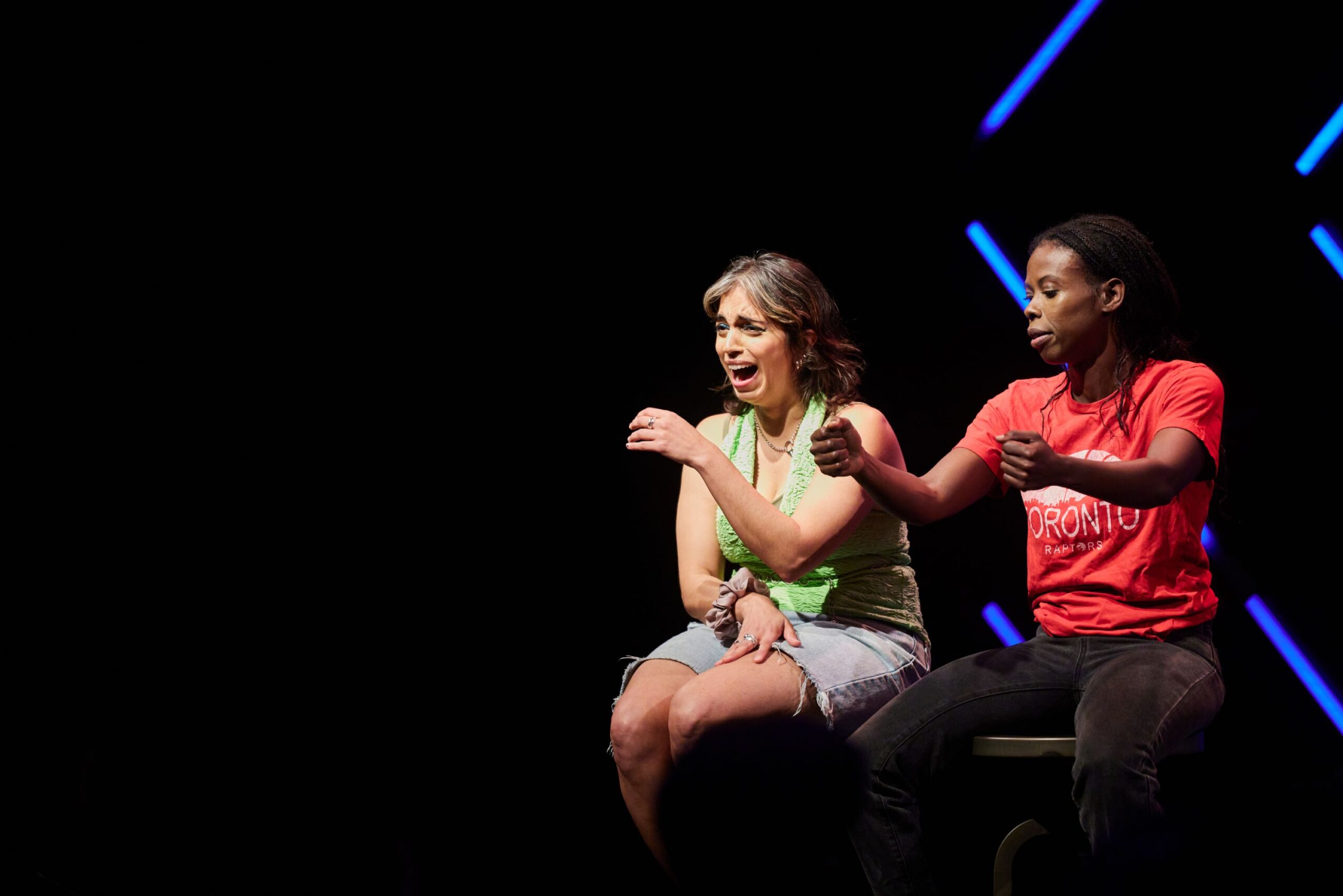
Hannan Younis and Rakhee Morzaria
The Toronto Sketch Comedy Festival will celebrate its 20th anniversary from March 5 to 16, 2025. It will showcase contemporary sketch comedy, storytelling, musical comedy, and clowning. Over 70 troupes from North America will perform high-energy acts.
Recently, I held an online conversation with performers Hannan Younis and Rakhee Morzaria. They will perform ‘My Best Friend’s Friend’ on March 12 at Toronto’s The Theatre Centre.
More about their upcoming show shortly.
Comedy is a complex art form. It’s not an easy one to perform live.
What does comedy mean for a twenty-first-century audience? Is there anything that a 21st-century audience should consider when attending comedy?
For Hannan and Rakhee, comedy is always rooted in truth and their experiences. They are both racialized artists, and their experience of the world is filtered through this lens. For them, the most important thing in their comedy is to write what’s true for them, what makes them laugh, and what spooks them.
I find it interesting that artists who work in comedy also search for truth and experiences, just as theatre actors constantly search for truth and believability in their performance work.
Performers in comedy aren’t just born. It must start somewhere and be nurtured.
Where did this nurturing begin for the two of them?
When looking at college brochures in high school, Hannan started a descent into comedy. Enrollment in 2004 in the Humber Comedy college programme followed. Rakhee started Second City in 2013 and completed their Conservatory, Bob Curry Fellowship (meeting Hannan followed) and worked on their mainstage in their Education Company, Family Company. Rakhee also made a comedic digital series in 2018, which was an incredible learning experience. The series was nominated for a Canadian Screen Award.
Some comedy performers typically had mentors throughout their career journeys. Who were some of Hannan and Rakhee’s mentors in comedy?
Their response was interesting:
“The audience…that sounds like a really weird answer, but our art is contingent on an audience coming out and giving us feedback. We write what’s honest and true and funny for us, that’s our voices – and no one can teach us about that except for ourselves (and our core group of comedy friends who encourage and empower us). In terms of honing skills and getting stronger in our craft, it’s about audience response and trying things out over and over to understand the mechanics of why something is working or not…it’s about being true to our message and figuring out the strongest way to communicate it.”
Their show, ‘My Best Friend’s Friend,’ opens March 12. It concerns two comedians trying to forge a friendship through the creation of their new, never-before-seen experimental comedy show. But the two of them whetted the appetite just a bit more.
Hannan said the show came to be because they share the same best friends. They didn’t want to do a show with us, so we made the show to spite them. Rakhee playfully added that since the two of them have hung out since 2015, they haven’t created something together since then. They got to know each other through the show.
Rakhee calls it very meta.
Are there any messages the two would like audiences to take away after seeing “My Best Friend’s Friend?”
Both agree:
“To be yourself and have fun.”
What’s next for them when the Comedy Sketch Fest concludes at The Theatre Centre?
They’re planning a tour of “My Best Friend’s Friend.”
But there’s something else they’re keeping in mind regarding the tour:
“Given the way things are going globally, it feels like the right time to dig our feet in and build an arts community that we’ve always wanted. We’re also writing a television show, but it’s under wraps so we can’t get into details at this time. You’ll have to stay tuned.”
To learn more about the Toronto Sketch Comedy Festival at The Theatre Centre, go here:
Hannan Younis and Rakhee Morzaria
The Toronto Sketch Comedy Festival will celebrate its 20th anniversary…

Heath V Salazar
This time of isolation from live theatre and the emerging civil and social reforms have certainly made me aware of the importance of hearing from as many voices as possible within the artistic community. Several of the artists profiled have been extremely helpful in suggesting names of individuals who deserve to be highlighted.
I was pleased when two artists suggested Heath V. Salazar. In the twenty-first century, it’s wonderful that we have social media sites like Facebook to make initial introductions; however, nothing beats speaking to a person face to face which is what I hope I can do in the near future with all of the artists I’ve profiled so far, and when it’s safe for all of us to return.
And I was grateful to make an introduction as Heath told me they would be delighted to be profiled for this series
Heath V. Salazar (they/them) is a Dora Award-winning trans-Latinx performer and writer. Since graduating from Randolph College for the Performing Arts, Heath has developed a body of work as an actor that spans the gender spectrum in both theatre and film. Within the drag world, they perform multidisciplinary draglesque as Gay Jesus and are featured on Season 1 of the CBC Arts’ Canada’s a Drag. Through their writing, Heath was selected for the Spoken Word Residency at the Banff Centre of the Arts (’17) as well as the Emerging Creators Unit at Buddies in Bad Times Theatre (’18). In addition, Heath has gone on to teach as a guest lecturer at the University of Toronto.
Currently, while Heath continues the development of their short film, Préstamo, in partnership with director Tricia Hagoriles, they’re also an Artist in Residence with both Aluna Theatre and Buddies in Bad Times.
It appears that after five exceptionally long months, we are slowly, very slowly, emerging to a pre-pandemic lifestyle. Has your daily life and routine along with your immediate family’s life and routine been changed in any manner?
My daily life and routine have changed drastically over the course of the past five months. As a multidisciplinary artist, I’m accustomed to working multiple gigs throughout the week that involve audiences or being in close proximity with large groups of people. In addition, as a queer and Latinx creator, I personally hold a strong community focus within my work which involves actively engaging with audiences outside of a performance setting as well as regularly attending community events.
Due to safety restrictions, all of those spaces were put on pause which has completely altered my everyday life.
However, that community focus has been a great contributor in motivating me to seek out alternate platforms and methods of creating that allow me to remain in connection and of service to my communities and those around me.
Were you involved or being considered for any projects before the pandemic was declared and everything was shut down?
There are a number of projects that I was preparing for when the pandemic was declared. In addition to local gigs and performances, I was in the midst of making arrangements to move to Stratford, Ontario for the summer to perform as Rafe in Wolf Hall as a company member at the Stratford Festival. In the past year, I’ve been involved in creation and research development programs at the theatre including working as a guest artist for their Laboratory Ensemble as well as for the Stratford Incubator. This would’ve been my debut performance with the company, however, in order to keep everyone as safe as possible, the theatre was forced to close.
Fortunately, the Stratford Festival has worked actively throughout the pandemic to continue upholding a sense of community with their company members. They’ve arranged mini-challenges and projects to bring people joy, they’ve ensured consistent and transparent communication, and when the civil right movement currently taking place began, they took the time to listen and have used their reach and platform to engage in productive and important conversation with Black and Indigenous artists and creators.
The state of our world, let alone our industry, needs to change and having a company like Stratford take accountability for its history engages a lot of people in a dialogue they may not otherwise have had.
Describe the most challenging element or moment of the isolation period for you. Did this element or moment significantly impact how you and your immediate family are living your lives today?
One of the most challenging elements of the isolation period for me, particularly in the beginning, was navigating limitations regarding my ability to bring aid to my loved ones and community. Safety isn’t something that’s afforded to everyone in our society. Even before the pandemic started, violence and discrimination against racialized trans people, particularly those who are Black and Indigenous, disproportionately affected their ability to access basic necessities such as housing, healthcare, and food stability.
Since the initial lockdown, those circumstances have only escalated but, since I had lost my employment for the foreseeable future, I felt very limited in my ability to help.
However, the work I’ve done over the years has allowed me to learn from some of the most incredible activists on how to provide community support in ways that don’t involve monetary donations, and that translated very well even in a time of isolation and social distancing. This came heavily into play over the past couple of months.
Ways to help can range from promoting and sharing information about organizations that provide resources for marginalized communities, donating performances and/or performance fees for online fundraisers, attending protests and demonstrations that call for the reallocation of city/government funding to be put towards community resources, using social media platforms to share accurate information about how people are being affected and ways that your friends and peers can help, engaging in a personal dialogue with city officials to demand protections for our most vulnerable communities, learning about the impact that the redistribution of funds can have even on a minor scale, seeking out petitions with clear demands to bring aid to those in need and much, much more.
Quite often, difficult times can bring on feelings of despair and helplessness, but those I’ve had the privilege of learning from have shown me the impact that can take place when we stand together as a community.
What were you doing to keep yourself busy during this time of lockdown and isolation from the world of theatre? Since theatres will most likely be shuttered until the spring of 2021, where do you see your interests moving at this time?
During the time of lockdown and isolation from the world of theatre, I’ve largely pivoted my focus to online creation and performance as well as the development of new work through my residencies at both Buddies in Bad Times Theatre as well as Aluna Theatre. As a creator, my practice involves approaching work development from a holistic standpoint centering and prioritizing the human in human experience.
Working as storytellers within a capitalist context can, has, and does encourage toxic and damaging methods of working in order to ensure a high turnover of creation and consumption.
However, we as people are not products and if we’re going to tell stories about people, but all of them get damaged in the process, then what good are the stories? What are we actually saying when we tell them?
This pandemic has really highlighted those values for me. Life is very short and needs to be appreciated because, ultimately, we can’t stop ourselves from dying.
My main interests right now are nurturing my relationships with my loved ones and working to protect, empower, and advocate for those around me.
Sometimes that’ll be in the form of performance and sometimes it won’t. But life isn’t about performance, performance is about life; I’m making life my priority in whatever way that takes place.
Any words of wisdom or sage advice you would give to other performing artists who are concerned about the impact of COVID-19? What about the new theatre graduates who are just out of school and may have been hit hard? Why is it important for them not to lose sight of their dreams?
The greatest piece of advice I would give to performing artists and new theatre graduates concerned about the impact of COVID-19 is that your value as a person isn’t determined by the jobs you do and don’t book. Life will always bring what we least expect, but how we adapt influences the people we become as well as the world around us. As creatives, artistry can be a very personal element within ourselves but remember that though art is a glorious part of you, it’s not all of you.
Give yourself permission to become someone that you would admire in a way that centers your character, not your profession. That way, no matter what you do, your legacy will be one that you’re proud of.
Do you see anything positive stemming from this pandemic?
It’s a complicated thing to find the positivity in a time that’s brought people so much loss. However, I also think that there were a number of deadly crises taking place prior to the arrival of Covid-19 that were costing people their lives and weren’t being addressed until a mass amount of our population was forced to slow down. Canada has a consistent track record regarding the erasure of our history and the systemic racism upon which our country was founded.
Knowledge is powerful, but a lack of information hinders the ability to understand and address the long-lasting effects that this racism has had on people of colour on this land. The repercussions have manifested in our modern-day society through a number of violences including the mass amount of missing and murdered Indigenous women who have yet to receive justice, the disproportionate incarceration and murder rate of Black and Brown people at the hands of our police system, as well as the targeted violence experienced by our sex workers, particularly those who are Black trans women, only to name a few.
The world of theatre is largely regarded as progressive and inclusive, however, when we look closer, we find exclusionary practices that not only contribute to but encourage systems of oppression within both our workplaces as well as on a mass scale due to the number of people taking in the messaging within our work. My hope is that our companies and our theatre workers take this time to grow their scope of awareness in order to change the toxic culture that previously existed within our spaces.
We’re all capable of growth and, as an industry whose practice is so deeply steeped in compassion and empathy, I have faith in our potential to create a better work environment, and in the long term, a better world.
In your informed opinion, will the Toronto and the Canadian performing arts scene somehow be changed or impacted on account of the coronavirus?
I have no doubt that the Toronto and Canadian performing arts scenes will and have been changed on account of the coronavirus. This pandemic has cost people so much from their safety to their livelihoods and, worst of all, their loved ones. A lot of our people right now are grieving while others are ill, and we don’t know what our futures look like.
But when I turn to those around me in the performing arts scene, particularly disabled, 2SLGBTQ+, and BIPOC creators, I see phenomenal innovation and community care. This spans from performers, to writers, to lighting designers, and more. I’m watching, in real-time, as people adapt the use of the performing arts to keep one another alive and to share their ruthless faith for a new future.
Our practices across the board will have to be reassessed and adapt to our new circumstances. But I think that as long as we prioritize people’s safety and wellbeing over profit and product, we have a great capacity to improve and strengthen the future of our industry.
What are your thoughts about streaming live productions? As we continue to emerge and find our way back to a new perspective of daily life, will live streaming become part of the performing arts scene in your estimation? Have you been participating, or will you participate in any online streaming productions soon?
What I’ve found so far regarding the streaming of live productions is that it’s made the performing arts far more accessible for a lot of people. Our industry isn’t financially or physically accessible for many members in our communities which applies across the board from on-stage, to behind the scenes, to our audiences. I’ve received a lot of feedback in the past five months from people with a variety of different accessibility needs that being able to access performances, panels, and classes online has drastically changed their ability to become involved in and/or take in the performing arts.
This shows us that accessibility has been a possibility all along and that it’s crucial for it to be a priority in our work even as we begin to reconvene in person. We also need to keep in mind that viewing art online still has its limitations as it requires the ability to own a computer and have access to wifi, which simply isn’t a possibility for many people. As our industries slowly re-open and we develop new practices in regard to safety, it’s vital that we ensure accessibility becomes a core point in how we adapt moving forward.
These conversations have been prevalent for me in the past five months as a lot of my performance work has shifted to online. As a drag king, I watched the drag industry adapt very quickly. Within days of the announcement of the lockdown, drag artists were creating online content in a variety of different formats.
I, myself, have now participated in live online performances, fundraisers, interviews, discussion panels, and more. Most recently, I developed a three-part video series during Pride whose pieces were screened separately at online events throughout the month of June. The last piece in the series, All of the Above, can be viewed online through the CBC Arts website.
What is it about performing you still love given all the change, the confusion and the drama surrounding our world now?
Storytelling is an ancient practice and I chose the performing arts as a profession because I believe in their ability to influence monumental change within our society, thereby shaping our world. I grew up speaking three languages, so I’ve seen how limited words can be.
As a multidisciplinary artist, I view art as a form of communication that allows us to connect with some of the most profound parts of one another, as well as ourselves, in a way that transcends the confines of language. Performance allows us to document both our history as well our current human experience at the same time, all the while, influencing our future. It’s something I have great respect for and am incredibly honoured to be a part of.
With a respectful nod to ‘Inside the Actors’ Studio’ and the late James Lipton, here are the 10 questions he asked his guests at the conclusion of his interviews:
a. What is your favourite word?
Amor
b. What is your least favourite word?
Impossible
c. What turns you on?
Privacy
d. What turns you off?
Willful ignorance
e. What sound or noise do you love?
Family reunion rancheras at 4am
f. What sound or noise bothers you?
Sirens
g. What is your favourite curse word?
Nothing I’d let my mother read in an online publication
h. What profession, other than your own, would you have liked to attempt?
Immigration Lawyer
i. What profession would you not like to do?
Anything that involves euthanizing animals. I grew up in Sudbury, Ontario and as a teenager, I used to volunteer at the Science Center. The section I worked in specialized in caring for Northern Ontario wildlife but, for some of the animals, their feeding process involved having to euthanize mice.
Though I understood the importance, I just didn’t have it in me and, after seeing my face when my supervisors taught me the process, they thought it best that I not be allowed to do it because they were concerned I would free the mice.
They were correct.
j. If Heaven exists, what do you hope God will say to you as you approach the Pearly Gates?
‘Took you long enough.’
To connect with Heath, visit their social media sites on Instagram and Twitter: @theirholiness.
Heath V Salazar
This time of isolation from live theatre and the emerging…

Herbie Barnes
Toronto’s Young People’s Theatre new Artistic Director Herbie Barnes talks about the movers and shakers of the next generation to follow him at the end of this profile.
Even before this occurs, I am eagerly anticipating and waiting to see where he will take Young People’s Theatre just over the next five years itself because I would also call him a ‘mover and a shaker’ in the theatre industry.
According to YPT’S website: “Mr. Barnes is an accomplished playwright, performer, director and arts educator whose 30-year-career spans stages across North America. He was among the generation of young Indigenous artists in the 1990s breaking down barriers to forge professional careers in Canadian theatre. Mr. Barnes will officially begin his tenure at YPT in the fall of 2021.”
An Anishinaabe theatre artist from Aundeck Omni Kaning First Nation on Manitoulin Island, Mr. Barnes was raised in Toronto. His theatre career began in 1989 with Debajehmujig Theatre Group, touring Ontario with the first run of Drew Hayden Taylor’s Toronto at Dreamer’s Rock. Since then, he has collaborated with some of North America’s largest theatre companies and was nominated for a John Hirsch Director’s Award. His new play, Bent Boy, was workshopped at YPT and shortlisted for the Sharon Enkin Plays for Young People Award in 2020.
We conducted our conversation via Zoom. Thank you so much, Herbie, for the interview and for sharing your voice to the discussion:
We’re now one year without live theatre where the doors have been locked for who knows how long, Herbie. How have you and your family been faring during this time?
I have to say I’ve been one of the lucky ones, knock on wood. It started out where I thought it was going to be a two-week holdup when we got sent home from Magnus Theatre in Thunder Bay. And I went, “Oh, this is okay. I’ve been working a lot, and this is good, I’ll take a two-week break and then I’ll move on as we were supposed to take a tour from Magnus down to Nova Scotia.” I further thought we’ll pick up the tour in Nova Scotia and we’ll be fine and then I was going to go off last summer to work at the Charlottetown Festival.
No thought of this closing down for a year. And then it just kept going.
So, I took a little bit of a break at the beginning and then I thought I should find some work since I’m not working. I ran around and did a bunch of things online. We did children’s mysteries on the telephone through the Ministry of Mundane Mysteries. We would call kids on the Monday, Tuesday, Wednesday, Thursday, and Friday and create this mundane mystery. It was a great idea and the kids just latched right on to it and we got to play so many different characters. Brilliant, brilliant idea. So much fun.
I started teaching and taught all the way through. I did a program online where I was teaching young people. Theatre that I just filmed in this crawl space in my basement where you see me now that I get to kick around in.
I’ve been very, very lucky. My partner Marjie has been working almost straight through. My two kids were lucky, and they’ve been working right through too. Everyone’s healthy. What we did was we took the pandemic seriously. The hardest thing: my two kids live outside the house and so they weren’t part of our bubble. We have been masking from the porch to see them. Their grandparents put a big heater in the garage for visits.
I can’t wait until we can hang out with our kids again.
Outside any theatre stuff, what have you been doing since the industry has been locked up tight as a drum?
I’ve been doing a number of interviews and have been teaching in the evening from 3 pm – 9 pm. My afternoons are full so I’m booking a lot of morning events. I’m also writing for Charlottetown Festival right now and also sorts of little things all over the place.
I didn’t realize I was going to be that busy. One of the things I did I took a writing course for ‘Writing for Television’. I decided I was going to take guitar lessons online. I’m in the midst of building a guitar. I kind of got heavily online.
We have three storeys in the house. Marjie’s got the upstairs level where she is teaching classes in an office space she has. Down here, this has always been my space. I come down in the morning, make a pot of tea and then get lost down here for most of the day and then realize it’s 6:00 pm. so I go upstairs for supper. Marjie’s been great because she does all the cooking. I’m a horrible cook.
Every day, Marjie takes me for a long walk. We got to know our neighbourhood really, really well. Every once in awhile we’ll drive to somewhere else and walk around that neighbourhood.
The late Hal Prince has described theatre as an escape for him. Would you say Covid has been an escape for you, or would you call this time something else?
This is definitely not an escape. I haven’t escaped theatre. I’ve escaped…this is an awful way to put it but I’ve escaped the audience. Unfortunately, they’ve been on the other side of this screen which is totally different.
As a theatre artist THIS (Herbie points to the screen where we are talking) doesn’t compensate for what the theatre does. There’s nothing like a live audience. Even when I did film and television, I was always performing for the camera guys or the lighting guys. I never thought of that little box recording all of that. If the crew was laughing, then this must be working.
I miss the audience. I miss sitting beside somebody and having that same effect as the person next to me.
I’ve been telling this story quite a bit. We know the audience’s heartbeat is synchronous while they watch a show so that all 150, 300 whatever number of people, their heartbeat beats at the same pulse during theatre.
That’s an amazing feat live theatre accomplishes. I love that.
What I’ve been doing is developing. I’ve been working really hard having stuff lined up here; I’ve been teaching classes. There’s going to be a group of students coming out of this pandemic hopefully more prepared. My writing: I’ve finished writing a native adaptation of ‘Tartuffe’ which is getting produced this year at Magnus Theatre at least.
I’m also doing an adaptation of ‘My Fair Lady’ in a native context as well. I think it’s really interesting how the white guy or the settler in that case is saying that your language isn’t good enough and what it did to the First Nations people.
And also preparing to get ready to take over Young People’s Theatre in Toronto in October.
I’ve been more busy now since I haven’t been travelling. What travel used to do to me was I could block off three weeks while I was directing in Vancouver and not take work since I was directing. Now I’m free so I can take work up until 230 pm. I’ll write that, direct that, teach that and there are days when I come out of my basement Zoom tired.
I’ve interviewed a few artists since the pandemic began who have said they cannot see live theatre returning fully (or what might some call ‘normal’ or ‘back to normal’) until at least 2022. Yes, there may be pockets such as what the Stratford Festival is proposing. What are your thoughts about this? Will live theatre return before 2022?
I think theatres will open. I think by September 2021 we’ll start to see a crack with public spaces being open. I think audiences are thriving to be together.
I firmly believe that. But…
Audiences will be a little afraid to get into a space with each other. That will happen. Certainly, we will know, not in my case with YPT, a lot of theatres rely on older audience members. They’re going to make sure they’re safe first.
But I think the audiences are striving for that feeling. I think we are a communal animal. I think we need each other. We desperately need each other, and people are missing that. That’s the big thing. A lot of people are willing to risk in order to be with human contact.
I’m hoping it comes back even stronger.
I fear for our film industry. I think our film industry, and we’ve realized we can watch most movies on our home systems because we’ve got these great tv screens and being able to hook them up with incredible sound systems which don’t need to be that expensive, but the more expensive the better the sound. You can build a theatre in your own basement now with very little money.
Superhero movies are the big blockbuster now. They aren’t making the great small screen stuff now. Our tv shows are phenomenal. ‘Game of Thrones’ would have had to be a movie 25 years ago. Now we can watch this incredible journey.
I fear for our film industry, but I don’t fear for live theatre because there’s nothing like being in the same space waiting for that production to begin and feeling the same thing.
I had a discussion with an Equity actor who said that not only should theatre entertain, but more importantly, it should transform both the actor/artist and the audience. How has Covid transformed you as a theatre artist and in your new role as we all move forward post pandemic?
It’s given me a huge respect for theatre, that’s one thing for sure. I miss it.
I’ve been working in the theatre for over 30 years now. It’s been something that’s been a part of me. We’ve all had goals to do film and television, and I’d love to do more film and television because it pays well, it’s lucrative, there’s the instant gratification of knowing who you are.
Whereas in theatre, you slug it out. Theatre, you’re a plumber. You go to work every day, put a satchel over your shoulder and walk into the theatre. Few people recognize you. Even after the show, you can walk past people out into the middle of your audience, and they don’t know who you are because they are not on that stage.
With tv, it’s the instant recognition perhaps in a commercial.
Yes, we do go into the arts in order to get recognized a bit.
Being without theatre and that fear of it never coming back, yes, it’s a little bit but it’s still there, it’s re-grown my love for the theatre. I love being with the audience. I love opening nights being unsure of what the product you’ve got, that edginess.
I come from an improv background. When you’re out on that tightwire, not knowing how an audience will react, it’s the best. There’s nothing like it.
The late Zoe Caldwell spoke about how actors should feel danger in the work. It’s a solid and swell thing to have if the artist the audience both feel it. Would you agree with Ms. Caldwell? Have you ever felt danger during this time of Covid, and how will this danger influence your work as we re-emerge from the pandemic?
Do I agree with Ms. Caldwell? I somewhat do. We’re going through a different time right now. I grew up in an era where actors who were constantly put in danger emotionally, psychologically (it’s like pushing the envelope and trying to get deeper and deeper into the character).
Now, when we’re training, we’re doing less of that. Safety first, everything is about your emotional well being. I’ve seen lots of trauma in the theatre. Many of the actors before and during me endured a trauma being misdirected or harmfully directed in that sense. We’re taking greater care now to ensure actors can get on with their lives as students and as people in the arts.
I think theatre should push as far as we can. I think emotionally that’s our job to take audiences on an emotional journey. That’s it. Other than that, any of the arts – music, painting -it’s not about painting inside the lines. Great painters don’t paint inside the lines, they colour outside the lines. When I see a certain painting, I might go ‘Wow! Okay! I don’t know why but that’s different than that.”
Same with music. Right now with all of these television competitions, I hear amazing voices. What I miss is the emotion attached to it. When Neil Young and Joni Mitchell sing songs, I go “Wow!” Levon Helm didn’t have the greatest voice, and you can’t hear ‘The Night They Drove ol’ Dixie Down’ without welling up. Or Rick Danko in ‘Makes No Difference’. You can hear the hurting and heartache behind the song.
So that’s our role. The actor must take the audience on an emotional journey and feel like there’s danger. I tell my students when I’m writing or directing in the theatre or acting, I want my audience to pay for the whole seat but only sit on the corner of it. I want the audience to feel like they can save the person who’s about to die on stage or to stop that woman from falling in love with that bad man.
We need to push the emotion, but we must also keep the actor safe.
How is it going to transform after Covid? I think we’re going to be surprised where theatre is when we come out of Covid. I think we’ve had an incredible amount of protesting that’s gone on in this time.
A crazy amount of change is going to happen. People on the fringe are going to be let in IN A HUGE WAY, and theatre will transform. We won’t throw the European framework away completely, but we’ll explore other forms of theatre and be able to welcome.
The late scenic designer Ming Cho Lee spoke about great art opening doors and making us feel more sensitive. How has this time of Covid made you more sensitive to our world and how will it impact your life when you return to the theatre in your new role as Artistic Director?
Marjie and I were talking about this the other day on our walk. There is no way that we cannot think globally anymore.
We have all been included in this pandemic and there are no borders and no walls. Those borders are false borders so it’s amazing how quickly the pandemic spread.
It makes me aware of countries in the world that are different than me and how I have to be aware of them, how I have to be open with them, and how I have to exist with them.
I’ve said this before: I don’t believe in a minimum wage. I believe in a maximum wage. I truly believe we should set up a system where you’re only allowed to make a certain amount of money, and once you’ve hit that level of money (and I don’t know what amount it should be) you have to stop working and travel the world so that you get to see it. And you hit those countries not the Riviera, not England or Hawaii, you go to countries that are desperate and I think you start to see where that cheap piece of clothing comes from or that electronic device and this will change your outlook on life.
Covid has made me aware of how much I need people, aware of the rest of the world and aware of how much I want to be a part of it.
And we’ve come full circle back to the late Hal Prince who spoke of the fact theatre should trigger curiosity in the artist and the audience. How has Covid sparked curiosity in you as an artist and what will happen with your curiosity as you return in your new role as AD of Young People’s Theatre?
Curiosity? I want to hear 100, 000 different voices. That’s my curiosity. As a teacher, I’m interested and want to hear the voices of young voices, BIPOC voices LGTBQ2 voices. My goal is to go into areas we haven’t tapped into yet.
As a First Nations artist, I want to go North and go into the communities in the North. I know, growing up on the reserve, young people had little to do. We were good at playing sports, and the fear of going outside that, especially in the arts.
We need strong people to keep the interest in the arts going. We need strong teachers and educators to keep that energy going.
Those are the curiosities I want to seek out. I’ve always been a curious person so it opens conversations and I want to be a listener in a big way as the Artistic Director of Young People’s Theatre.
I think I have a couple of years of just hearing what the world is saying. That’s going to be my job there to listen to what the world is saying and then try to pass it on to the next generation of young people so they are the changers, the movers and the shakers.
That’s it.
To learn more about Young People’s Theatre, visit www.youngpeoplestheatre.org;
Facebook: @YoungPeoplesTheatre Twitter: @YPTToronto Instagram: @ypttoronto
Herbie Barnes
Artistic Director of Toronto's Young People's Theatre
Toronto’s Young People’s Theatre new Artistic Director Herbie Barnes talks…