

*All profiles are compiled by Joe Szekeres
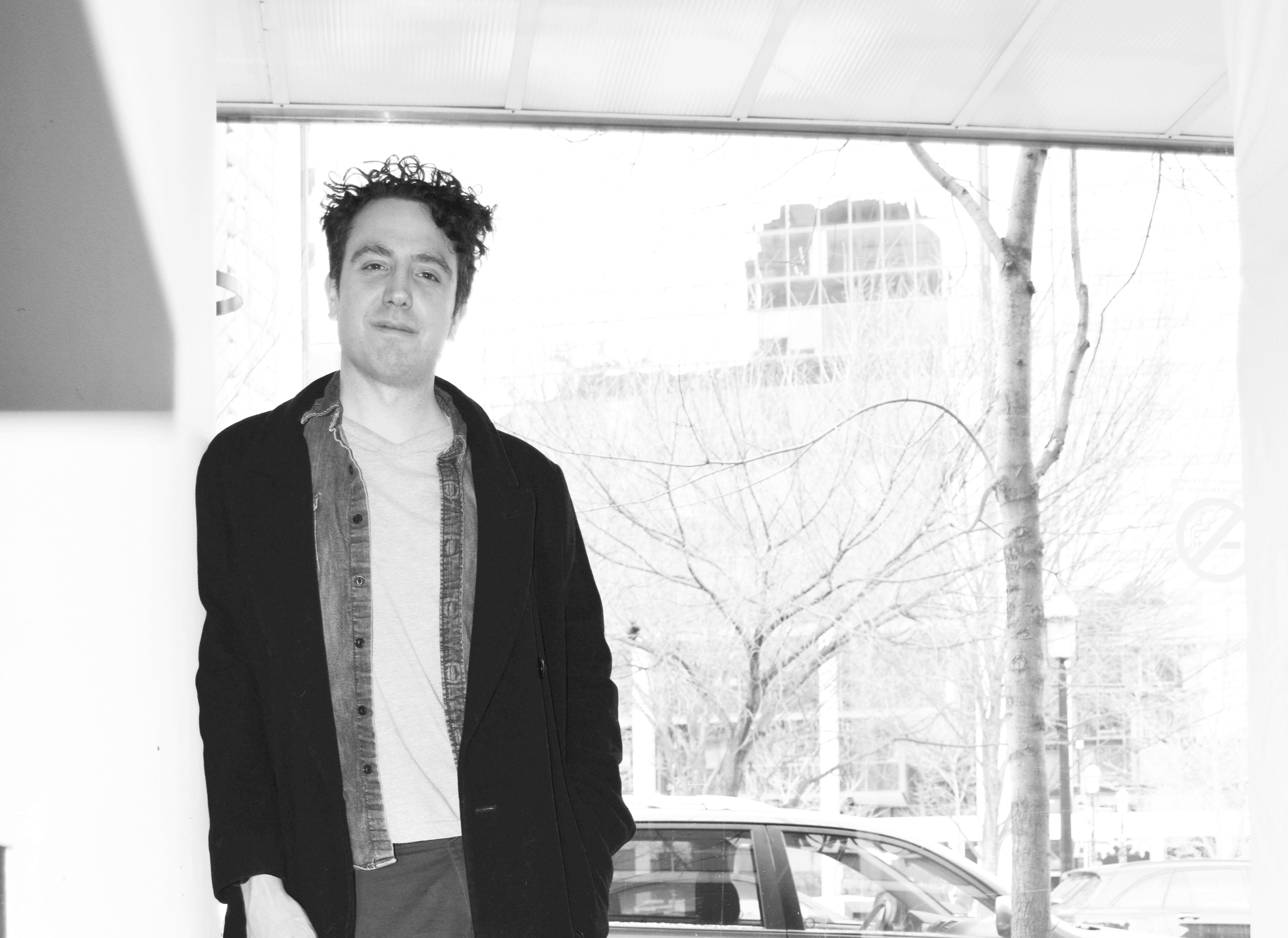
Iain Moggach
In my first profile of Iain Moggach during the height of the pandemic, I mentioned how other personnel from the theatre industry have described him with terms like whip-smart, astute, talented, and clever. These are just a few of the descriptors. He’s also one of those artists who makes you feel comfortable and at ease when you speak with him.
He says he’s extremely honoured by the accolades many have showered him with over the years. Moggach recognizes how people in the theatre industry pour their blood, sweat, and tears to make theatre happen in Canada, often without due credit, so he can’t help but be very touched that his work has been recognized. The messages of support and encouragement are motivating.
Moggach is also a modest fellow:
“I am very aware that most of the awards did not come from my work alone. It truly takes a village. I have tried my best to make sure that credit is provided and express gratitude to people whose work has helped make such accolades possible happen.”
He remembers the many artists and volunteers, juries, sponsors, and donors who made realizing the vision of various projects possible. He received the ‘Contributions to the Community Award’ last fall for the Barrie Arts Awards.
Much has changed significantly since he departed as Artistic Director at Barrie’s Theatre by the Bay. We’ll discuss that bombshell shortly.
Change is inevitable in the artistic career. He feels the artist must learn to embrace it fully when that occurs.
Ironically, for many years, Iain couldn’t even envision what life outside Barrie’s Theatre by the Bay would look like. Now that he is experiencing a different life, he discovers there is so much to learn, experience, and do. A philosophy or cause can also help keep an artist grounded during inevitable changes. Iain has ultimately realized that he has a desire to help people. As an Artistic Director, he aims to support local artists, enable the community to see itself more clearly, and understand itself from important perspectives.
Change in the way audiences respond to theatre is also inevitable. Iain embraces this change in the industry. He wants to help actors deliver their best performances, allowing the playwright to perceive their work in new ways without sacrificing the authenticity of what has been written. Moggach aims to assist designers in crafting worlds they can take pride in while aligning with a cohesive vision. His desire to help embodies what working actors are all about.
In return, being surrounded by inspiring and hardworking people inspires Moggach to work hard to help them. He has a loving network of family and friends upon whom he can lean during the challenging days ahead after what happened at Theatre by the Bay.
Iain says there have been incredibly emotional days since leaving Theatre by the Bay:
“ It has been a roller coaster, to say the least…it was not the way I could have imagined going out, but I stand behind the decision to leave and am the better for it. I put a third of my life into Theatre by the Bay and achieved many wonderful things, met amazing people, and created art I thought was interesting, important and creatively engaging.”
As every theatre artist knows, the work in the industry can be and is very hard.
Even before he decided to leave, Moggach intended to take a mental health break because he wasn’t sure how much he had left in his cup to give. Now he’s getting a chance to heal, realign, and refocus. He feels healthier, happier, and more aligned. Plus, he’s doing work that he finds fulfilling. Moggach can be a better husband and dog dad – all important and lovely things.
During the upcoming summer season of 2025, Iain will direct one of the three plays for Port Perry’s Theatre on the Ridge. Artistic Director Carey Nicholson is thrilled to have him on board.
Iain shared his past connection with Theatre on the Ridge.
After graduating from George Brown, one of his first directing projects was a production of ‘Romeo and Juliet’ that Moggach and actor Landon Doak adapted as a musical at Port Perry’s Old Flame Brewery in 2015. At that time, Theatre on the Ridge was known as Theatre 3×60. Nicholson saw the show.
In 2017, he participated in a week-long directing workshop led by Philip Akin. One of the participants was Nicholson, who recognized Iain and knew he had seen the previous 3×60 productions of ‘Peter Pan’. During that week, the two became friends and kept in touch, occasionally making calls and meeting. Nicholson viewed Theatre by the Bay as an example of the type of company she wanted Theatre on the Ridge to become.
She was also among the first artistic directors to reach out to Iain professionally after he stepped down from Theatre by the Bay. It felt like the time had finally come for them to collaborate.
Iain values Carey’s work in the Port Perry arts community and beyond. Her passion and results are extremely impressive and inspire support. Port Perry is where Moggach felt his career truly began. Now he’s back as his career starts anew.
Iain will direct playwright Vern Thiessen’s ‘Bluebirds’ at Port Perry’s Scugog Shores Museum and Village this summer.
It is a beautiful and powerful play about three Canadian nurses who bond during their service in World War One. Canadian nurses were in a league of their own and were called ” bluebirds ” for their iconic blue uniforms. The play presents a fascinating glimpse of Canadian history wrapped in a touching and engaging story.
Although it is still early, Moggach sees ‘Bluebirds’ as both evocative and a very physical play performed in the round, with as much of the music and other elements presented live by the three actors as possible.
For those who saw Iain’s work at Old Flame back in the day, ‘Bluebirds’ should capture the ensemble feeling with nothing hidden from the audience. This is his favorite way of working when it makes sense. He is looking forward to rehearsals because it should be very special and worth the trip.
Moggach also adds:
“With everything going on in the world, ‘Bluebirds’ story about the dedication of nurses, and (more generally) of the burdens women carry during times of crises feels quite topical right now.”
With tension lingering between Canada and the U.S., how does he view the future status of the Canadian theatre industry?
For a long time, Iain has believed it is important for Canadian theatre companies to present Canadian work. He has built his career on that belief and has also witnessed the benefits that come from that work.
However, as an Artistic Director, Moggach also understands budgeting, audience interest and engagement. While there are benefits that come from presenting Canadian story work live:
“Survival and convincing increasingly strapped audiences and donors to see shows and give money is going to be the priority. I can’t help but respect that decision. If Canadian work makes sense for your community and audiences, as it did with Theatre by the Bay,…then absolutely do it. But at this point we have to respect companies that do musicals, pantos, American and British classics and whatever else to get butts in seats right now.”
What lies ahead for the entrepreneurial theatrical Moggach?
Right now, he is consulting extensively for arts organizations, which includes creating strategic plans, corporate restructuring, and developing fundraising strategies. This work has been rewarding and serves as a great way to stay engaged before the next big opportunity arises. He is also applying for various jobs and opportunities to see what yields results.
Even if he doesn’t get that big flashy job somewhere, Iain is happy in the lane of directing, consulting, doing some advocacy work and trying to live a healthier, more wholesome life.
He concludes our online conversation:
“In this world filled with so much noise and anxiety, maybe that is enough. But my favourite project is always the next one, so I am ready and excited for whatever is next.”
To read my first conversation with Iain, go here: https://www.onstageblog.com/profiles/2021/3/22/theatre-conversation-in-a-covid-world-with-theatre-by-the-bays-artistic-director-iain-maggoch?rq=iain%20moggach
To learn more about the summer 2025 slate at Port Perry’s Theatre on the Ridge, go here:
Iain Moggach
In my first profile of Iain Moggach during the height…

Indrit Kasapi and Marjorie Chan
Before this great theatrical pause of 19 months, I had the opportunity to attend some productions at Theatre Passe Muraille which bills itself as one of Canada’s original alternative theatre companies currently developing and producing new Canadian plays. TPM is striving to articulate a distinct Canadian voice that reflects the complexity of our intercultural society. TPM believes there should be a more diverse representation of artists, audience members, and stories in its theatre. I was most appreciative of the time that two of its artists were able to take to speak with me.
Marjorie Chan is the Artistic Director of Theatre Passe Muraille. As an award-winning interdisciplinary artist, she primarily identifies as a writer with specific interest in contemporary opera and collective forms, while also maintaining an active practice as a dramaturge and director.
Indrit Kasapi is the Interim Managing Director of Theatre Passe Muraille. A graduate of Montreal’s National Theatre School of Canada he is well-known to the Theatre Passe Muraille community, having been the Associate Artistic Director under Marjorie Chan for the last two years— collaborating on programming, budgeting, producing as well as coordinating special projects. Prior to beginning in that role, Indrit was also the Accessibility Lab Co-ordinator which explored experimentation in access initiatives which recently culminated in a series of short documentaries.
Five years in the making, his play Toka (A Theatre Passe Muraille and lemonTree creations Digital Co-Production) for which he is the writer and choreographer, will finally be shared with audiences in the upcoming year. Indrit is also the Co-founder (along with Cole Alvis) of the prolific lemonTree creations, which was a TPM Company-in-residence for the past three years.
We conducted our interview via Zoom. Thank you so much, Marjorie and Indrit, for your time:
Could you share the names of one teacher and one mentor for whom you are thankful.
MC: Ohh, that’s always really tricky. One teacher – his name was Mr. Kishibe. I knew his first name but I can’t think of it now. He taught English Literature. I took English 11, 12 and OAC (when the province had it). He was at St. Joseph’s/Morrow Park a Catholic girls’ high school. Mr. Kishibe loved Shakespeare and because it was an all-girls’ school, whenever we read Shakespeare he would read the lead – Hamlet, King Lear, he would read MacBeth. He was extraordinary. We were excited to go to his class because he made the lesson interesting because he would perform.
I did read a few times aloud in his class and enjoyed it. I didn’t know I was going to be an actor or involved in the theatre at that time. He spoke to me one time and asked me if I ever considered going into the theatre since I really appeared to enjoy it. It never occurred to me that could be a career. Mr. Kishibe came to one of the first performances in Shakespeare in the Rough (the older collective, not the collective now) when I graduated theatre school. I really appreciated it that he saw I was performing and came to see it.
I have so many mentors in many forms and roles.
A lot of times when I mentor a young person, I often think the reverse is true as well as they have become my mentor because I’m learning about different approaches and perspectives. If I had to mention a particular mentor at this moment, it would be Michael Wheeler who is now a professor at Queen’s University. He certainly helped me think about digital work in a different way and structural organization at theatre companies in a different way. Julie Phan, a young artist who just graduated from the National Theatre School, is also someone who has influenced me. She’s a playwright. She would be ‘mentor/menteree’.
IK: This is an easy one for me because I had an important Drama teacher in high school and his name is Teodoro Dragonieri. He’s become a friend of mine now as we’ve kept in touch. He has a brilliant mind. He’s a visual artist who learned mask work and fell in love with theatre and had an extensive wealth of knowledge. He was just one of those people who has a creative mind. He was teaching us in Grade 10 how to make masks out of recycled jugs. He was an inspiration and made me realize the potential of what theatre can be and what live performance can be. He embraced my training as a dancer and saw the world in a multidisciplinary way without even using that word.
Now that I think about it, my work strongly centered around that sense of creativity in a multidisciplinary format. There’s an immediacy to the work he was doing in the stories he was telling.
I’ve been very thankful that my mentor is now my colleague – Marjorie Chan. She has been a huge influence on me. It’s been a beautiful journey of learning from an incredible person dating back to Cahoots Theatre from years ago. She has so much to teach all of us even as she learns from us.
I’m trying to think positively that we have, fingers crossed, moved forward in dealing with Covid. How have you been able to move forward from these last 18 -19 months on a personal level? How have you been changed or transformed on a personal level?
MC: It’s a huge question. I’ve been quite public on my social media; as a matter of fact, Joe, in late October of 2020 I had a stroke. I feel great. I’ve had a lot of support through the various programs available, but it’s an ongoing, lifetime journey for me. Doctors will be looking at my brain for the rest of my life.
This particular full calendar year since 2020 has been a huge re-examination of everything for me and that includes in my personal life as I’m dealing with my health. All the conversations that are happening around the culture of work in the theatre industry, in terms of our scheduling, and in the way we do things, these are things that I really take to heart in terms of these conversations.
IK: These last 18-19 months have made me appreciate my alone time a lot more than I used to. Before I was always needing to be in community and with people, but the pandemic has made me think more about my alone time.
How have these last eighteen months of the pandemic changed or transformed you as an artist professionally?
MC: It’s been interesting to think about if you’re a practicing artist and you also have a full-time job running a theatre company, I’m already very specific about the other projects in which I involve myself. Definitely that’s been exacerbated by the pandemic – to be mindful to what I put my energy towards. For me, that’s about a selection of projects of what I do outside TPM (Theatre Passe Muraille).
As an artist, I’ve limited energy so I have to be quite specific, careful and intentional whether to take a project or not.
IK: Professionally, it has made me think a lot about the technology and technology within the context of the theatre medium, and how these two intertwine in various different ways, how they help and sometimes how they challenge each other. My perspective has been opened as I thought live performance was a different experience than something that’s digital. The digital world has a harder time creating community.
But I think I was proven wrong in many ways because we found community in different forms, and technology was a huge support in that. I’m thinking a lot more about how technology and digital methods continue to do what live performance does in terms of bringing people together.
In your professional opinion, how do you see the global landscape of Theatre Passe Muraille changing, adapting, and morphing as a result of these last 18 months?
MC: When we were streaming work and doing OUTREACH where we were meeting new artists, that opportunity to connect with individuals not necessarily in Canada, even in North America, opened itself up. The artists were interested in it as well. It just shows what is possible.
Certainly, on one end it was exciting to have equal access to work all across the country even if it meant that I had to wake up at 7 am in the morning to watch a show that was coming out of Hong Kong. I don’t usually watch a live theatre show at 7 am, but an exception will be made when you want to connect with live work across the globe.
At the same time it’s made us all understand the need and the change in conversation that can happen when a global conversation happens. I think that’s very exciting and it’s something we’ve been pursuing in our upcoming year. We do have an international artist coming and who might bring a different perspective and enlighten our community here in Toronto. We’re also aware and want to learn more about our local neighbourhood here in the area of Queen and Bathurst and the area.
IK: To add to what Marjorie is saying, I think we’ve also taken some big steps towards what is being updated through TPM. We are renovating our Back Space and we’re also launching a Digital Creators as well at the DC Lab. We are looking at how technology comes in theatre and also who from the community of artists gets access to those kinds of training, those kinds of tools.
We want to make sure that our priorities in terms of the kinds of artists that we want on our stages and the stories to be represented on our stages that those artists are the first ones to have access to these trainings, the tools. The learnings from the other companies with whom we partnered, we will bring some of their expertise as part of that journey.
What intrigues you post Covid?
MC: Of course, I want our audiences to have positive experiences. That seems very general, but I think very deeply about this from what it means in trying to invite audiences back on their own terms (ie. a gentle entry to being back in the building and sharing the space with others). I’m intrigued by the art to come.
I don’t think anyone can be unchanged by these 20 months from a social-political perspective, from a personal perspective, from not experiencing in person theatre. A lot of our work that is to come on our stages is work that was postponed from the pandemic. I’m definitely intrigued to see what’s to come.
IK: For me, I’m intrigued by immersive experiences and the immediacy of us being together. How does technology and augmented reality all become a part of this. I’m curious to see how virtual reality will make its way into theatre, how audio dramas will fit into this equation.
It feels to me we are in an exciting place of rejuvenation of sort as live performance art makers, and what does that mean, where is it going to go? The possibilities are endless and I’m intrigued.
What unnerves/disappoints you post Covid?
MC: What’s unnerving and disappointing is if the lessons of the pandemic are lost; if the lessons of the pandemic have been dismissed and there’s a return to “normal”. We can’t have the murder of George Floyd and then things return to the status quo. What is the conversation and how do we dig in? What is an organization’s responsibility? To me, that would be disappointing if the theatre industry did not take away lessons from the pandemic and things returned to the way they were.
IK: I’d say the same thing. If we pretended the pandemic didn’t happen that would be unnerving and disappointing. So much has changed and how are we taking in what happened and moving forward rather than retreating and going back to what once was. I want for all of us to learn and not forget and to grow and to move forward.
RAPID ROUND
Try to answer these in a single sentence. If you need more than one sentence, that’s not a problem. I credit the late James Lipton and “Inside the Actors’ Studio’ for this idea:
If you could say one thing to one of your mentors and teachers who encouraged you to get to this point as an artist, what would it be?
MC: Thank you for seeing more of me than I could see of myself.
IK: Thank you for your passion and creativity because it’s inspirational.
If you could say something to any of the naysayers in your career who didn’t think you would make it as an artist, what would that be?
MC: In a short way, I would say “Welcome”. Some of these naysayers have not come around.
IK: I would say “Thank You because it was you not believing in me that drove me to work even harder.”
What’s your favourite swear word?
MC: I swear a lot actually depending on the company I’m with. I use the “F bomb’. I don’t use the word ‘Shit’ very much, I don’t. I’ve said, “Damn”. Sometimes if I have nothing to say or I’m stuck in a situation where I don’t know how to proceed, my staff will tell you that sometimes I might meow when I don’t know what to do (And Indrit pipes in and agrees that is Marjorie’s favourite thing).
IK: For sure, 100%, it’s the “F bomb” because it’s not as heavy for me. English is my third language actually. I don’t swear in Albanian as it feels very wrong for me to do. When I use the “F bomb’ in English, I get what I need to get out of it.
What is a word you love to hear yourself say?
MC: What I like to hear myself probably say is “Welcome”.
IK: ‘Hence’. I don’t mind hearing myself say it.
What is a word you don’t like to hear yourself say?
MC: Frankly, I don’t like to say “No”.
IK: Wow!!!! I don’t know. I don’t enjoy hearing myself say “No”. I don’t say No often.
With whom would you like to have dinner and discuss the current state of the live Canadian performing arts scene?
MC: I would like to have dinner with a person who hates theatre and hates what it represents and has articulated they will never return to the theatre.
IK: This has been on my mind lately. This is a person whom I didn’t have a chance to get to know and have been reading a lot of their tributes. I think I would have loved to have dinner with David Fox. It seems as if he has affected so much of Canadian theatre and the lives of artists in this country, and I would have loved to have heard from him what he thought about the Canadian theatre and the scene.
What would you tell your younger personal self with the knowledge and wisdom life experience has now given you?
MC; To my 3-year-old self: “Hang on to your sense of playing because it will help you as you continue.” To my 10-year-old self: “Hang on there because art will reveal itself soon and you will love it.” To my teenage self that did acting randomly: “Pay attention as this might be your career, and not in Museum Studies or Teaching as you thought.” To my theatre school self: “This is all great knowledge. Hang on to it but you may not end up as an actor as you think.” To the person that got an internship to become an artistic administrator: “Becoming a cultural leader is going to change your life.”
IK: “Don’t be afraid to be all the things you want to be rather than just trying to be one thing. As long as it’s clear for you, be all the things you can be.”
With the professional life experience you’ve gained, what would you now tell your upcoming artist careers from years ago who was just in the throes of beginning a career?
MC: “Continue to be brave.”
IK: Wow!!!!!! This is good. “You are a director. Period. Get over it.”
What is one thing you still wish to accomplish both personally and professionally?
MC: Personally, I would like to run a 5K race. I’d like to be in a place where I can do that. Professionally, I’m so open to whatever comes. I’d like to write a play that is popular (and both she and Indrit start to laugh) and just has a broader reach even in a story in some way.
IK: Personally, I would love to live in different places in the world and learn a fourth language. Professionally, it has nothing to do with theatre, but I would love to publish a book of poetry.
Name one moment in your professional artistic careers that you wish you could re-visit again for a short while.
MC: As not quite 18 years of age, I was a production assistant at Mirvish Productions for the opening of the Princess of Wales from years ago and the Canadian premiere of ‘Miss Saigon’. I was learning so much; I was doing sponsorships, opening nights and all this producing work and not understanding that I was gaining such invaluable experience from that. This time was also a lot of fun and to be involved in such a large production with ‘Miss Saigon’ for a teenager was quite magical as an assistant to the Assistant Producer.
IK: Performing at The Tokyo Metropolitan Arts Centre on a piece by Corpus Dance Projects. It was a good time.
What is one thing you will never take for granted again post Covid?
MC: For sure, my health. 100% IK: Proximity to my friends and family and the side conversations at the office.
Would you do it all again if given the same professional opportunities?
MC: I would do it exactly the same. IK: That’s exactly my answer too. I have zero regrets. I’d be happy to come back again and do it all the same.
To learn more about Theatre Passe Muraille and its upcoming season, visit www.passemuraille.ca. You can also visit the Facebook page: @TheatrePasseMuraille and Twitter: @beyondwallsTPM.
Indrit Kasapi and Marjorie Chan
Before this great theatrical pause of 19 months, I had…
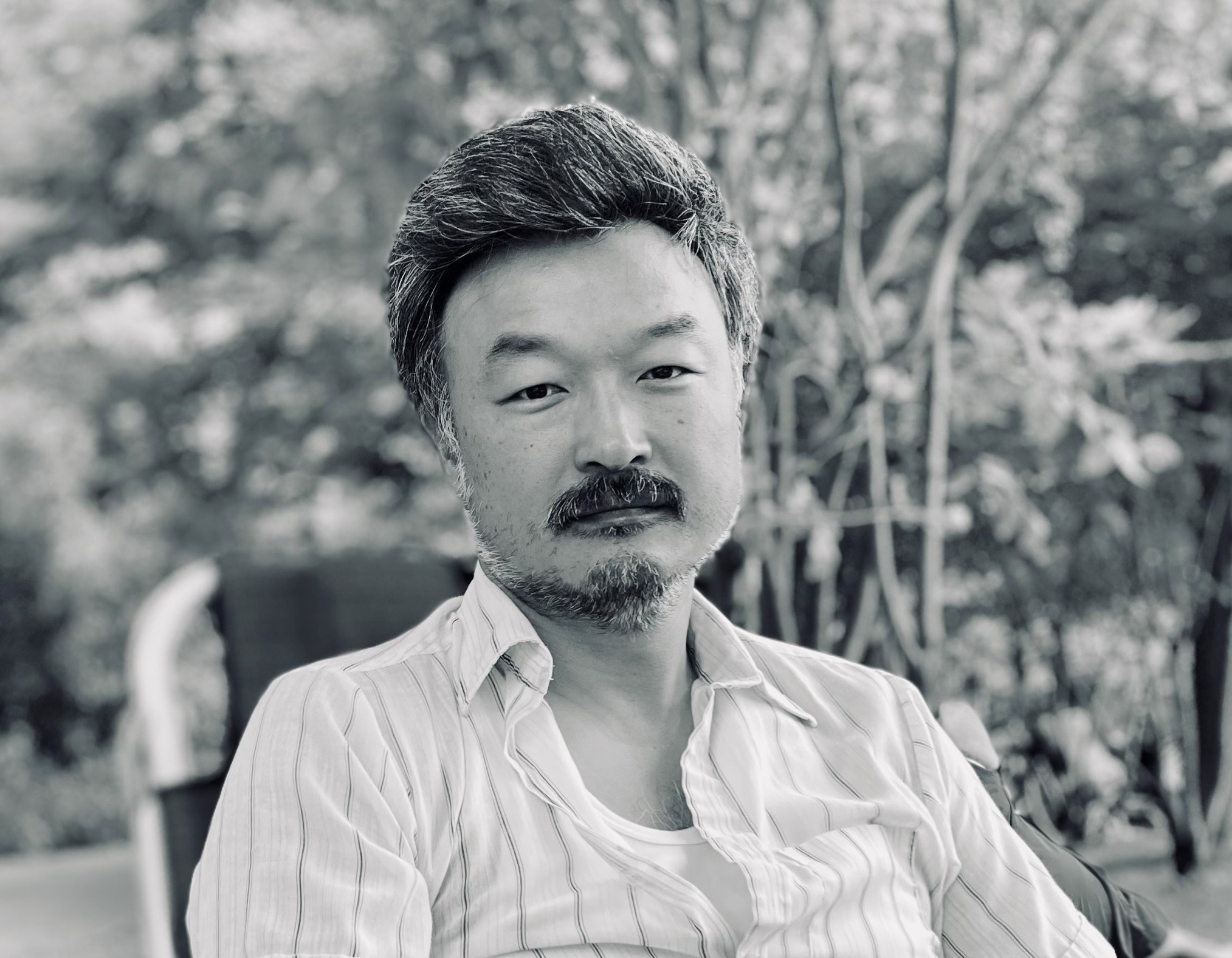
Ins Choi
I saw ‘Kim’s Convenience’ when it was remounted at Soulpepper in 2012. At that time, Ins Choi did not play the central role of Appa, but this time, he does at London, Ontario’s Grand Theatre.
I’m most appreciative of his time to answer a few questions via email.
Ins studied acting at York University in the Bachelor of Fine Arts (BFA) Program. He’s also quick to point out that his training was from not only one institution but many influences.
Skateboarding was one, although he acknowledges he wasn’t that good at it:
“I’d practice for days, weeks on a trick – an ollie kickflip, for example, and then “perform” it in front of people once I was comfortable landing it in private. I also kinda liked playing the part of a skater – the clothes, the shoes, the hair, the attitude, the jargon. It was like a role.”
Although he doesn’t consider himself an athlete, Ins played on his high school’s volleyball, rugby, hockey and soccer teams. He never regretted this participation in sports because he recognized how they all added to the importance of collaboration and teamwork. Being kind to one’s teammates also figured prominently. To be kind, collaborative, and part of a team, he had to listen to others and find his part and voice.
Ins is very family-oriented. As a child, at family gatherings, he would watch his father and siblings tell stories and reminisce about the ‘old days’ while making each other laugh. Ins’ father was the Pastor of a Korean immigrant church in downtown Toronto. At home, the young lad would watch his father research, read, write, and practice his sermons first. Then, at the church’s regular Sunday matinee ‘gigs,’ Ins’ father would frame ancient stories for a contemporary congregation with humour, craft, and passion. Ins’ mother put her boy in several violin, piano and voice music lessons. He also recalled singing in many choirs and ensembles, where he learned the importance of musicality and rhythm.
He credits his training as a writer with writing songs, poems, and short stories. The next bit of advice is something most of us have experienced at least once in our lives: ‘Failing at something but getting up and trying again.”
How does he feel about the current state of Canadian theatre and where the industry is headed over the next proverbial five-year plan?
“I think we’re still in a bit of a hangover from Covid, but I hope we can fiercely support our Canadian playwrights and see to [writing, producing, directing and acting in] more productions that help us continue to find and define our collective voice.”
I was taken with the family unit behind ‘Kim’s Convenience’ the first time I saw it at Soulpepper. The Kims are an immigrant family with flaws, striving to make ends meet and raise their children in a culture that’s a little foreign. The story deals with a small family convenience-run store and what to do when the next generation doesn’t want to take it over.
The family is not perfect, as none is. However, this family tries to express their love and care for each other despite language and cultural barriers. Feelings are hard for everyone around.
That’s precisely one of the messages Choi wants audiences to come away with after seeing ‘Kim’s Convenience.’ He also adds:
“I’d love for people to leave the theatre having fallen in love with a family that perhaps looks differently than theirs and for that to have had a positive effect in how to view and treat others in their day-to-day lives.”
There’s a little bit of Ins in each of the characters. He was single into his thirties and pursuing an artistic career like Janet. Much like Jung, he has felt like a failure many times in my life. Like Umma, he’s tried to please others.
The following statement made me laugh when I read it in his email:
“And like Appa, I now have two children who don’t listen to me. I’m joking.”
Ins has never considered continuing the story of the Kim’s in another script.
When I taught high school English, I always sought new material with strong Canadian content about bringing contemporary drama to students. I asked Ins to imagine that he had the opportunity to go to the Ontario Ministry of Education and defend why ‘Kim’s Convenience’ should be studied in high schools across the province.
Ins hated reading in high school. He states: “A pageful of words was intimidating.”
‘Kim’s Convenience,’ however, is an easy read for students. A page of the text can be flipped in ten seconds. The dialogue is quick and in contemporary speech with a variety of characters.
Choi is proud to state that young people in the Ontario school system can relate to the play even if their parents were born here. The play deals with immigration, racism, gentrification and racial profiling, and these issues are part of our Canadian world today.
The one crucial thing that will sell students to read the play.
‘It’s funny.’
What’s next for Ins once ‘Kim’s Convenience’ concludes its run at London’s Grand Theatre?
He’s returning to being a real Appa with his family and taking a break in November. He’s then off to London, England, to perform the role of Appa in the United Kingdom’s premiere production of the play at Park Theatre. Esther Jun will direct the production there.
Choi was also a tad coy in saying he’s also chipping away on a few projects in theatre and television but wouldn’t reveal what they are at this time.
‘Kim’s Convenience’ continues at London, Ontario’s Grand Theatre, 471 Richmond Street, until November 4. For tickets, visit www.grandtheatre.com or call the Box Office at (519) 672-8800.
Ins Choi
I saw ‘Kim’s Convenience’ when it was remounted at Soulpepper…
Irene Poole
It has been rewarding personally to watch artist Irene Poole in a variety of compelling roles over the last few years. First, I must make reference to the emotionally astounding production of ‘To Kill a Mockingbird’ at The Stratford Festival in which Irene played the adult Jean Louise Finch who looks back on her life in Maycomb, Alabama. I know I’ve said it before, but that production left me in tears because it struck right at the very heart of my core and emotional being. Sooo good…..
Irene has also appeared as the ghostly Catalina/Katherine in Kate Hennig’s ‘Mother’s Daughter’ at Stratford. Other appearances include At Tarragon: The Little Years – Dora Award. Soulpepper (The Gigli Concert), Pleiades Theatre, Buddies in Bad Times (Manon, Sandra and the Virgin Mary), Stratford Shakespeare Festival (The Little Years, Three Sisters, The Taming of the Shrew, Macbeth, Romeo and Juliet, Phèdre), Factory Theatre (The Leisure Society – Dora Award, Bethune Imagined, Escape From Happiness, Better Living, Fighting Words, The Glace Bay Miners’ Museum, and Hockey Mom, Hockey Dad), Birdland Theatre (The Last Days of Judas Escariot – Dora Award), Citadel Theatre (God of Carnage), Alberta Theatre Projects (The Age of Arousal), Prairie Theatre Exchange (Hockey Mom, Hockey Dad), Theatre Aquarius (Wuthering Heights), Sudbury Theatre Centre (The Game of Love and Chance and The Attic, The Pearls and Three Fine Girls), Resurgence Theatre (A Midsummer Night’s Dream, Much Ado About Nothing, Talley’s Folly, Salt-Water Moon, Romeo and Juliet). Film and TV: Killjoys, Murdoch Mysteries, Carrie, Republic of Doyle, Breakout Kings, Rookie Blue. Other: Directed Canadian premiere of David Mamet’s, Romance, at Berkeley Street Theatre Upstairs.
She studied acting at Dalhousie University. We conducted our conversation via email and, from some of her responses, Irene gave me some ‘food for thought’ ideas on how she is dealing with the pandemic.
Thank you for the good conversation, Irene:
It has been an exceptionally long eight months since the pandemic began, and now the numbers are edging upward again. How are you feeling about this? Will we ever emerge to some new way of living in your opinion?
Throughout this pandemic I’ve felt very fortunate to live in Stratford where we’ve been relatively free of Covid, except for some outbreaks in LTC Homes. With numbers creeping up again though, and in this region, I feel it’s time for extra caution and patience. And perhaps a small, family Christmas.
With several vaccines on the horizon, I think we’ll be looking at some sort of normal within the year. For many of us though we’ll emerge from this experience with a more cautious approach to interacting with people and being in public spaces; with perhaps more walls around our personal space than we’re accustomed to as artists. I wouldn’t be surprised if masks and sanitizers continue to be a normal part of our lives, especially during the season.
How have you been faring? How has your immediate family been doing during these last eight months?
I’ve been ok. Trying to find the positive side of having so much time on my ands. That meant a wonderful summer with my husband and kids, 12 and 7 – lots of trips to the beach, lots of walks with friends, distanced backyard visits. We taught them how to play Hearts and Euchre (editor note here: excellent choice) and forced them to listen to music created before 2019.
But it’s been difficult to be entirely carefree with so many unknowns and worries about the future.
As an artist within the performing arts community, what has been the most difficult and challenging for you professionally and personally?
Well, beyond the obvious shuttering of our industry and the financial fallout of that, the most difficult thing has been feeling somewhat insignificant. That what I do for a living is so easily pushed to the side, and seemingly forgotten. While the government has been generous in taking care of people in the ‘gig economy’ I don’t feel there’s been many lights shone in the corners where we work. And we do work, and pay taxes – Federal, Provincial, Municipal, school. We carry mortgages and contribute to local economies. I wish there was little more effusive respect from our leaders for what we bring to our cities.
Were you in preparation, rehearsals, or any planning stages of productions before everything was shut down? What has become of those projects? Will they see the light of day anytime soon?
I was in rehearsal for ‘Much Ado About Nothing’ and ‘Hamlet’ and prepping for ‘Wolf Hall’ at the Stratford Festival. My understanding is that those productions may go ahead at some point but there are no immediate plans for their continuation upon reopening.
What have you been doing to keep yourself busy during this time?
I have been working on our house! I love home reno projects and luckily have this big old house to putter around in and fix up. It’s kept me sane. I’ve built railings and steps, repaired siding, rehung doors and painted everything. Since filming started up again in Toronto, I’ve also been auditioning and working.
And being a mother keeps me busy all the time!
Any words of wisdom or advice you might /could give to fellow performers and colleagues? What message would you deliver to recent theatre school graduates who have now been set free into this unknown and uncertainty?
I’d say to recent grads, “Get yourself a really good agent and audition for film and television.” I’d also say, if you can write, write. If you can produce, produce. If you can direct, direct. Get experience wherever you can.
Also, and I say this with all respect for my chosen profession, if there’s anything else you love to do, develop those skills as well. I’ve been extremely lucky to have made a living as an actor, but the pandemic has left me bereft of any other employable skills.
To my fellow performers, I’ll say, “We’ll survive, and I miss you.”
Do you see anything positive stemming from Covid 19?
The time I’ve had to cement the important relationships in my life has been a real gift. I hope that we can seek a better work life balance when things open back up. Going from working insane hours (and trying to squeeze all the other important life moments into the remaining hours) to barely working (and having lots of time to focus on those other moments) has illuminated how unbalanced life in the theatre can be. And it doesn’t feel tenable anymore. I hope our industry leaders will recognize the importance of that balance and act on it.
Do you think Covid 19 will have some lasting impact on the Toronto/Canadian/North American performing arts scene?
Without a doubt. Theatres that manage to actually survive will have to make many changes going forward. Not just the obvious changes to health and safety but to programming an responding to issues highlighted during the time of Covid.
The break has allowed us time to ponder our place in society, our responsibility to the events happening around us, especially with regard to BIPOC conversations and inequities. There’s no going forward without more inclusivity and real change in all areas of production.
Some artists have turned to You Tube and online streaming to showcase their work. What are your comments and thoughts about streaming? Is this something that the actor/theatre may have to utilize going forward into the unknown?
I think artists should feel free to showcase their work however they want. There are no rights and wrongs about how to be an artist during this time. Let creativity boom and see what becomes of it. I did a Zoom reading of ‘A Midsummer Night’s Dream’ early on and had a fantastic time learning and trying to connect with the cast. I’m not sure it was the most engrossing theatre ever, but it was an offering for those seeking a break from a very scary worldwide crisis.
Interestingly, we filmed our production of ‘Henry VIII’ last fall without an audience, due to the size of the Studio Theatre. I’ll be very curious to see if a play that has been rehearsed and lived in, then filmed can capture the spirit of the show, and audiences.
Despite all this fraught tension and confusion, what is it about performing that Covid will never destroy for you?
Connection, understanding, communication – with words, stories, colleagues, audiences. If I can’t have those connections in a live theatre I can seek them in other mediums – film and television, voice work.
Also the community I’m proud to be a part of, the deep lasting friendships are the result of work in the theatre, and they remain strong. Even stronger since the pandemic started.
Irene Poole
It has been rewarding personally to watch artist Irene Poole…

Irene Sankoff and David Hein
When it is safe to return to the theatre, and we will (sorry to disagree, Dame Judi Dench), if you have not gone to see the extraordinary ‘Come from Away’, make it one of the shows you definitely must attend. I know I would like to see it again.
Irene Sankoff and David Hein’s apres 9/11 story of hope, of kindness, and of generosity is one that resonates with me in an emerging post COVID world now more than ever. Amid the statistics and the confusion of this coronavirus time, I know there are stories out there of front-line workers who have instilled hope, shown kindness, and born generosity of spirit.
I had the good fortune to see the show three times: twice in Toronto (and once with the Canadian cast) and the New York/ Broadway company.
Many thanks to Irene and David who were extremely kind and generous to participate in this interview when they have so much going on in their lives right now.
How have you and your family been keeping at this over three-month isolation, and now with a slow re-emergence?
IRENE: We’ve remained healthy. Not sure how with so many people we know having been hit by this wretched virus, but so far, we’re okay. We’re grateful for what we have and try to stay aware of our privilege. And wear our masks when we’re out near others but mostly stay home. I really miss my life from The Before Time. It was all gone so quickly, y’know?
DAVID: We had been living in New York but have driven back with our daughter and two cats and renting a place – and we’re only now sorting out where we’ll be going forward. We’ve been trying to keep an eye on our five CFA companies who are all out of work – not just the onstage team, but the box office, front of house, crew, etc. And we’ve been trying to do some good, donating, buying a 3D printer for makers to make face shields and delivering them.
What has been the most challenging and difficult for you and your family during this time? What have you all been doing to keep yourselves busy?
IRENE: In the early days it was fear over the outbreak at my Mom’s Long-Term Care Home. We spent a lot of time sourcing and delivering PPE as well as coming up with ways to keep the staff and residents’ spirits up, whether it was having food delivered or doing impromptu performance art outside the building. Now that the outbreak has resolved (knock on wood)
I’m missing the community I had in NYC, as they drift away from that city and all over the map. I spend a lot of time texting or video chatting with them. So – keeping busy has not been a problem. Work has not slowed down (I know, I’m surprised too – and grateful).
And then there’s the education and entertaining of our six-year-old. She is used to a lot of programming and stimulation, having lived the last three years in Manhattan. But she is LOVING being here – and running in and out of the house and hopping on and off her bike and making friends with kids across the street or over a fence while yelling “6 feet back!”
DAVID: We’re surprisingly really busy. Between homeschooling our daughter and figuring out where we’ll live next, we’re doing interviews and as many benefits as we can, trying to raise some money or cheer on front line workers – many of whom are our friends. But we’re also doing work in film and television – and everyone in those fields seems to see us as writers at home with nothing to do – so there’s suddenly a lot to do!
We’ve been working on the ‘Come From Away’ movie, a TV project, and a couple of other irons in the fire.
In your estimation and opinion, do you foresee COVID 19 and its results leaving a lasting impact on the Canadian and North American performing arts scene?
DAVID: I don’t think there’s a way that it won’t – it’s been so challenging for every theatre company, performers, all our crew members – not being able to work. And at the same time, I hope that some writers out there – the ones without six-years-old to homeschool – are writing the next great Canadian musical. Or just recharging and being good to themselves, so that when it makes sense, they can write the next great Canadian musical! Zero pressure to be productive during this.
But long term, I know that theatre will come back – our producers are determined that “Come From Away” will return – and its message of resiliency and coming together in response to a tragedy feels even more relevant now.
IRENE: Yes. I definitely think COVID will have a lasting impact. You can’t come out of a moment like this unchanged, both metaphorically and practically speaking.
I’m mercifully (for all involved) not on the business side of things – but when I speak to those who are, they are cautiously optimistic about the long term. They are constantly running through options and worst-case scenarios and running task forces, and I try not to bother them too much because I don’t know how they do it.
Do you have any words of wisdom to build hope and faith in those performing artists who have been hit hard as a result of COVID 19? Any sage and wise words of parental advice to the new graduates from the theatre schools regarding this fraught time of confusion?
IRENE: I’ve always been a big fan of having a Plan B. I always had more than one and lived them for a long time. It gave me income, insight into humanity, and knowledge that I then used in my artistic pursuits, as well as confidence that there were many things I could do to earn a living. So, I was never desperate and always had the ability to walk away if I wasn’t happy in a situation.
It also gave me friends who weren’t in the arts who could advise on life matters and who could frankly afford to come and support our shows. So, this seems like a great time to go to your Plan B. What else can you do?
I’m not saying to give up, not one bit, but you’re going to have to be creative about HOW you are going to keep going while there’s nothing to go to. What else can you do right now to keep yourself fed, and to keep yourself learning so you’re not burnt out by the time this is all over? (Also, I don’t think it will ever really be ‘over’. But I’d love to be wrong about that).
Before COVID, it was predicted that people would have 7 different careers in their lifetimes. Not jobs, careers. As people in the arts, we shouldn’t think we’re exempt from that. David and I are each on our third, maybe fourth careers? And that’s before COVID.
DAVID: I obviously, often think about Newfoundland and what a hard place it can be to live – the winters are awful – it’s literally a rock in the ocean, the fisheries failing – all of that. But the people there have responded by becoming some of the best people in the world – kind, generous to both neighbors and strangers, and brilliant musicians and storytellers. Each winter, they get stuck inside, and they’ve learned to overcome them by coming over to each other’s kitchen parties and telling stories and singing songs – and making sure their community survives together.
So, I think there’s hope that we can learn from this moment and become better. And to the graduates – many of whom were born during 9/11 and are now graduating during this – you have an incredible, unique story to tell – and that story and this time will bond you together as a group.
Find the people you love who you’ve studied with and make art that you love. That’s what we did. Worst case scenario: you’ll have enjoyed the process.
Do you foresee anything positive stemming from COVID 19 and its influence on the Canadian and North American performing arts scene?
DAVID: I think the pressure it’s putting on the system is exposing so many inequalities, which is painful, but acknowledging those issues and working together to find solutions is positive. We’re already seeing new theatre companies being founded to share unheard voices and we’re excited about the art that this moment in the Black Lives Matter movement will create – which as allies, we are trying to educate ourselves on and work to support.
IRENE: COVID has shown so many cracks in the way things were all along it’s dizzying. But the positive side of that is we can look to ways to change during this pause. Inequalities in healthcare and education and access to technology are painfully more pronounced. That’s why performing arts schools all have students who look the way they do – not a ton of racial and/or socioeconomic diversity.
And women are being squeezed out of professions again not just in theatre, but elsewhere as well, as men usually make more money so their jobs take priority, and child-rearing and domestic management still tend to fall to women somehow. I’ve had so many friends, in arts, science, business and even healthcare say something along the lines of “how did I become a 1950s housewife?!”
Wait…I was supposed to stay positive. Oops.
I’ve spoken with some individuals who believe that online streaming and YouTube presentations destroy the theatrical impact of those who have gathered with anticipation to watch a performance. What are your thoughts and comments about the advantages and/or values of online streaming? Do you foresee this as part of the ‘new normal’ for theatre as we move forward from COVID 19?
IRENE: I have no idea. If it is all going to be about streaming, I better learn how to use the TV. Although, I do have a kid. Isn’t that why people have kids? So, they can change the TV channel? They don’t even have to get off the couch anymore. Back in my day, you had to walk all the way over to the TV.
DAVID: I don’t think anything will replace live theatre – that feeling of your heartbeat synchronizing with the audience members around you. But if theatergoers want to watch theatre right now on their computers, how can you blame them? And why would you discourage it?
If you don’t want to watch it, don’t –there’s already theatres working out how to do live theatre with socially distanced seating, or in front of your house, or by phone or zoom – but I don’t have an issue with streamed theatre – the more theatre the merrier!
What is it about the performing arts you still adore that will never be destroyed by COVID?
DAVID: We stand at the back of the house at Come From Away and we watch the show, but we also watch the audience. I love hearing a thousand people laughing at once or hearing them all sigh together – or cry together and then pass Kleenexes down the row.
There was that article about how everyone’s hearts start to sync in rhythm within a theatre. It’s such a gift to get to witness people coming together in a shared experience – which is really what our show is about – and I can’t wait till we can return.
IRENE: I’m not sure I adore this, but somehow, from the very beginning and no matter where in the world we’ve been, David and I have always ended up writing cramped in the middle of the night on a closed toilet seat in a bathroom, one of us seated on the edge of the tub if there was one. There was no tub at the Broadway theatre, but everyone knew the bathroom in the stage manager’s office was where we worked.
And lo and behold, we’re working in a cramped bathroom again right this minute. Apparently COVID can’t destroy that.
But seriously, a line from ‘Carousel’ comes to mind that gives me hope. This isn’t quite it, but the sentiment is right: “As long as there is one person on Earth who remembers, it isn’t over yet.”
With a respectful acknowledgment to ‘Inside the Actors’ Studio’ and the late James Lipton, here are the ten questions he used to ask his guests:
What is your favourite word?
DAVID: When I was a kid it was “Hawaii” – I’d say it over and over again even though I’d grown up in Saskatchewan and had never been there. With ‘Come From Away’, when we had to travel to meet our Australian company, we stopped there and it became our daughter’s favorite place – primarily because of the stray cats, so it’s as good a word as any.
I also love the word “kindness” both for its practice and that it implies a “kinship” or “similar kind” with another person – recognizing our similarities rather than our differences.
IRENE: Roller Coaster.
What is your least favourite word?
DAVID: This is such an only child word to pick – and I hate saying it to our only child too, but “No.”
IRENE: Sprain.
What turns you on?
DAVID: A good Canadian self-deprecating sense of humour.
IRENE: Surprising people.
What turns you off?
DAVID: People not listening, or not learning. I’m guilty of it too, plenty of times, but it drives me crazy. Also, when computers don’t work. It makes me crazy.
IRENE: Ableism. ‘Isms’ in general.
What sound or noise do you love?
DAVID: Irene and my daughter’s laughter when they literally can’t keep it inside and it just burbles out. It’s my favourite sound ever. I spend a lot of time being goofy mostly so I can hear them laugh.
IRENE: Rain.
What sound or noise bothers you?
DAVID: Chalkboard fingernails and my daughter crying. Or our cat, Gambo, “wowing” for breakfast at 5am.
IRENE: Ignorant people talking.
What is your favourite curse word?
DAVID: Fuck. I also love the Newfoundlander’s “lard tunderin’ jaysus” though I never feel like it’s mine to use.
IRENE: Fuck.
Other than your current profession now, what other professions would you have liked to do?
DAVID: I always wanted to be an animator or draw comics. Through Come From Away, I got to draw a backup Spider-Man story and I can’t wait to do another one.
IRENE: Teacher. Being surrounded by small children. Is. The. Best.
What profession could you not see yourself doing?
DAVID: Oh man, there’s so many. Prime Minister since I’m terrible at decision making. Deep sea diver because I’m claustrophobic. Is scorpion zookeeper a thing? I might rather die. I have a lot of respect for all of those, but I couldn’t do them.
IRENE: Teacher. There is no profession more underrated, underpaid and under-respected. Post-COVID I’d add ‘essential worker’.
If Heaven exists, what do you hope God will say to you as you approach the Pearly Gates?
DAVID: “Excellent, you and Irene came together. Glad you took your time.”
IRENE: “You can dance the way you used to, and it won’t hurt a bit.”
To learn more about any of the worldwide extraordinary companies of ‘Come from Away’, please visit www.comefromaway.com.
Irene Sankoff and David Hein
When it is safe to return to the theatre, and…