
*All profiles are compiled by Joe Szekeres

Vanessa Sears
Holy mackerel. Artist Vanessa Sears has been performing professionally for a couple of years, and the wonderful work in which she has performed along with some top-notch award acknowledgments have made her an upcoming young artist for whom we should continue to watch on stages across Ontario and across the country.
My first introduction to her work was as Ronette in Stratford Festival’s fun production of ‘Little Shop of Horrors’. I then saw her work in the glorious ‘Caroline, or Change’ at Toronto’s Elgin Theatre just this past January. For this performance, Vanessa received the Toronto Theatre Critics’ Award for Best Supporting Performance in a Musical (and most deservedly so). She has also received the Dora Mavor Moore Award for Outstanding Ensemble Work when she appeared as Dorothy Gale in Young People’s Theatre production of ‘The Wizard of Oz’.
When we all get back to the theatre, and you see that Vanessa is performing in a show, make sure you check out her bio in the house programme to learn more about her. I have also included her social media accounts at the conclusion of this profile.
We conducted our interview via email:
1. How have you and your family been keeping during this two-month isolation?
It’s been a strange and scary time as it has for most everyone, I’m sure. I’m isolating alone which has been difficult. Navigating mental health is a struggle but so far with incredible support from my loved ones I’m managing. My parents live in Vienna, Austria so they’re ‘ahead’ of Canada and have been letting us know how things are going over there and what to look out for here. My siblings are spread out and all dealing with the world day by day. I think we’re all stressed but trying to stay grateful for our health and for each other.
2. What has been most challenging and difficult for you during this time personally? What have you been doing to keep yourself busy?
I thought being alone was the hardest part but being alone while navigating the images and videos of police brutality against black people has been heartbreaking. I didn’t understand how traumatic and exhausting that could be until recently. It’s hard to navigate and heal without the ability to physically gather with my loved ones, but I’ve received so much love and care from my family, friends and the black community. It’s equal parts painful and inspiring, but it also feels necessary. I’m trying to focus on all the positive changes already coming out of this increased understanding of the Black Lives Matter movement.
I have been staying busy doing projects here and there, working with Songbird series, teaching classes as well as taking them, learning guitar, reading and more recently trying to educate myself and others on BLM. Sunshine and workouts have also been hugely helpful for my mental health.
3. Were you involved in any professional projects when the pandemic was declared, and everything was shut down? How far were you into those projects? Will they come to fruition some time soon? Professionally, has Covid changed your life regarding all the work you have completed or may have had planned?
I was in rehearsal at the Stratford Festival for ‘Here’s What It Takes’, a new musical scheduled to premiere at the new Tom Patterson Theatre. We were just moving past the table work and onto our feet, starting to block scenes and numbers when rehearsals stopped. I can’t say whether or not it’ll come to fruition, there are zero guarantees but I’m staying optimistic.
Covid has definitely changed my professional life. I was very lucky to earn my living solely from working in theatre and now I am facing a year of no income. I’m genuinely trying to decide if I need to shift careers as we have no idea when or if we’ll be able to mount productions again. With every day that passes I’m more and more grateful that I got to finish the run of Musical Stage Company and Obsidian Theatre’s ‘Caroline, or Change’. What a way to go, and what a show to hold in our hearts through this time.
4. Some actors whom I’ve interviewed have stated they can’t see anyone venturing back into a theatre or studio for a least 1 ½ to 2 years. Do you foresee this possible reality to be factual?
Unfortunately, yes. Reports and meetings I’ve attended have all been honest about their projections and it doesn’t look great. However, I’m recording in a studio for Andrew Seok’s ‘Birth of a Song’ alongside Chilina Kennedy this week, and that gives me hope. Theatre, opera and dance will probably be the last to return but there are other avenues to explore that are creatively fulfilling!
5. In your estimation and opinion, do you foresee COVID 19 and its results leaving a lasting impact, either positive or negative, on the Canadian performing arts scene?
Absolutely, it’s going to change how we operate for a long time. It’s going to change how people interact, it’s going to change audience engagement, and it’ll change health and safety standards for all industries.
One positive change I anticipate is that there will be a new appreciation for the performing arts. As artists (especially ones who are self employed and constantly hustling), we are aware that we’re lucky when we’re getting paid to work at all. What I took for granted was how integral community is to my mental health, and how much joy I get from my work and the people I work with. I value that community so much and I’m going to do a better job of expressing that when this is all over. I also hope that theatre companies will use this forced pause to change theatrical practices previously deemed too ‘inconvenient’ or ‘broad’ to tackle. There’s no better time to reconstruct an entire industry than when the world is forced to slow down.
6. Do you have any words of wisdom to build hope and faith in those performing artists who have been hit hard as a result of COVID 19? Any words of sage advice to the new graduates from Canada’s theatre schools regarding this fraught time of confusion?
I’ve only been performing professionally for a couple of years, so I still look to my role models who’ve been in the business for decades for guidance and wisdom. Their ability to stay calm and kind is the best reassurance I could ask for during these troubling times. So I suppose I’ll say, “stay kind and stay calm”! Process things in whatever way is healthiest for YOU! And do not be afraid to ask for help.
7. I’ve spoken with some individuals who believe that online streaming and You Tube presentations destroy the theatrical impact of those who have gathered with anticipation to watch a performance. What are your thoughts and comments about the advantages and/or values of online streaming? Do you foresee this as part of the ‘new normal’ for Canadian theatre as we move forward from COVID 19?
Personally I have yet to see live a performance through streaming that really excites me, and I want entertainment on screen I’m much more likely to watch a move or show designed for that medium than a script reading. However, it’s your art and you can share it how you want to! Folks are getting more and more innovative as we familiarize ourselves with the tech available, and there’s loads of room for something exciting to grow.
8. What is it about the performing arts that still energizes you even through this tumultuous and confusing time?
Love. There is so much love. It takes a full heart to be in this profession, and it’s what keeps me going in an industry full of obstacles. Story telling is powerful, it changes hearts and minds. I truly believe that, and I want to continue doing it. Art connects us all to humanity, it is worth doing.
With a respectful acknowledgment to ‘Inside the Actors’ Studio’ and the late James Lipton, here are the ten questions he used to ask his guests:
1. What is your favourite word?
Mug
2. What is your least favourite word?
Moist
3. What turns you on?
Emotional intelligence
4. What turns you off?
Arrogance
5. What sound or noise do you love?
Purring
6. What sound or noise bothers you?
Mosquito’s buzz
7. What is your favourite curse word?
Fuck
8. Other than your current profession now, what other profession would you have liked to attempt?
Veterinarian
9. What profession could you not see yourself doing?
Gardener
10. If Heaven exists, what do you hope God will say to you as you approach the Pearly Gates?
“I’ve got some of your family up here who’d love to see you.”
Facebook: @ActorVanessaSears/ Insta: @vanessa_sears / Twitter: @nessasears
Vanessa Sears
Holy mackerel. Artist Vanessa Sears has been performing professionally for…
Vern Thiessen
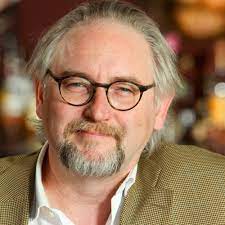
There are times looking back on my 33-year teaching career when I wish I had known the names of more Canadian playwrights and the crucially important stories they had shared with audiences.
Vern Thiessen is one writer whom I place here. A local semi-professional theatre company had produced Vern’s play ‘Vimy’ of “a seminal nation-building moment in WWI in terms of the lives of four men from different parts of Canada, and their interaction with the nurse who cares for them.” (www.canadiantheatre.com), and when I had seen this extraordinary production, I wanted to know more about Vern and his work.
He is one of Canada’s most produced playwrights. His work has been seen across Canada, the United States, Europe, and Asia. His works include Of Human Bondage, Vimy, Einstein’s Gift, Lenin’s Embalmers, Apple, and Shakespeare’s Will. He has been produced off-Broadway five times.
Vern is the recipient of numerous awards, including the Dora and Sterling awards for Outstanding New Play, The Carol Bolt Award, the Gwen Pharis Ringwood Award, the City of Edmonton Arts Achievement Award, the University of Alberta Alumni Award of Excellence, and the Governor General’s Literary Award for Drama, Canada’s highest honour for a playwright.
After seven years living in New York, Vern returned home to Canada to teach and write. He currently lives in Edmonton, Alberta.
We conducted our conversation via Zoom and shared a few laughs as I got to know Vern briefly during this time. Thank you so much for the interview, Vern, and for adding your voice to the conversation:
The doors to Toronto live theatre have been shut for over a year now with no possible date of re-opening soon. How have you been faring during this time? Your immediate family?
We’re very lucky, I’ve had very good health over this year as has my family. We’ve had a couple of extended family members who have contracted Covid very early because they were coming back from travels afar, but they’re all fine with no long-term issues there. Thank you for asking.
How have you been spending your time since the theatre industry has been locked up tight as a drum?
Well, I’m really lucky, Joe, because so many of my compatriots have lost their livelihoods particularly actors, I think were hit the hardest in the theatre. Not only because the theatres are closed but their secondary businesses like bar tending and those in the service industry were closed down. I consider myself very lucky.
I have been writing. I’m also lucky because I don’t have young children and I’m not taking care of older parents. Many of my theatre friends are squeezed between these two things – they have young kids and elderly parents for whom they’re caring. I don’t know how they’ve been surviving, and certainly not creating any art.
I’m in this lucky group that’s not being squeezed in those ways.
On top of that, I’ve had some outstanding commissions that I could finish. I’m teaching and doing work that I’ve already done. Playwrights can write on their own and squirrel things away for future, so I’m sure after Covid lifts and everyone gets back in the theatre you’re going to see this tsunami of plays because people like me have three plays we’ve been working on.
To be specific, I’ve been working on an adaptation of ‘The Diviners’ by Margaret Laurence for The Manitoba Theatre Centre which I’ve been commissioned to do. We’ve done some workshops via Zoom at MTC. I’m also just finishing a brand-new play I’ve been working on called ‘Bluebirds’ for Theatre New Brunswick which we’ve developed over the summer again through Zoom. ‘Bluebirds’ is the story of three World War 1 Canadian nurses in France.
I’m working on something new that’s different for me, a family thriller, and a couple of other things in the mix. I’ve actually been quite busy writing this year and very thankful for that.
Outside of the writing and teaching, my wife and I, right as the pandemic started, we happened to be moving into a new house that we were renting which was awesome because it has a huge garden plot. I hadn’t gardened in twenty years, and I come from a gardening family. I thought, “I’m gonna put in a garden” and that was a lot of fun.
I’ve done a lot more cooking because my wife is busier than I was during the fall and spring so I had time to tend the garden and make some meals and become a better cook, not chef, because that would be pushing it. I’ve taken the opportunity to get to a number of things I haven’t done in a long time like play my guitar and take tap dancing lessons to get out of my comfort zone. I tap dance only for fun and nobody will ever see me tap dance except my teacher.
I’ve also done quite a bit of dramaturgy and teaching online, and Covid has allowed us to connect as theatre artists across the country in different ways we didn’t do before.
Just trying to use the time the best way I can – doing some family history research, things like that.
The late Hal Prince described the theatre as an escape for him. Would you say that Covid has been an escape for you, or would you describe this near year long plus absence from the theatre as something else?
No, I certainly wouldn’t call it an escape. Theatre can be an escape from your life, but I don’t think Covid has been an escape from it or from anything.
If anything, Covid has been a reckoning. I’ve been lucky because theatre for me has been an escape from Covid, right, I’ve been allowed to work and do my writing while this horrible thing has been happening.
Certainly, Covid itself, I wouldn’t call it an escape at all. Call it a challenge. The only thing that it has allowed me and other theatre artists to really do is to really re-think how we create. Mainly I’m talking about the professional business in Canada, the United States and Europe to some extent. Double that with Black Lives Matter and the re-thinking of how we create with our BIPOC brothers and sisters has really and completely been a revolution in Canadian theatre in the last year which I think is fantastic.
I wouldn’t call it an escape, but I would call it a reckoning. In one way it has been awful because we’ve lost our abilities to make our living but, on the other hand, it has provided this opportunity for us to really re-examine and change the way we make theatre in this country for the better.
I’ve interviewed a few artists several months ago who said that the theatre industry will probably be shut down and not go full head on until at least 2022. There may be pockets of outdoor theatre where safety protocols are in place. What are your comments about this? Do you think you and your colleagues/fellow artists will not return until 2022?
I don’t know. I think that really, really depends on what happens with the pandemic and how it’s managed.
If I was in Australia, well, the theatres are full here because the country handled the pandemic very differently. Obviously if I’m in Texas and they’ve 40,000 people watching a baseball game, The Toronto Blue Jays no less, well I can see the theatres being full down here (Vern rolled his eyes at this point so I could tell what he was feeling and didn’t have to ask him anymore) no matter what the cost to humanity.
So I guess it really depends on where you are. I can see in small towns or some smaller cities that have professional theatres – Barrie, North Bay, Thunder Bay – might actually have full houses very soon. It’s going to be a bit more challenging for the commercial theatres in the bigger city centres.
Even then, Nathan Lane just did something on Broadway with 25% capacity.
I feel it will roll along, go back a little bit and then roll along some more and go back a bit and forward. The agreement I would say that around the world, full time, people in theatres at 100%, yes, it will probably be 2022 at the earliest, I hope, I hope it’s not later than that.
I fully expect to have a production. In fact, I’ve booked productions in the US for next fall. I’m not sure how much capacity they will be at, but the fact paying me a royalty for doing my play gives me sufficient reason to believe they will have an audience.
I feel like we’re slowly going to come out of the cave.
I had a discussion recently with an Equity actor who said that yes theatre should not only entertain but, more importantly, it should transform both the actor and the audience. How has Covid transformed you in your understanding of the theatre and where it is headed in a post Covid world?
It’s transformed me personally on many levels that we’ve already talked about in terms of my family and how I look at my family and friends, and how I communicate with people.
I think it’s transformed on the business side my collegiality with people across the nation. Before Covid, it was pretty unlikely you were going to do a workshop over Zoom with a bunch of artists across the country. We did a reading of ‘The Diviners’ at Manitoba Theatre Centre which was an entirely Indigenous cast, and they came from everywhere from Alberta all the way to Quebec. That is something we would have never considered before the pandemic.
Covid has changed me and my practice in a way because it’s broadened my field of vision across the country in a way that we were forced to do because of Covid. So that’s been very, very positive.
It’s really changed me. It’s less about Covid than it is about what has happened with Black Lives Matter and our attempt to de-colonize Canadian theatre. That has had a huge impact on me, and again I make reference to ‘The Diviners’ because it was a really good chance for me to engage with the Metis community and the Indigenous theatre workers in Winnipeg, in Manitoba and, as a white settler dude, not only white but old, white, straight and male, it’s changed me because I’ve really had to re- think what my position is in the theatre community and world.
In terms of what I’m creating (regarding transformation), that’s interesting. It’s hard for me to say as I think I’m too close to it. Am I writing stuff that has been really influenced by Covid? I don’t think so, but I don’t know. I might look back on it five years and go, “Oh yeah, that was my Covid play” because those characters in the play are all in the same room OR they can’t connect. In ‘Bluebirds’ those nurses are three front line workers, so has that influenced me? I don’t know if I’m conscious of that.
It’s too soon to tell.
Certainly, in ‘Bluebirds’ there’s been a shift in the writing of the play which will premiere next fall, I hope. There’s a focus on these women doing extraordinary work in very dangerous conditions with a flu pandemic coming in at the end of the first World War as well. That may have been by Covid, but I’m not sure how conscious I was of that in writing it.
The late Zoe Caldwell spoke about how actors should feel danger in the work. It’s a solid and swell thing to have if the actor/artist and the audience both feel it. Would you agree with Ms. Caldwell? Have you ever felt danger during this time of Covid and do you believe it will somehow influence your work when you return to the theatre?
For sure, there has to be a certain kind of theatrical danger. We’re not talking about real danger. I don’t want to see actors in a place where they feel like they will physically hurt themselves, or, as an audience member, I don’t want to be in a position where I feel like I might be in a place where I might physically hurt myself.
Certainly, to be in a dangerous emotional place for actors and audience, I think, is critical to the theatre. It’s not only something that should happen, and that is what transforms us because we have to come out on the other side of that.
I believe that theatre should be dangerous that way. We should be excited to be there, not bored to be there or feel like it’s an obligation. We should walk out of it feeling that we have been transformed in some way, I don’t mean in any religious sense, but something should have shifted inside of us whether in my brain, my heart, my soul (if that thing actually exists within us).
Yes, I agree with her. Have I ever experienced that? Absolutely. Endangering and fear are two close things that are related and certainly, as a playwright, I don’t know of any playwright who doesn’t feel an enormous amount of fear when they open up their file and start to write. It’s engaging that fear and danger that is both exhilarating and makes the time go by and fly by as you’re writing.
It’s also transformational as well, right, that you’re actually putting something down on the page that has never been there before. Hopefully, down the line some actors will read it and an audience will be transformed by it in the same way you were transformed as you wrote it. So, yes, I have been in that situation.
I feel danger certainly. Nobody has coughed on me, and I don’t feel the danger that I might feel as if I were in Rio de Janeiro or in that ballpark in Texas. But I certainly felt that the theatre itself was in danger, and how are we going to survive this? We’re lucky to have some great extraordinary leaders, and frankly the federal government has stepped up to the plate to give us some money early on. That was critical to ensure that some artists could survive.
The late scenic designer Ming Cho Lee spoke about great art opening doors and making us feel more sensitive. Has this time of Covid made you sensitive to our world and has it made some impact on your life in such a way that you will bring this back with you to the theatre?
I think that hits it, doesn’t it? Sometimes, I feel as if we are overly sensitive. I feel as if we are all a bit fragile right now, and that it is very difficult to take criticism or difficult to understand how things are changing so quickly.
The way we are making art changes so quickly, and our institutions this year are changing so quickly that there is a deep sensitivity to making sure we are doing it right, and that we’re creating art in a responsible way that we never did before.
It’s tricky because sometimes it can lead to a fragility that is not necessarily healthy.
Sensitivity can mean a lot of different things.
Again, the late Hal Prince spoke of the fact that theatre should trigger curiosity in the actor/artist and the audience. Has Covid sparked any curiosity in you about something during this time? Has this time away from the theatre sparked further curiosity for you when you return to this art form?
I’ve become much more curious and sensitive about how other people are making art and writing plays. I belong to this Tuesday evening group of theatre people from around the country. We meet every week on Tuesday evening to read a play. We’ve been doing this now, next week will be a year. We missed a couple of times around the holidays.
I think our group has read 48 plays. I do read plays and I don’t think I would have read the breadth and depth of that cannon of work had it not been for that group. So, it has made me more sensitive to what is going on. I’ve actually had time to read plays that are going on around the world that I wouldn’t have had a chance to do because I’ve had the time and the desire to do it.
This time has also made me curious about other things in my life, as curiosity is always a key tool for the artist anyway. To come full circle to the first question you’ve asked me, I’ve always been curious about tap dancing. I’m also interested in taking some cello lessons.
I’ve connected with a musician friend, a professional well known cello player, and we’ve decided to create something together.
I think curiosity is broadening how we create theatre and who we create it with, and who we create it for. My actor friend, who is well known, lost the whole season this year. I won’t mention his name and lives down the street from me. On Easter morning, he got dressed up in this gigantic bunny suit that he rented from ‘The Theatre Garage’ (which must be hurting these days).
My friend just walked around the neighbourhood and that was his piece of art for the day. We have a fair amount of children in the area, and the kids loved it. This was his chance to get out and perform, but also engage with his community. I’m not saying this is a piece of theatre, but maybe it is? That was his way of creating a bit of theatre…and that he went to direct a bit of traffic on the main street still wearing the costume.
That kind of curiosity exists within me too – maybe I should write something different this time. I think that, if anything, this Covid time has made us more curious about different things, and that’s a good thing because we can get stuck in our ways.
Vern Thiessen
There are times looking back on my 33-year teaching career…

Vikram Dasgupta
Normally I like to send interview questions to a guest a few days before, so the artist has a few days to think about how to formulate an answer. Independent film maker and Indo-Canadian Vikram Dasgupta told me he prefers an ‘off the cuff’ conversation because he said he is “all about documenting and documentary with genuine interaction” so he felt it was good he wasn’t prepared for the questions.
Born in New Delhi, India, Vikram was born into a family of artists, musicians, dancers, and scientists. A gold medalist in Fine Arts from Kolkata University, Vikram came to Canada to pursue cinema.
Some of the titles of his short films and documentaries sound interesting. For example, his short film, the multi award winning ‘Calcutta Taxi’ funded by Bravofact! and NFB Canada, was in the races for the Academy Awards in 2014 after winning the Oscar Qualifier at the Aspen ShortFest 2013 and was screened at over 50+ festivals worldwide. Vikram’s commercial on Paralympanians for the PanAm TO2015 entitled ‘Are you ready’ was nominated for the Cannes Lions in the Film Category. His debut feature documentary ‘Beyond Moving’ premiered at the HotDocs theatre in February 2020 with theatrical and VOD distribution through Blue Ice Docs. His upcoming feature documentary ‘Dog-Ma’ – a deeply personal journey about his mother feeding 500+ stray dogs on the streets of Delhi was set to release in summer 2021.
We conducted our conversation via Zoom. Thank you so much for the conversation, Vikram:
I see from your bio that was sent to me states that you come from a family of artists of all kinds and scientists, and yet the biggest influence on you as an artist was your grandmother’s storytelling. Tell me a little about your grandmother and the art of her storytelling.
In my family we have such a beautiful, weird mix of people. My immediate family is 75 people. I’m raised from a really big village.
My grandmother was the storyteller of that village, and she would just make even the most little of things seem spectacular. I remember when she first came to visit my uncle in the US, they visited Niagara Falls. When she returned, she told me about that story when she exited the car in the parking lot and she could hear this roaring sound of a monster. The more she was wondering what the sound was, the more my eyes widened as I was a kid hearing this story for the first time. She revealed how the monster was this healing body of water.
I was blown away by it.
When I finally visited Niagara Falls, my visit fell short of what her story was to me when I was a kid. For me, that is the power of storytelling, and that’s what I was raised on.
I wanted to get into a profession and do for a living what my grandmother did. I wanted to tell stories as well. In my immediate family of 75 people, I grew up hearing stories and discussions for example about God versus the atom. I’m very lucky that way in that I grew up in that cross section of society, that I had access to all these stories and conversations.
I had to be a filmmaker. I had to find the medium ground to tell without any kind of prejudices stories on either side.
I feel it is all just one story and we have dissected them, kept them, and made boxes, but it is all just one story. Every story is a human story. That’s why my field of work is from Paralympians to dancers to musicians to orchestra. It doesn’t have that boundary. We don’t have that boundary, we created them. Stories see past these boundaries and unite us all.
Stories make us feel that way.
Your biography states that you are a gold medalist in Fine Arts from Kolkata University, and then you came to Canada to pursue cinema. Did you continue some of your studies in cinema when you came to Canada, or did you move right into cinematic work immediately?
I actually studied Fine Arts because I wanted to be a storyteller. I had this conversation with my late father who passed away a few months ago. I told him I wanted to study film making and he said perhaps I should focus on one frame at a time instead of 24 frames per second, and perhaps to study fine arts and painting and understand the content of telling stories through one frame before you go and take cinema.
That’s why I studied fine arts on the advice from my late father. I like water colours, drawing and painting to eventually be a filmmaker. It’s funny that this makes me connected to the artists with whom I work in all different fields.
After my father’s passing, I returned to doing some painting. But I’ve not had the chance to do it for a long time as being a filmmaker is time consuming.
When I came to Canada, I was here to study film. My post graduate work is here.
I see that premiering on October 13 is the three-part performance film directed by you for Fall for Dance North. What specifically is it that film can capture regarding choreography, dance, and movement?
This is a very loaded and yet a very good question.
I will tell you what I try to hopefully bring.
So, what is it that cinema can bring to dance that there is something for us to strive for?
Personally, I feel that when I film dance I actually like to be in the dance and not from the way the audience watches it from the stage. When we watch a dance on a stage, we watch it in a perfectly set theatre and framed the way it is projected.
I actually am with a camera and running around with the dancers and trying to give the audience and myself how does the dancer feel.
For me, it’s always about that connection be it with someone feeding dogs in India, be it a Paralympian trying to strive for a gold medal, or be it with a dancer, I want to try and connect in the closest, subliminal way possible from an angle that the stage might not be able to give a vantage point to the audience and what they can see.
And that’s what film making is all about as it offers the audience another vantage point to see, and what is normally portrayed to the audience. If I’m filming dance, then I’m going to film it from a vantage point that the audience cannot see.
It’s a challenge because if the camera is going to be with the dancer, then we have to choreograph ourselves on the choreography of the dancers, and we have to make sure that at the end of it, the filmmaker has to ensure there is not any visible footprint from him/her/them. Eventually, you cannot see the hand of the director and nobody should know that it is filmed. The second we are too self aware of the presence of the filmmaker we take away from the actual creation of the dance and the dancer.
So it’s a very thin line for the filmmaker in deciding how to be there and not be there. I never want to see myself in it. Every documentary I film, I don’t want to see myself in it. I hate it when I can see myself because it looks crafted, it looks like a reality show and I don’t want to see myself in anything.
If I do it right, then I disappear and that’s my goal. The goal is to allow the art to be in its truest form. If I can do that right, then I’m on the right path.
When I was filming Siphe for my documentary ‘Beyond Moving’, he was developing the choreography and we were filming as he was developing it. We developed our movements in the way Siphe was developing the choreography. We grew with Siphe as he developed the choreography. We were discovering our movements with the camera as Siphe was discovering his movements, and that is the synergy that helps us to disappear.
On a side note, my aunt is an extremely celebrated Indian classical dancer. She won the President’s award; she’s a big deal, but I’ve never filmed Indian dance before. It’s been interesting for me coming back home to film classical Indian dance form. My aunt has always me to be a dancer as a kid, and I told her I don’t want to be a dancer.
She would make fun of me now because I am filming dance.
What drew you to want to film this kind of material?
People. I fall in love with people, and I just want to understand and learn about them. I work with people that I love and, for me, that love really shines on the screen in whatever the field whether it be dance, athletics. I’m doing a film about widows as there are about 30,000 widows who live in India.
Tell me about your connections with Fall for Dance North in Toronto and how you came about to relate and connected to them.
I fell into filming dance for about 7-8 years. I never used to film it, but I fell into it during the Pan Am Games. I filmed Peggy Baker and then at Canada’s National Ballet School I ended up filming Siphe November for 7 years which made the documentary. Ilter Ibraimhoff, Artistic Director for Fall for Dance North, saw the documentary from the National Ballet School of Canada and asked if I wanted to do a piece with Siphe and his brother because the documentary ends with Siphe’s desire to work with his brother on the world stage.
So, I said to Ilter I would love to do it, but I couldn’t do it in the months he wanted as I was in India. Ilter then said that since I was in India if I was going to be near Bangalore. I said yes that’s where my late father was going to pick me up from. There’s a dance village in Bangalore called Nrityagram, and maybe I could film there. So that’s how the second project came about.
The third one was with Aszure Barton in Cuba. That’s how I got into Fall for Dance North.
While I was doing a promotional piece for the National Ballet School one day with Siphe, I fell in love with this kid. The way he looked at the camera, he looks through the lens and it looked like Siphe was seeing our soul. Both my cinematographer and I thought, “Wow, this kid, Siphe, is so profound to be able to do that.” We went to South Africa as well to film Siphe. We stayed with his mother, met his brother who’s amazing and another brilliant dancer (and whom you will see in the program).
Their story became a part of my story and I started recording the journey. This is how I made ‘Beyond Moving’. Ilter saw the film and ‘Beyond Moving’ concludes with a quote from Siphe saying that he looks forward to that day he can share the stage with his brother and Fall for Dance North wanted to provide that for the first time.
This process has been organic and unplanned and that’s how I like to work.
I’m intrigued by the title +(DIX) – how is it pronounced and the exploration of the Odysseus myth about journeying far but always desiring to return home. Tell me about the rehearsal process so far into the performance on September 23.
I’ve been involved in the rehearsal process for the last few weeks.
We’ve been working with the dancers and trying to understand the best way because it also comes philosophically from a point of Guillaume Côté watching the piece emerge. There are instances in the filming that I would like to show Guillaume when he has left the stage and gone off, and I would like to show from his perspective watching the dancers from afar.
Because I’m filming the whole theatre, I want the theatre to also be a character in the piece. Let’s see how far we can achieve it.
I haven’t had a great deal of training in the art of dance and movement. I’ve noticed many of the professional dance companies want to encourage people like myself and others who haven’t had any experience at all in the art of dance and movement to come watch and to experience a production.
What would you say to individuals like me, others who have very little background who have little understanding of movement and dance, why is it important for us to watch, through cinema, the art of dance. Do you think that will allow us to accomplish something?
This is a lifetime of a question.
I think it boils down to not just the immediate question of how people can appreciate dance through cinema. It’s a much deeper and philosophical question regarding what exactly is the purpose of art.
I think that is the bigger question.
Why art and why is it important?
I think I was very lucky that way being raised in art. I didn’t realize that art is a thing because that’s what happens when you’re raised in art. I never realized that dance is for dancers; painting is for painters; singing is for singers; science is for scientists.
I never knew that.
And I think we lack that because we in society put things in certain boxes and that you have to be a certain kind of person to appreciate art.
I don’t think so.
I think understanding and appreciating art is comparable to understanding and appreciating life. Everyone needs to do that, and everyone should be born in it. That should be a part of our inherent diet of ideas. If we are to think of it that way, then that makes sense why no matter where you are or who you are, where you’re from, what race, what religion, what part of hierarchy or class, we all need to understand about life. We all need to figure out why we’re here.
It’s not an immediate or direct question. It’s such a bigger universal question. I’ve been dealing with a lot of existential questions and things about my late father’s passing away, and there are times when everything seems absolutely pointless and immediate. And there are other times when things have a purpose and things go far beyond my existence.
Art kind of rounds off the edges. It’s that nice, warm embrace that we all need and want after a hard day of life’s reality check. It makes you feel at home in whatever you are and wherever you need to be. That’s why art, dance, cinema or poetry is important as it allows us to be honest as to who we are.
Vikram Dasgupta
Normally I like to send interview questions to a guest…
Vivien Endicott-Douglas
“I learn about the strongest choice to make by trying out different things, by taking risks and being on my feet. There’s safety in being given permission to do that.”
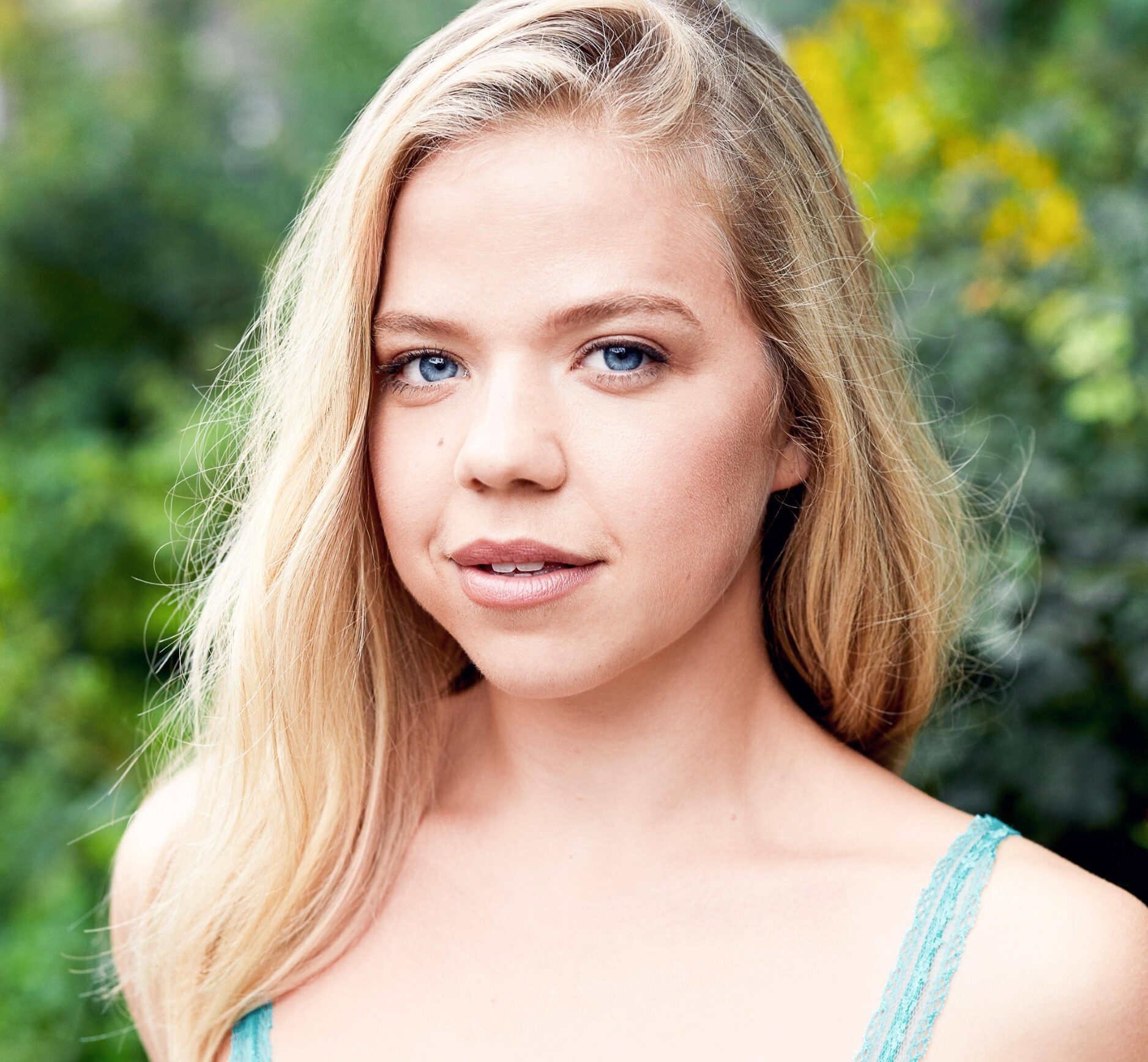
Vivien Endicott-Douglas holds some highly regarded credentials in her training as a performing artist.
She started working professionally when she was ten. The first play in which she performed was Arthur Miller’s The Crucible at Hamilton’s Theatre Aquarius. From there, she says she didn’t attend a conservatory. She learned on the job and continues to train with teachers of her choice.
From her website: Vivien studied Women, Gender and Equity with a minor in Film & Drama Theatre at the University of Toronto. She graduated from the Centre for Actor Training at Shakespeare & Co. in Lenox, Massachusetts. She studied Advanced Voice and Text in Orkney, Scotland, with internationally revered voice teacher Kristin Linklater. In North America, Vivien has studied extensively with highly respected acting/voice instructors, including Rae Ellen Bodie (through Pro Actors Lab), Lindy Davies and Larry Moss.
Endicott-Douglas speaks fondly of more people whom she calls mentors. Richard Rose from Tarragon is one. Richard gave Vivien her first theatre job outside of high school in Rosa LaBorde’s second play, ‘Hush’. Vivien also speaks fondly of her dear friend, Layne Coleman, whom she says is a mentor to many other artists.
I’ve also had the opportunity to see some of Vivien’s work gracing the stages here in Toronto at Tarragon Theatre, Canadian Stage, Crow’s and Factory Theatre.
Next month, she will appear in Nightwood Theatre’s Enormity, Girl, and the Earthquake in her Lungs by Chelsea Woolley and directed by Andrea Donaldson, Artistic Director of Nightwood. Again, two more names I’ve read and heard.
Woolley’s play title fascinates me. I want to know more about it. How fortunate to learn the production will be directed by Andrea Donaldson, who is the Artistic Director for Nightwood. I’ve always liked hearing the name Nightwood Theatre. I know the company highlights feminist contributions to the theatre. I’m sure learning more about the theatre itself will provide valuable insight into Woolley’s upcoming play.
According to the theatre website, Nightwood (founded in 1979) remains highly respected as Canada’s preeminent feminist theatre that cultivates, creates, and produces extraordinary work by women and gender-expansive artists, liberating futures, one room at a time. Nightwood has produced some remarkable work over the years: Ann-Marie MacDonald’s Good Night Desdemona (Good Morning, Juliet) and Djanet Sears’ Harlem Duet are only two examples.
Recently, I had the chance to speak with Endicott-Douglas via Zoom. Our time was limited. After she finished our conversation, she was on her way to an Enormity rehearsal.
Vivien holds a place in her heart for Nightwood. The first piece she did for the company was a reading during the Groundswell Festival when Kelly Thornton was running the theatre. Andrea Donaldson then ran the program “Write from the Hip”. Endicott-Douglas met Andrea first at Tarragon Theatre a long time ago. The first time Vivien worked with Andrea was in Romeo & Juliet, a Shakespeare in the Ruff production:
“Andrea was an amazing director during ‘Romeo’. The next year, we worked on Rose Napoli’s “Lo (or Dear Mr. Wells). Our relationship has continued to grow since then”.
In 2020, Endicott-Douglas signed on to perform Enormity, but Covid happened and changed everything. At that time, no one was certain if Enormity would return. Nighwood is delighted that Enormity returns to the stage in September and runs to October 5.
Vivien has learned a lot from director Andrea Donaldson:
“I feel a real safety [with Andrea] to be able to explore together. It feels like we’re always very much in conversation, finding any answers to questions together.”
Growing up in the performing arts industry and often being the youngest person in the room, Vivien says she did not always feel comfortable speaking up and sharing her feelings and ideas:
“Over our years of working together, Andrea has always created a space where my input feels respected, valued and integral. Our work together and her trust in me have contributed to building my confidence and voice as an artist.”
Our conversation then turned towards Enormity, Girl, and the Earthquake in Her Lungs.
According to Endicott-Douglas, the play begins with a woman in crisis and finds herself in a women’s shelter. As she attempts to process how she got there and what’s happened to her, these parts of the woman’s psyche (played by the other women in the play) emerge from her and begin to dialogue with each other and the woman. These parts speak to the woman and try to convince her whether she should stay or leave, and they all have their incredible personalities.
These parts of the woman have their own needs, desires and objectives. The theatre’s brief online synopsis adds further to what Vivien says: “The more she tries to listen to her inner voice, the more the fractured perspectives of her personified mind clamour to be heard. Enormity offers a highly physical, fresh, and unexpectedly comedic take on a woman in her 20s seeking refuge.”
Vivien also adds:
“It’s quite poetic. What I’ve been finding in this first week of rehearsals is that, as the actor, you don’t have to do very much because the language itself is so powerful. Even in the title, ‘Enormity’, ‘Girl’ and ‘The Earthquake in Her Lungs’, the way that all these vowels and consonants are working together, there’s a strong image evoked in the mind.”
Also appearing in the production with Endicott-Douglas are Bria McLaughlin, Sofia Rodriguez, Philippa Domville, Emerjade Simms, Liz Der, Marta Armstrong, and Noa Furlong.
What does Endicott-Douglas hope audiences will take away after seeing Enormity?
She says Enormity is a play about coming home to yourself and finding yourself, the strength and resilience within yourself and connecting with the different parts of who you are: your history and your lived experience. From a first invited read and a few workshops, Vivien says a few people watching have shared how much they related to her character and what she’s going through. Vivien believes people are constantly searching for a place where they can fully be themselves and want to feel safe and at home in who they are, being seen, known and ultimately loved for who they are.
“Andrea once told me that I am a kinetic actor. I learn about the character by getting on my feet and doing it, trying it out. It was such a helpful thing to have reflected to me about the way I work.”
Vivien loves it when the risk-taking becomes part of the process. It’s okay if something doesn’t work right away. The idea is to get a feel for the shape of the play, make discoveries, learn what works and what doesn’t.
How would Vivien describe Andrea as a director? Donaldson has an incredibly sparkly energy, and Vivien went on glowingly:
“Andrea is very smart. She’s a great leader. She leads by example. She has an incredible capacity to listen and to see people and their essence and to honour the artists she works with. It can still be rare to feel you’re truly being cared for in a rehearsal space and creative process. By creating that genuine care, there’s permission for the artist to open up their hearts, be vulnerable and make great work. A really good director allows you to feel the idea was your idea even though she’s had the idea all along.”
Enormity, Girl and the Earthquake in Her Lungs opens September 16 and runs to October 5 at the Nancy & Ed Jackman Performance Centre-Performance Hall, 877 Yonge Street. For tickets, visit nightwoodtheatre.net.
Vivien Endicott-Douglas
“I learn about the strongest choice to make by trying…