
*All profiles are compiled by Joe Szekeres

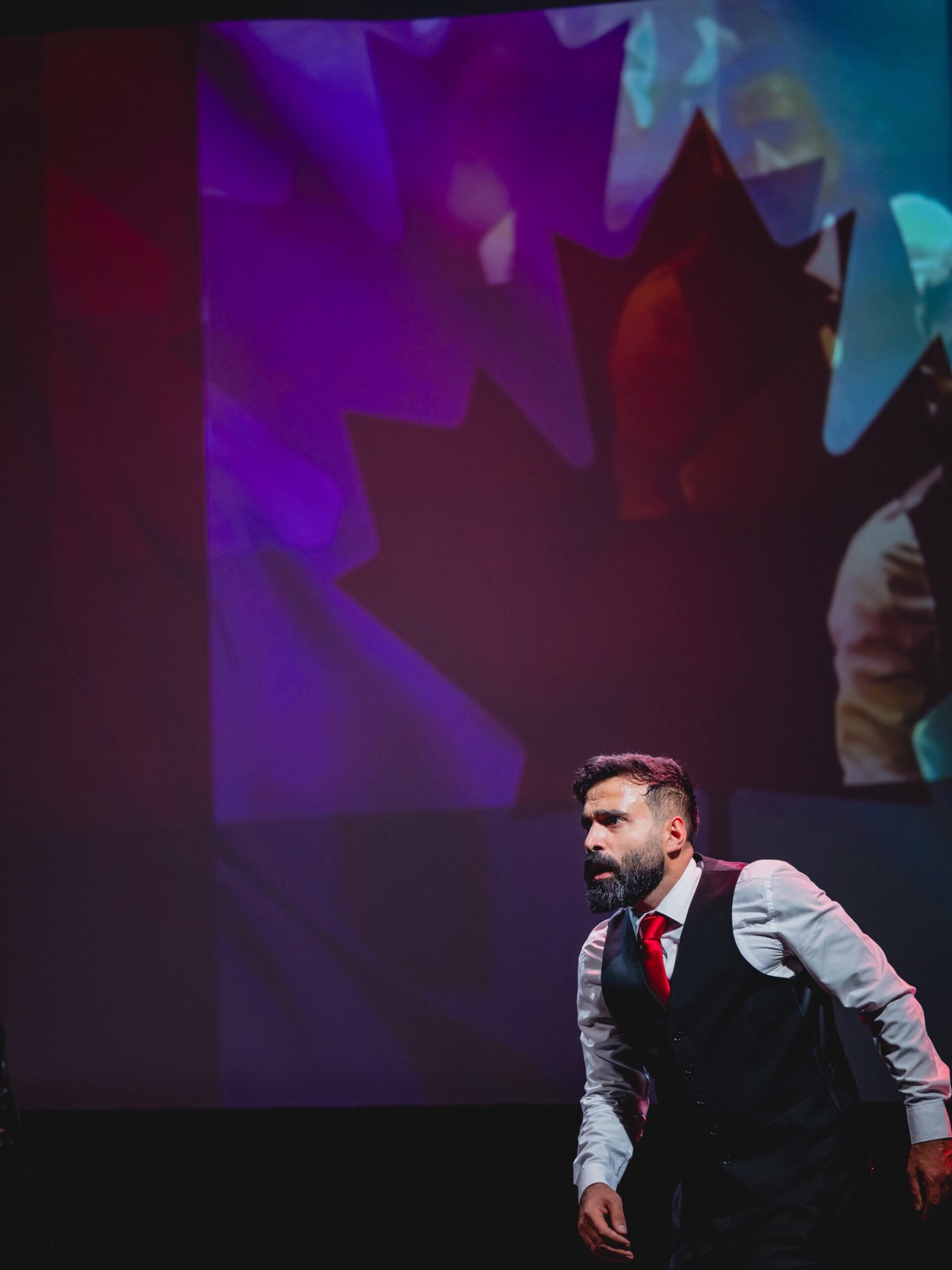
Nabil Traboulsi
Just before the pandemic shut everything down, I had the chance to attend a terrific production of Ella Hickson’s ‘Oil’ at ARC. I had never heard of ARC theatre before but was seeing many online advertisements for the play that piqued my interest.
I was pleased to have written a profile of Bahareh Yaraghi, one of the artists from this production. As I was thinking about other artists whom I’d like to invite for an interview, I remember that Nabil Traboulsi also gave a memorable performance that evening. I was pleased when I had contacted him and he agreed.
Nabil has received solid training as an actor according to his biography from his website. He has performed in New York, Toronto and Brussels. He is fluent in English, French and Arabic so I will have to practice my knowledge of the French language with him sometime. I see he has also performed at Theatre Francais de Toronto so I will have to attend a performance there as well.
We conducted our interview via email:
1. It has been the almost three-month mark since we’ve all been in isolation? How have you been doing? How has your immediate family been doing during this time?
I’ve been doing well given the circumstances. I mostly feel gratitude for being here in Canada where there has been some support provided to help us through this difficult period. There have been things that could’ve been more successful bug as a whole I believe we are doing well. Of course, some days are more difficult than others and it’s a time to be especially kind to ourselves and each other, but I live with my partner and we keep each other happy.
My parents live in Beirut, Lebanon (which is where I grew up). I have two brothers living in Berlin and Dubai and they are all safe and healthy. We talk regularly.
2. As a performer, what has been the most difficult and challenging for you professionally and personally?
We make our living by being around people, collaborating with other artists, and putting on shows for live audiences, so it’s been hard to have that taken away so abruptly, but it’s what needs to be done to get to a place where it’s safe to get together again. Looking ahead has also been a source of anxiety because it feels like theatres won’t be able to open safely for awhile.
3. Were you in preparation, rehearsals, or any planning stages of productions before everything was shut down? What has become of those projects? Will they see the light of day anytime soon?
I was in performances for ARC’s production of ‘Oil’ by Ella Hickson when the world came to a standstill. Thankfully, we were able to have two weeks of performances and we only had to cancel the last of our three-week run. I’m so grateful that we were able to share this very important play with our audiences and I wish the people who were planning on seeing it during the last week had been able to do so. Who knows, maybe a remount in the future?
My heart goes out to all the artists who were involved in shows but weren’t able to share their work with their communities. I know that theatres are working hard to incorporate these plays in future seasons so I have high hopes.
4. What have you been doing to keep yourself busy during this time?
I’ve been doing a lot of things that I usually do or want to do but didn’t have enough time for because of work. It’s been lovely to just be able to spend some time with my partner, Margaret, and sip a cup of tea in the backyard. We’re both actors so she’s been organizing weekly play readings on Zoom which has been a great way to discover new plays or revisit familiar ones so it’s a different experience from reading it alone.
We also go for daily walks and I try to exercise as much as possible.
I quickly notice that when I’m not active, I tend to feel ‘smaller’ and more prone to having a bad day. And then more of the common pastimes that a lot of us have resorted to: cooking, reading, watching films and tv shows, podcasts, tuning into Zoom readings and/or live interviews and panels. Music has been a part of my life since I was a teenager and it’s been an important creative outlet.
Oh, and I seem to have developed an interest in birds, which is something I never thought I would be into. They’re fascinating and incredibly unique and watching them makes me think of characters and acting.
This makes it sound like I’m accomplishing a thousand things a day so I want to clarify that there has also been A LOT of just sitting on the couch mindlessly browsing the internet or social media and some very unproductive days.
5. Any words of wisdom or advice you might /could give to fellow performers and colleagues? What message would you deliver to recent theatre school graduates who have now been set free into this unknown and uncertainty?
I’m trying my best to take it one day at a time and take in what’s happening around me. The actor in me is always and forever will be a student of human behaviour so I think it’s a good time to check in and see how I feel on a regular basis, but also to tune in and watch other people around me.
6. Do you see anything positive stemming from Covid 19?
Yes, I see a lot of positives. The status quo we were operating under before the pandemic hit was bad. The dominating capitalist and consumerist paradigm that we’ve developed over the past 50 + years is wreaking havoc on the planet and our ability to live in a fair society. I think it’s interesting that from a purely biological perspective, a virus has spread to curtail humans’ need (?) to drill for oil, pollute the planet and produce mass quantities of useless products. It feels like a self-regulation of sorts and it should be a wake up call going forward. The success of societies should be gauged by how the most vulnerable people are faring, and not by how many billionaires we produce or how much value we’ve created for shareholders and large corporations around the globe. I sincerely hope that on a macro scale, we will adjust in a way that is appropriate, before irreversible damage is done.
The only thing is that this has allowed us to stop and reflect on what truly matters in our lives. Even our industry can be a bit of a rat race, where we’re all trying to book the next job. I think a lot of people have been able to take a deep breath and feel like they have time to rest and organize their thoughts. Nevertheless, it’s important to recognize that even this is a privilege and that a lot of vulnerable people don’t have that luxury and have to hustle even harder to make ends meet during the pandemic.
7. Do you think Covid 19 will have some lasting impact on the Canadian/North American performing arts scene?
On a practical level, I think all industries worldwide will be impacted. It will take some time to recover economically as a country and a lot of our theatres depend on public funding. Overall spending is going to decrease which means less tax dollars for governments, in addition to the burden of making up for the crucial emergency benefits that were created and helped so many of us stay afloat, will make the recovery difficult but not impossible.
However, we’ve been putting on plays and telling stories for millennia so the core of what we do as artists doesn’t change and the core of how we experience art as an audience doesn’t change. It’s deeply ingrained in our DNA and our culture, and that is a comforting thought. We are resilient and we will adapt to the circumstances.
8. Some artists have turned to You Tube and online streaming to showcase their work. What are your comments and thoughts about streaming? Is this something that the actor/theatre may have to utilize going forward into the unknown?
I love it! I’ve watched a lot of performances online and it’s been a blessing. Live readings are even better. However, I don’t think this will replace live theatre in any way, shape or form. Theatre needs an audience to exist and nothing can replace that. If I wanted to experience something through my screen, I’m more likely to watch a movie or TV show because that was created for that medium specifically, and so it will be crafted more successfully than say, a video recording of a play.
This is a temporary situation and we will be back in our theatres when it is safe to do so. You can’t replace the live experience of the theatre the same way you can’t equate watching a concert online with being there.
9. Despite all this fraught tension and confusion, what is it about performing that Covid will never destroy for you?
The connection with my fellow actors and creatives. The community around it. The pleasure of being in front of a live audience. The joy of crafting a performance and finding the nuances and subtleties, and most importantly, understanding the human story that is being told. Those are some of the reasons why I love being an actor and they exist independently of Covid.
As a respectful acknowledgment to ‘Inside the Actors’ Studio’ and the late James Lipton here are the ten questions he used to ask his guests:
1. What is your favourite word?
Pamplemousse
2. What is your least favourite word?
NO
3. What turns you on?
The idea that all humans are connected through biology but also through our stories and myths, no matter when and where.
4. What turns you off?
Negativity
5. What sound or noise do you love?
Birds chirp in the morning.
6. What sound or noise bothers you?
The air show.
7. What is your favourite curse word?
COCK AND BALLS !
8. Other than your own, what other career profession could you see yourself doing?
Musician or investigative journalist
9. What career choice could you not see yourself doing?
Soldier
10. If Heaven exists, what do you hope God will say to you as you approach the Pearly Gates?
“Come on in, man, they’re waiting for you.”
To learn more about Nabil, visit his website: http://www.nabiltraboulsi.com.
Nabil Traboulsi
Just before the pandemic shut everything down, I had the…

Naishi Wang and Jean Abreu
Dancers Naishi Wang and Jean Abreu are currently touring their show ‘Deciphers’ across Canada, having started on January 26 and ending on February 23. I sat down for a Zoom call with both of them where I got to learn more about each one as artists and the history of how ‘Deciphers’ came to be.
Although their Dramaturg, Guy Cools, formally introduced them in 2019, Abreau jokes that they had been “flirting” for years– following each other’s work, liking each other’s social media posts, and expressing an interest in collaborating. With Wang based in Toronto and Abreu based in the U.K., it was not possible for the two to meet in person in 2020 like they had intended. However, they still began to bounce around ideas that eventually culminated in Deciphers.
When Cathy Levi at the National Arts Centre asked Wang about projects he was working on, of course he mentioned Deciphers; this led to the NAC offering Wang and Abreu a space to “explore” this ambitious project. However, with the ongoing travel restrictions, their residency had to live on Zoom.
Over a 3-month period, the two met biweekly and presented a “letter” to each other. Aided by their dramaturg, they would each write out “whatever [they] wanted to tell each other” and base their creation around these letters. At the end of this virtual process, they finished with seven letters that centered around the idea of “translation”. Of course, this process was limiting, but it was integral to the next step of their creation– finally meeting at the National Arts Centre in Ottawa.
Here, these seven letters were printed and splayed out in the studio space, allowing them to really visualize all the letters in relation to each other and begin to physicalize them. The theme of “translation” had permeated all parts of this creation process– translating their ideas into these seven letters, translating their at-home movements to a virtual space, and now translating those letters into what Abreu describes as “poetry of the body”. Not just movement, but creating a language from that movement.
By exploring the translation motif, the two artists began to see how each of their immigrant experiences fit into Deciphers. Naishi Wang was born in Changchun, China and moved to Canada in 2004 to train with the The School of Toronto Dance Theater. Jean Abreu was born in Brazil and moved to London in 1996 to study at the Trinity Laban Conservatoire for Music and Dance. While the two had a similar artistic upbringing and shared interests, a lot of their exploration came from the concept of “misunderstanding”.
Wang explains that: “In the beginning stages, we didn’t just say Okay, this is it. We’re going to focus on this immigrant experience. That came later.”
By working on the show, they recounted their teenage experiences of immigrating to an English-speaking country twenty years ago when translation technology was limited. This shared “perspective of misunderstanding” now started to infiltrate the creation process.
Wang explains how the entire process is “based on our experience with misunderstanding. Not everything is very clear. We don’t understand everything. We are trying so hard to find this natural rhythm of the body. Reading the body distance. Reading the tone. Reading facial expressions.”
Abreu shares that once they got over the “romanticism” of working on this project, they began to face the challenges that come with any creative process– they were just getting to know each other, they now had to translate their online work to a studio space, and they had to try to understand why the theme of translation was so important to them.
“We realized we were living in this continuous translation mode. Thinking in these two terms, between these two places all the time… As we got deeper into the collaboration, we were constantly trying to explain things, and we’re thinking about how meaning is transported, and that then became very central to what we wanted to do.”
These complimentary and contrasting experiences are reflected in ‘Deciphers’ through its cultural fusion and interdisciplinary elements. In addition to dance, there is also “spoken word, breath, and ink on paper”. Even the Chinese Folk Dance and Brazilian dance styles themselves are not straightforward. While Wang trained in Chinese folk dance when he was little, he now has more training and experience in a Western “contemporary form of embodiment”. Instead of being “authentically” Chinese or Western, he feels that he’s been able to form a new cultural identity as an artist by mixing the two styles. Similarly, although Abreu has experience in Brazilian dance, he’s also lived in the U.K. for over 20 years. His idea of Brazilian culture “has been so diluted that it’s hard to claim”, and still, he “can’t fully claim the UK side”. However, instead of trying to put labels on his artistic style, he has also embraced the beauty of fusing his cultures.
When I asked them about anything else they wanted to mention about the project, they chose to highlight the artists who shaped Deciphers including: Lucie Bazzo (Lighting Design), Ivy Wang (Visual Designer), Olesia Onykiienko (Composer), Guy Cools (Dramaturg), Ginelle Chagnon (Outside eye), Xing Bang Fu (Rehearsal Director), Fides Krucker (Voice Coach), Emerson Kafarowski (Technical Director), and A.J. Morra (Stage Manager)
And give thanks to Canadian support from: the National Arts Centre, the Harbourfront Centre, MAI Montréal, PuSh International Festival, the Canada Council for the Arts, the Ontario Arts Council, the Toronto Arts Council, as well as U.K. support from: Fabric Dance, Dance City Brighton Dome, South East Dance, Towner Gallery, and the Arts Council of England.
A co-presentation with Harbourfront Centre and DanceWorks, ‘Deciphers’ runs February 8, 9 and 10 at the Harbourfront Centre Theatre, 231 Queen’s Quay West. To purchase tickets: https://harbourfrontcentre.com/event/deciphers/
Naishi Wang and Jean Abreu
Dancers Naishi Wang and Jean Abreu are currently touring their…
Natasha Powell
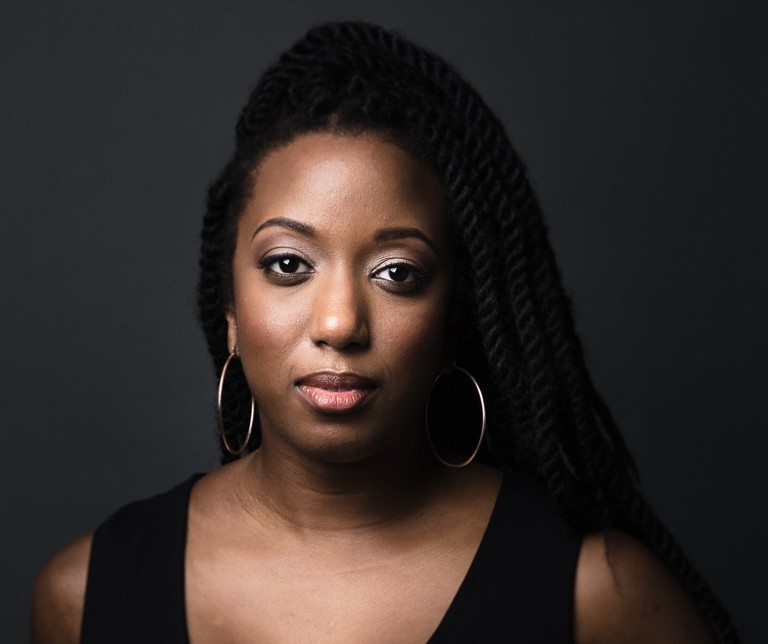
Holla Jazz Founding Artistic Director Natasha Powell will celebrate important milestones and prepare for the world premiere of her upcoming show on stage at the Winchester Street Theatre.
In partnership with DanceWorks and Toronto Dance Theatre, Holla Jazz will celebrate ten years with The Room Upstairs, an ode to the impact of John Coltrane, one of the most influential musicians in jazz history. The production will also mark the occasion as a fitting tribute this year, in what would have been Coltrane’s 100th birthday.
Choreographed by Powell, Room will ruminate on the inspirational beauty of Coltrane’s creative process, honed in a special room upstairs in his family home.
Powell is quite proud of HOLLA’s success in the Canadian dance canon. While she’s held different positions in different kinds of jobs, the experience of making art with body and with others has been deeply satisfying:
“I recognize that what we do is bigger than me… the art forms I practice come from a lineage of folks that made incredible contributions to the world under circumstances that were much more than I experienced right now.”
Her company’s name comes from her unique practices in hip hop, house, and jazz:
“HOLLA JAZZ is a meeting place for those dance styles to play and work with one another. I wanted to be true to my personal experience and the kinds of artists I was interested in collaborating with.”
A recent press release I received about the show states Room’s choreography will ruminate on the inspirational beauty of Coltrane’s creative process through the vocabulary of black vernacular dances, while set to a live score. The interesting part – it’s all honed in a special room in the upstairs of Coltrane’s family home.
The release also speaks about how Coltrane prioritizes spiritual practice and deeply collaborative relationships with others. For dance artists, Powell states that context is to be considered. If an artist creates something to be shared, they are often collaborating with artists in different departments to present an idea.
She also adds: “Even if you’re not making something to be shared publicly, the act of collaboration can exist in practice and communal environments as a means for connection and growth.”
Natasha speaks about Stephen Nachmanovich’s Free Play: Improvisation in Life and Art. As a dance artist herself, she values the richness that comes from working with other artists. Natasha also connects to Stephen’s idea about movement as a form of meditation. If a dancer is focused and deeply connected in the moment, the dance can feel like an act of disappearing.
Our email conversation then turned to the upcoming The Room Upstairs, beginning April 29. Powell has been inspired to create work in specific locations. It inspired her to explore what creative spaces mean to the artist and to those they care about. While she hears many things in Coltrane’s music – freedom, quirkiness, swing, coolness, playfulness, sadness and beauty – she learned more about Coltrane and his family:
“It led me to be inspired [in that] he specifically moved [his family] to a new home where he could focus on music-making and being close to them. [The creation of Room] inspired me to create a work in a space that felt cozy, creative and playful.”
Powell also shares the performance with dancers Raoul Wilke, Caroline “Lady C” Fraser, Hollywood Jade, and Miha Matevzic. The show’s musicians include Tom Richards, Thompson Egbo-Egbo, Eric West, Scott Hunter, Colleen Allen and Rebecca Hennessey. Natasha has nothing but absolute praise for these artists and says they inspire her to be a better artist every day. She hopes audiences will experience the same feeling.
Those audience members with an educational and/or training background in music, jazz, and dance, I’m sure the performances will speak volumes. To those who don’t have a background in these art forms, Natasha hopes that these audience members will walk away with a feeling:
“Whether they felt angry, sad, or annoyed at it all, at least they walked away feeling something, while also learning that this music and dance can come together to create an experience.”
As we concluded our email conversation, I asked Natasha if she had any sage words of wisdom or advice for new dance artists attending The Room Upstairs. She does:
“It’s okay for your dreams and ideas to change. What you felt a few years ago may look different than where you land, and that’s okay. Be mindful of who you surround yourself with. You will become a product of your environment.”
In partnership with Dance Works and Toronto Dance Theatre, Holla Jazz presents the world premiere of The Room Upstairs, April 29 – May 2 at 7:30 pm at the Winchester Street Theatre, 80 Winchester Street, Toronto.
To learn more about HOLLA JAZZ: www.hollajazz.com.
Headshot Credit: Kevin Jones
Natasha Powell
HOLLA JAZZ Founding Artistic Director
Holla Jazz Founding Artistic Director Natasha Powell will celebrate important…

Nathalie Bonjour
For someone like myself who has never had any formal training or background education in dance, why is it important to reach out to those of us who have no expertise in this area?
Director of Performing Arts at Toronto’s Harbourfront Centre Nathalie Bonjour was grateful to have a Zoom call with me where she was eagerly willing to engage in such a conversation. Her response regarding those audience members who have no training in dance:
“I don’t think you need to have any background or academic understanding of dance especially in this [upcoming] piece of [Chapter 3: The Brutal Journey of the Heart L-E-V Israel]. The music is very strong in this piece so audiences will be drawn in right away as is the lighting. This is a piece where audiences must let themselves be carried on the journey. The movement is very particular, very unique. There’s an energy
as there is a tension in wanting to move forward but there is an extension back.”
Bonjour emphasized clearly that it is the emotion and the tableaux on stage that speaks to audiences, and one doesn’t have to have any background or training to experience and feel that. I agree with her on this account as those dance productions that I have had the opportunity to watch, to listen, to hear have spoken to me on many levels.
The Canadian premiere of Chapter 3: The Brutal Journey of the Heart L-E-V Israel opens March 3 and plays again March 5, 2022 at Toronto’s Harbourfront Centre. It will play in New York first before it opens here. Choreographed by Co-Artistic Director of L-E-V Israel’s Sharon Eyal this production opens Torque, Harbourfront’s international contemporary dance series. From a press release I received, Ms. Bonjour states that Journey: “invites us on an exhilarating journey through the extreme states of the heart, from anguish and fervour to passion and rage. It is a universal narrative, and we can all intimately relate to L-E-V’s vulnerable study on heartbreak.” Additionally, stunning costumes for the dancers, designed by Christian Dior’s Maria Grazia Chiuri, emblazoned with one bright red bleeding heart will emphasize the sensuality and the emotion of the work.
Bonjour spoke candidly and compassionately about the heartbreak for all those involved in the art of dance as the community has suffered just as all professional artists have experienced. But with the dialogue of Black Lives Matter and Indigenous residential schools, the truth, and their creators and creations, the dance community has become stronger in the last two years.
Harbourfront Centre has been creative in finding ways to get through and keep going these last two years. The company had to learn how to become video producers and come together as presenters and learn how to support artists in other ways creatively. Like many of the professional performing arts companies, Bonjour recognized how programming changed at Harbourfront. There were a number of live streams and pre-recorded shows along with a lot of digital experiences in working with AR and VR in person. Outdoor installations and projections also filled the void so audiences from the last two years could still come down to the Harbourfront and remember there is a performing arts Centre there.
Bonjour supervised The Junior Festival and The Summer Music in the Garden. Some of these editions were done online completely during the first summer of the pandemic. In the second year, Bonjour recognized how people have been on screens a lot and how could Harbourfront do something different? There was investment in commissions of works that could be seen later when Harbourfront re-opens. The Toronto International Festival for Authors has done two editions fully online.
When theatres reopened but not to the general public, there were production residencies at Harbourfront for artists to continue working on their shows. As a larger organization in the ecosystem of the performing arts, Bonjour wanted to know how Harbourfront could help other organizations so when everyone goes back there are those smaller presenters as well. It followed through with a financial partnering with The Citadel where there was support of three solos by female choreographers. In August, Harbourfront welcomed the National Ballet of Canada as an outreach and it was so successful that Harbourfront will be doing it again. On the national level, Bonjour was part of an alliance that was created with other dance presenters – the NAC Dance Department, Danse Danse in Montreal and Dance House in Vancouver – to start an initiative called Digidance.
In concluding our conversation, Nathalie and I spoke about how it is the anticipation in watching dancers move and intertwine with each other that makes dance productions visually moving for me. I have seen some Fall for Dance Toronto productions over the last couple of years and have been captivated by the dance artists’ electric synchronicity with each other. I’m looking forward to experiencing what Bonjour describes for Journey as a universal narrative on heartbreak since we’ve all been there at one time in our lives.
I hope you will also join this journey.
Chapter 3: The Brutal Journey of the Heart L-E-V Israel performs live March 3 and 5 at 7:30 pm at The Fleck Dance Theatre, Queen’s Quay Terminal 3rd Floor, 207 Queen’s Quay West. Suggested ticket prices are $20 – $ 95, Pay What You Wish. Ticket link and website: www.harbourfrontcentre.com.
Nathalie Bonjour
For someone like myself who has never had any formal…
Nathan Carroll
Again, I’ve recognized Nathan Carroll’s name when I had seen he had read and liked some of the profiles I’ve been compiling throughout this pandemic. I was wracking my brain in trying to remember where I’ve seen him perform.
And it’s wonderful when the artist sends me their bio and I can then say, yes, I’ve seen that particular production.
Nathan has performed on stages across Canada, from Vancouver to Charlottetown. His credits include: Next to Normal (Musical Stage Co./Mirvish) (saw this one), Hook Up (Tapestry/Theatre Passe Muraille), Vimy (Western Canada Theatre), Once (Mirvish) (saw this one), and The Book of Esther/Bordertown Café (Blyth). A graduate of George Brown Theatre School, he has been a member of 3 Dora Award-winning ensembles. Nathan lives in Toronto with his dog Henry.
We conducted our conversation via email. Thanks, Nathan, for your time:
In a couple of months, we will be coming up on one year where the doors of live theatre have been shuttered. How have you been faring during this time? Your immediate family?
It has been a rollercoaster, and I feel for anyone who has had to deal with my rapidly shifting moods. The lows have been low. But the highs have been, surprisingly, high!
The week the pandemic was declared, I came down with another virus that laid me out for a month and continued to make me sick until November. Add a bad living situation and the evaporation of every industry I was working in at the time, and I went dark quite quickly. I remember recoiling at the very idea of participating in online theatre.
Things turned around in the late spring when I developed a more positive POV, kicked out my freeloading roommate, and felt the summer coming. Forced to be alone with my thoughts (terrifying!), without the validation of work (I live for the applause, applause, applause), and dating a couple of flakey guys (fair in a global emergency!) combined into an intense period of personal growth. It sucked at the time, but I’m grateful for it now.
I am fortunate that my family has been healthy. They’ve all experienced their own challenges, from my brother’s endless Zoom meetings my older sister taking care of 2 teenagers, but we’ve so far been spared the loss of anyone close to us.
How have you been spending your time since the theatre industry has been locked up tight as a drum?
I’ve oscillated between (short) periods of intense productivity and (longer) periods of ennui. I have also tried to change my relationship to the ‘less productive’ periods and get out of the mindset that says I have to accomplish things to have worth.
After those dark first few months of the pandemic, I realized I needed to change my daily routine to try and pre-empt a more serious depression. I, with extreme reluctance, tried to do something physical every day (doing yoga in a basement with low ceilings did not inspire joy) and threw myself headfirst into a few creative projects.
I’ve never been able to work slowly and consistently on personal projects. But I do well when I give myself deadlines, writing challenges, and to-do lists. I scheduled a Zoom reading with some actors who have been generously helping me develop my play Cenotaph. This forced me to finish a draft worthy of their talents and watching Yolanda Bonnell, Aldrin Bundoc, Graham Conway, and Michael Chiem read my silly play lit a much-needed fire under my ass to keep writing.
After 4 years of procrastination, I finally started a YA novel about an experience I had being gay at a Baptist church camp.
And my good friend Fraser Elsdon had the idea to co-write a Christmas rom-com which we outlined together on video calls, providing some much needed social engagement at the same time.
Though I famously have no attention span, I decided quarantine might a good time to try and watch more films. I made a list of movies I’d never seen, like The Royal Tenenbaums and 9 to 5 and Breathless, and made watching a movie the ‘thing I was doing’ each evening instead of just listlessly wandering around my apartment wondering why my dog wasn’t laughing at my jokes.
Of course, I couldn’t keep up with the freakish expectations I set myself for longer than a few weeks, but it did help kick me out of my funk.
Since then, after a summer I spent selling cookies and hanging out at Hanlan’s Point, I’ve been working on a few different things. I started as Assistant General Manager with the Paprika Festival in the fall, the workshop facilitation I do with Canvas Arts Action has shifted online, and I’ve been teaching guitar lessons through Project Humanity’s CAPP program. Commercial and film/tv auditions have picked up a little, and I’ve been working on developing some of my own projects in that medium.
But mostly I drink coffee, spend a lot of time on Twitter, procrastinate doing my daily yoga, and hang out with my dog!
The late Hal Prince described the theatre as an escape for him. Would you say that Covid has been an escape for you or would you describe this near year long absence from the theatre as something else?
I hesitate to describe this year as any one thing but, sadly, this year has felt like an escape in some ways. The theatre industry is dysfunctional, and there are aspects of our industry I’ve been relieved to take a break from.
It’s been nice to get away from the hustle. From being underpaid (it was hard to realize how much more financially stable I felt on CERB than I have on most of my theatre contracts). From being looked down on by a large segment of society. From nepotism and bullying and sexual harassment.
Start talking about racism and shadeism and misogyny and fatphobia and transphobia and femmephobia and ableism, and that dysfunction becomes even more clear. Yes, we appear to have begun to take some of these things seriously, but I can’t imagine someone who has experienced these forms of discrimination not experience some reprieve when the industry paused.
I’ve interviewed a few artists several months ago who said that the theatre industry will probably be shut down and not go full head on until at least 2022. There may be pockets of outdoor theatre where safety protocols are in place. What are your comments about this? Do you think you and your colleagues/fellow artists will not return until 2022?
I decided early on that I wouldn’t try to predict the future of the pandemic or when we might be able to perform live theatre again. Even epidemiologists don’t know for sure.
I’ve never been particularly good at staying in the moment. I’m always planning ahead, setting goals and then working towards them. Sometimes I even have a hard time doing something as simple as drinking my coffee in the morning. I literally wonder if I’m ‘enjoying it enough.’ And it’s impossible to enjoy something if I’m wondering if I’m enjoying it……. It’s amazing how my brain can invent problems where none exist.
As terrible and depressing as the pandemic has been, I’ve taken it as a forceful reminder that I can’t predict the future, and that I can always do a better job of living in the moment, even if the moment is feeling pretty shitty. I’ve tried to practice being present, and ok with not thinking months in advance like I’m used to.
It may not be a popular take, and I’m certainly not suggesting that others should take the same approach, but I decided early on to assume that I’ll never act in live theatre again. I knew that having expectations to be back onstage in a month, 3 months, a year, or 3 years—and then experiencing the disappointment of another cancellation—would be hard on me, so I moved forward with no expectation that I’ll get to perform at any point. My mom is a therapist, and one of the things she’s taught me is that imagining the worst possible outcome and accepting that possibility can curb acute anxiety. I often feel more stress imagining the bad things that could happen than I feel when the bad thing actually does happen. Imagining my future without theatre and accepting that possibility has stopped me from the stress that comes from guessing and predicting and worrying.
But I know how fortunate I am to have had 10 years of experiences as an actor and feel intense sympathy for artists at the beginning of their careers.
Do I actually think theatre won’t come back? No. I know we’ll get back to it at some point. I am just trying hard to stay present and enjoy the time I’m being given to explore other paths my life could take.
I had a discussion recently with an Equity actor who said that yes theatre should not only entertain but, more importantly, it should transform both the actor and the audience. How has Covid transformed you in your understanding of the theatre and where it is headed in a post Covid world?
I think we’ve made ‘entertaining’ a dirty word in the theatre industry. I don’t agree that it’s more important for theatre to ‘transform’ the actor and the audience than it is for theatre to entertain. To be honest, I don’t exactly know what ‘transform’ is supposed to mean.
Maybe the fact our society doesn’t value entertainment as something worthy of investment and respect has made us shy away from the idea of entertainment being enough. But it is enough that theatre is entertaining.
COVID has made us realize how important entertainment is. People are getting through this time by watching TV and films and stand-up comedy and Zoom panels and listening to podcasts and reading books and laughing at tweets and Tik Toks.
Many of my favourite TV shows, like Broad City and Key and Peele and Arrested Development and RuPaul’s Drag Race, aren’t necessarily ‘transformative.’ But that doesn’t diminish their value. They are—to me—just as essential as shows that aim to be profound.
Similarly, many of my favourite theatre experiences, like School Girls: The African Mean Girls Play, Urinetown, and Mr. Burns: A Post-Electric Play, have been entertaining above all else. They’ve also been indelible, but they wouldn’t have been so if they weren’t first and foremost entertainting.
And I don’t think COVID has changed my understanding of theatre or where it is headed. I think the powers-that-be have always known theatre should be more inclusive. It just hasn’t been in their own best interest to make those changes. Theatre has always needed to appeal to a younger audience. Part of that is making sure theatre is entertaining and another part of it is giving opportunities to new and younger voices without waiting for them to be ‘established’ or a ‘safe bet.’ COVID didn’t teach us either of these things, it just gave us the space and time to think more about them.
The late Zoe Caldwell spoke about how actors should feel danger in the work. It’s a solid and swell thing to have if the actor/artist and the audience both feel it. Would you agree with Ms. Caldwell? Have you ever felt danger during this time of Covid and do you believe it will somehow influence your work when you return to the theatre?
I actually picked up a copy of Zoe’s autobiography during quarantine. I’ve looked up to her since I was a teenager. Though I’ve never seen her work, I was obsessed with the history of the Stratford Festival as a kid. The Michael Langham-directed Antony and Cleopatra with Caldwell and Christopher Plummer was, by all accounts, one of the biggest touchstones of Stratford’s ‘Golden Age,’ alongside Langham’s Love’s Labour’s Lost, the Robin Phillips Measure for Measure with Martha Henry and Brian Bedford, and the John Hirsch Three Sisters with Henry, Maggie Smith, and Marti Maraden. I ate up every story I could find about these productions and dreamed of working there.
I’m not sure that I agree with Zoe. I don’t know that danger is what we should be aiming for. The best work requires risk, absolutely. Making the choice that isn’t obvious, that will surprise the audience, that might not work. But danger makes me think of fear.
I’ve done some of my worst work as an actor when I’ve been afraid. A lot of this was in theatre school, taught by people who had worked with these directors from Stratford’s ‘Golden Age.’ And instead of challenging me to produce work filled with boldness and risk, their techniques scared and humiliated me into creating work that was stifled and small and terrified.
Because the shadow side of those Stratford tales I didn’t read about included bullying, abuse, fear, and manipulation. I know this because actors have told me what it was really like, and the danger that accompanied the idea of speaking up.
And yes, actors like Zoe were fortunate to thrive in those environments and produce iconic portrayals of Shakespeare’s great characters. But I know what other actors and stage managers endured at the same time. And I think Zoe would have been brilliant as Cleopatra without feeling danger.
I’ve been lucky not to feel real danger during COVID. However, the perspectives from artists who have bravely shared when they’ve felt in danger at work (like the #InTheDressingRoom hashtag and the Black Like Me: Behind the Stratford Festival Curtain discussion) have shifted and augmented how I will approach the work when we are able to return to it.
The late scenic designer Ming Cho Lee spoke about great art opening doors and making us feel more sensitive. Has this time of Covid made you sensitive to our world and has it made some impact on your life in such a way that you will bring this back with you to the theatre?
I can’t conceptualize a more sensitive way I’ll approach theatre as a result of the COVID pandemic, though I do think I will bring a new gratitude to the work when I’m able to return to it. I’ve learned a lot about society and the world during this time, but COVID didn’t mark the start of the learning.
Some of the issues that we’ve seen come into the limelight since the pandemic began—like racial injustice, police brutality, inequity in the healthcare system, anti-Indigenous violence, and the ultrawealthy profiting while the most marginalized struggle—have existed for centuries. It’s great to see people engaging with these issues, and there is always more for me to learn, but I know it’s been exhausting for some watch people ‘discover’ their existence during this time.
By no means am I trying to brag about my own ‘wokeness’, I just think these things have been visible for a long time, and it’s been weird to witness a sudden interest from the majority of people around me in something I’ve seen marginalized artists speaking loudly about and trying to bring attention to for a very long time.
Again, the late Hal Prince spoke of the fact that theatre should trigger curiosity in the actor/artist and the audience. Has Covid sparked any curiosity in you about something during this time? Has this time away from the theatre sparked further curiosity for you when you return to this art form?
I’ve become curious about a lot of things in the past 10 months. COVID has granted me more time to watch film + tv, I resubscribed to the Toronto Star and have the time to read the Saturday and Sunday paper throughout the week, and I inhale hours and hours of podcasts while I walk my very active dog.
I started dating someone from Azerbaijan in the Fall, and through discussions with him and some articles and podcasts I became curious about the history of both Azerbaijan and Armenia, as well at the history of the region, from the Ottoman Empire to the Soviet Union. Being able to admit that I had hardly heard of Azerbaijan before I met my boyfriend, it’s been a good opportunity to become more aware of both the history and current affairs of the Caucasus.
Probably my favourite tv series I’ve watched since this all started has been Veneno, about the life of Cristina Rodrigues Ortiz, an iconic trans woman who rose to prominence in Spain in the mid-90s. I’ve become incredibly curious about her life and the lives of other women in her orbit since watching the show, and am also fascinated and inspired by how the series was made, with a commitment to cast trans actors in trans roles—including the actors who did the English dub.
One of my favourite books I’ve read in quarantine was The Nickel Boys by Colson Whitehead, which was awarded the Pulitzer back in May. Because it’s based on a real school in Florida, it sparked my curiosity and led me to do research on the real-life situations the book was based on. There are some horrific parallels between this school (the Dozier School for Boys) and the residential school system in Canada, which I’d read about in books like Seven Fallen Feathers and Indian Horse. These books, along with a long article about youth detention centres in the Star, led me to research the Sprucedale Youth Centre in my hometown—where my friend’s father worked and where we even held our elementary school track meets every year.
But the biggest area I’ve been curious about, and the direction COVID has specifically encouraged me to move in, is towards film + tv. I have great admiration for the artists who are exploring what live theatre looks like in a pandemic, but I am personally using this time to learn more about screenwriting and how to produce film. I’ve been chatting with some incredible young filmmakers, have a few projects in development, and am learning as much as I can about the medium in the hopes that I can find a way to bring the skills I’ve acquired as a producer and theatre artists to the world of film + tv.
To connect with Nathan, Twitter: @nnncarroll / Instagram: @wademuir
Nathan Carroll
Again, I’ve recognized Nathan Carroll’s name when I had seen…
Nigel Shawn Williams
I’m sure each of us will remember certain productions of plays that have touched our hearts over the years. For me, this would be the Stratford Festival’s engrossing and moving production of ‘To Kill a Mockingbird’ in 2018. I reviewed the final preview as I could not make the opening. It was a school matinee and there were several groups there.
I remembered over the years being in audiences where there were students and wondering how they would respond.
Like me, many of the students around me had tears in their eyes at the conclusion. Most of these kids were on their feet at the end to give the actors a well-deserved standing ovation.
It was an honour to have interviewed the director of this production, Nigel Shawn Williams. During our Zoom conference, he let me know just how appreciative he has been of the compliments he received in 2018. Nigel explained how there are certain opportunities one gets as an artist and director to create change. What made ‘Mockingbird’ so successful for him was to show the contradiction in the story of the human being and to bring out the racism and misogyny in the story. Nigel thrives in telling stories like this.
I certainly hope that I will get a chance to see future productions directed by him again once it is safe to return to the theatre:
1. How have you and your family been keeping during this nearly three-month isolation?
I know, it’s been nearly three, three and a half months. We have a contract as citizens with our community and our country to remain isolated. It’s a responsibility. Yes, sometimes it’s inconvenient but not overwhelming but it’s how you put it into perspective. We’ve been okay, but in the grand scheme of things historically, Joe, this is not a big deal. Being asked to do what we’re asked to do. It’s not overwhelming as it depends on the perspective in which you put it. This contract we have with the pandemic – it’s something we have a responsibility for.
On a very personal and blasé note about my family, we still have a great sense of humour. We’re able to spend a lot more time with each other. We laugh and joke. We get out in the forest and walk. So, it’s been okay.
2. What has been the most challenging and difficult for you during this time personally? What have you been doing to keep yourself busy?
I guess, it’s a focus. Taking away the industry of film and television and theatre where the hardest thing is waiting for something that I don’t know what I’m waiting for. I’m very work focused and agenda driven, and this not having any sense of work on the horizon or not knowing what that’s going to be has created a sense of unease. I’m a husband and a father and so there’s the concern of financial security of keeping the house, the car running, not going into debt, making sure there are groceries. We’re not in debt, but like every other Canadian there’s a finite amount of savings, if you have savings at all.
To keep busy around the house, the list around the house is pretty much nonexistent. Every project around the house from windows which have no mould, they’re re-caulked, everything that’s needed to be re-painted or sanded. My deck’s re-finished. I could put this baby on the market right now. It’s staged.
These two parts of the question go hand in hand. I need a project to do. This isolation and quarantine have allowed me to not look outward but to look inward to look inside my home, inside my family, helping kids with their online learning. It’s trying to stay buoyant but at the same time honest with our kids and the reality.
I’ve been working around the house and trying to make sure that everyone around me whom I love is as buoyant as possible.
3. Were you involved in any professional projects when the pandemic was declared, and everything was shut down? How far were you into those projects? Will they come to fruition sometime soon?
I had just finished a project. I directed the Canadian premiere of ‘Controlled Damage’ by Andrea Scott at the Neptune Theatre (Halifax). ‘Controlled Damage’ was the last full production staged by the Neptune. My company was able to finish the run at the end of February and then just after that everything hit. So, I was very fortunate. My project was completed.
On the other hand, my wife was in a run at Theatre Aquarius that was cut short. I know many colleagues, acquaintances and friends who had their contracts cut short, but I was very fortunate that my company family was very fortunate to be able to finish their run.
4. Some actors whom I’ve interviewed have stated they can’t see anyone venturing back into a theatre or studio for a least 1 ½ to 2 years. Do you foresee this possible reality to be factual?
Well, yeah, I do. Whether or not I like to admit it or not, I think the live performing arts of orchestra, opera, dance, narrative theatre will unfortunately and probably be one of the last industries to open up. I know there is a lot of conversation with Artistic Directors, PACT, and Equity on how to do this safely not just for our patrons but also for our artists. It’s a difficult task. There are theatres in this country not being supported by this government as much as any other countries around the world, it’s difficult for them to sustain themselves on a 30% house. Self isolating an audience is difficult.
What I’m concerned about is that we start programming for only one-act plays so we don’t have intermission. We don’t have to worry about how the audience mixes and mingles, but I’m afraid that this is going to be a reality. I think it’s not just the logistical reality of how to have patrons in a theatre or how to have your artists safe in rehearsal or stage management, and your designers safe; it’s also giving the audience, the patrons and the general public the confidence and the want to come back into the theatre. And this is going to take time.
The audience does want to take part in that community and to hear and see stories and to share that same energy. Audiences do want to come back, but it’s going to take confidence to be built around the sense of gathering.
5. In your estimation and opinion, do you foresee COVID 19 and its results leaving a lasting impact, either positive or negative, on the Canadian performing arts scene?
There will be an impact financially. In the larger ideological sense of what I believe theatre to be, theatre will always come back. Theatre was our first newspaper and it will be our last. The sense and the culture and the need for story telling will always be there. The shared experience of energy between performer and audience is something that we’re all just connected and wired to and we need that, and I don’t think that will ever go away.
The impact of what we’re going through right now is in danger of jeopardizing a lot of smaller independent theatre companies and mid size theatre companies that don’t have the donorship and stakeholders that the larger ones have. I’m very fearful of a lot of our theatres right now staying financially healthy through all this into next year.
It’s a many pronged answer to this question. Of course, it’s going to impact the writing that is going to come out, the creative process and sense of creation, and how we go back into rehearsal and how we create in that cozy environment is going to change itself. I think it’s going to circle back around to the power of storytelling that is community, and there’s a necessity to tell stories about love. And it’s very difficult to tell stories about love when you’re six feet away.
Hand in hand with the confidence that we, as a society, have built up to get back into the theatre, so will the confidence be regained telling the stories as is necessary.
6. Do you have any words of wisdom to build hope and faith in those performing artists who have been hit hard as a result of COVID 19? Any words of sage advice to the new graduates from Canada’s theatre schools regarding this fraught time of confusion?
Well, I don’t think any artist that has been working in the industry requires sage advice right now. It’s been three months, and everyone has been surviving it and going along with it. If anything, I’m an individual that requires everyone to maintain their responsibility in this.
For the next generation of artists coming out of school and graduating and confronting this what seems an immovable roadblock, I think the best thing for them to do is to stay engaged. Stay engaged as human beings. What is happening with the pandemic right now, I think, is hand in hand with the focus that our citizens are going through with the anti-racism protest. I think this bubbling of energy is necessary. There’s an incredible amount of witnesses right now that are focused and will not lay down anymore when the system betrays them again.
So, the young artists that are coming out and can acutely learn that the other artists that have been speaking out about injustices, misogyny, and racism backstage in the workplace. The kids at school coming out have probably experienced this and they don’t feel they have a voice.
Coming around to the simplest answer to your question, I would encourage all young artists to remember they have a voice, and to not be silent, and to never be silent.
7. What is it about the performing arts that still energizes you even through this tumultuous and confusing time?
My relationship with the performing arts hasn’t changed because of this. I still need to tell stories. I still need to feel that I have a responsibility to right wrongs, to uncover indignities and injustices in our society. The plays I mostly am attracted to when I direct are ones that are combative to a great degree of the status quo to a system that is built to keep people under.
My need to tell those stories hasn’t changed. On a professional level, it has become a little bit more precarious about when or if there’s going to be work. The sense of sharing a story and having the ability to have someone in the audience question what they believe or believed, how they engage with another human being, and the power that can create, and that we have the artists to do that. That is a change, and that’s what energizes me, and that’s what I’ve love about it. And that’s what I’ve always loved about it.
The other thing that energizes me about the performing arts and theater -I love the collaboration in doing theatre. I love not being the smartest person in the room and letting others shine, let the designers be artists and let actors make mistakes in a free and safe space to work is something I cherish. That’s what energizes me.
With a respectful acknowledgment to ‘Inside the Actors’ Studio’ and the late James Lipton, here are the ten questions he used to ask his guests:
1. What is your favourite word?
Delicious.
2. What is your least favourite word?
The ‘N’ word.
3. What turns you on?
Insight.
4. What turns you off?
Ignorance.
5. What sound or noise do you love?
My family laughing.
6. What sound or noise bothers you?
When someone snorts their own snot. I hate that! Absolutely hate that! Use your thumb or get a tissue.
7. What is your favourite curse word?
Fuck! I love that word. (Nigel and I shared a good laugh over his answer)
8. Other than your current profession now, what other profession would you have liked to attempt?
An ophthalmologist. I’ve always been fascinated with the eyes.
9. What profession could you not see yourself doing?
An ophthalmologist (And again, Nigel and I shared a good laugh over his answer).
10. If Heaven exists, what do you hope God will say to you as you approach the Pearly Gates?
“Shaken or stirred?” I would think he would offer me a drink. I think God would assume I’d like a martini. My life’s not going to turn off just because I go to heaven.
Twitter: @NswNigel.
Nigel Shawn Williams
I’m sure each of us will remember certain productions of…
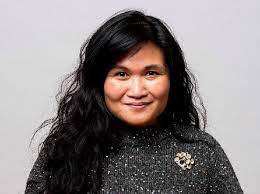
Nina Lee Aquino
What a delightful conversation this afternoon with Factory Theatre’s Artistic Director, Nina Lee Aquino. An absolute pleasure in hearing her speak, rather candidly, at times, about how she has been coping as a self-isolated artist.
Nina Lee is choosing to remain optimistic in the face of this pandemic. Just from listening to her today, I felt reassured that she is another strong individual to lead Factory out of this darkness right now of uncertainty and confusion into whatever the future may hold. She put me at ease very quickly with her witty sense of humour combined with her dynamic spirit of counsel and fortitude especially in how she is looking where she will take Factory over the next few years.
Nina Lee and I conducted our conversation via Zoom:
It has been nearly three months since we’ve all been in lockdown. How have you and your family been keeping during this period of isolation from other immediate family members and friends?
Well, it doesn’t feel like isolation other than the fact than I’m just really at home for almost 24/7. In terms of workload for myself if anything it’s been a lot more. We’re a family of 3, my husband, Richard, and 13-year-old daughter, Eponine. Surprisingly or maybe not so surprisingly everyone has been busy. I mean everyone in the family.
My 13-year-old daughter is juggling her school which has fully transitioned online. She’s had a couple of theatre gigs – online workshops or online presentations- with different theatre companies (YPT). Her movie also premiered online with the virtual edition of the Canadian Film Festival. She’s done some PR work. Apart from school, she’s had her own theatre work and the responsibilities that come with it – reading the script, making sure she’s being a good actor, and doing her homework. That’s occupied her time.
Richard is a theatre artist. His teaching online during the lockdown time with Humber is done. He’s involved in advocacy work with various boards of directors that have transitioned online. He’s had some theatre gigs and some online workshops where he gets hired as an actor.
And there’s me balancing Factory Theatre and PACT. I also have to help ensure the bigger picture nationally of what theatre companies are going through that I am there with them to help contribute, to help solve, to comfort or agitate (at times). I have to be at the very top helping the theatre companies go through this crisis together and be a unifying force in many ways. So, that’s the work I do with PACT.
And then there’s Nina Lee Aquino, the artist. Lots of little Zoom meetings, fielding phone calls where I’m comforting the distressed and the confused. I’m also helping to comfort the anxieties with the emerging artists. I have fresh theatre graduates from York University who are really scared and confused and just want to know what they’re stepping into in this theatre community right now. So there are a lot of meetings of this kind going on and they add up in the day with virtual coffee chats, ‘talk it through’ with a lot of listening. My June calendar has filled up but July’s calendar is looking good.
I think I’m due for a vacation in whatever form that takes for awhile because at some point I really need to stop and recharge. It is unrelenting but that is the job and the role of Artistic Director.
And then we have to be a family of mother, father, daughter, husband, and wife, and just be together as a family only. We can be together in a space but are we really together and present for each other? I’ve scheduled no Zoom meetings on Saturday or for a certain day. Because of this COVID situation, because I try not to do anything on Saturday or Sunday, then I’m restless. It’s not like I can go out. It’s just so weird where I’ve been working at home for 40 plus hours and now, I’m not expected to leave the house except for essentials.
What has been most challenging and difficult for you during this time both personally and professionally? What have you all been doing to keep yourselves busy?
Personally, I think it is connected to the profession. Before COVID we as a family have accepted that our personal and professional lives will always be closely intertwined. I’ve stopped fighting as these are two beasts that need to live together. I’ve stopped attempting to place things in innate little columns as it just doesn’t work for our family. There’s an acceptance in the three of us that personal is professional, and professional is personal. Who we are as human beings is who we are as artists.
The challenge right now really is about space. That is the one as a family we are trying to manage in this tiny Toronto shoebox of a condo. We have a dog too. The navigating of the physical spacing doesn’t really work with the professional space that is required which in turn is also emotional space. With the advocacy work I’ve done the last couple of days, how do you shed that for awhile?
The final piece because personal and professional are merged – for the first time, my daughter is getting a clear idea of what I do. I have to allow her to witness me at work going through everything from the hardest bits to the glorious bits. At 13 (a crucial age), when she’s trying to figure her own shit out, what a way to learn things that I can be there and have those candid conversations with her. My kid has turned out really cool so I know we’ve done something right with her and we’re just going to go with the flow.
My lovely husband has gifted me with a bike so that I can, in those small moments, hop on it, go ride around and come back. As a family, we rode our bikes together last weekend and then had dinner in a park together. I wouldn’t have thought that a bicycle would be a gift. Just give me a diamond necklace or get me shoes. The bike has come in handy.
My husband gets to go out more as he is freelance. He does the grocery shopping, the errands because he’s the driver. For me, besides bike riding, I should think of something else to be able to unload for a bit. I should try to find a hobby outside all of this is a challenge. That hasn’t changed. Maybe I’ll try to grow some plants in my balcony but wish me luck because I’m horrible. My cactus died. Who kills a cactus? I know it’s awful, but I should also have some outside interests and I’m going to try. I’m a work in progress.
I can’t even begin to imagine the varied emotions and feelings you’ve been going through personally and professionally with other key players and individuals with regard to Factory Theatre’s future. In your estimation and opinion, do you foresee COVID 19 and its results leaving a lasting impact on the Canadian performing arts and theatre scene and on Factory Theatre?
Yah. Here’s the difficult part of these COVID conversations. There’s just no answers as information keeps evolving every 48 hours. The only certain things are that it’s here and what are the safety measures to combat the spreading of COVID. We’re still talking as if it’s going to go away.
Right now, we are transitioning to new conversations of “What if COVID is going to stick around like the common cold?” “What if it never goes away?” “How do we deal with this shit?”
Part of me is still not accepting and that we will come back as normal as normal can be. Part of me thinks there’s going to be a season next season. Part of me says there will be people who will come through our doors and sit side by side. And it’s just not going to happen. That uncertainty is killing the vibe. No clear answers with very conflicting events that are very confusing. It’s also scary because what do we follow? What do we do?
Not all provinces are ready to open while some are. For me, who also freelances on the side, what are the possibilities of doing my gigs in Winnipeg when Ontario is on semi-lockdown? It’s tricky.
I worry in thinking about it. If it’s here to stay for a while, it affects what I had planned for next season. Now I have to look long term. It’s a delicate juggling balance as AD. In postponing productions, what other artists are you screwing over that season or next season? With Factory, I’ve roughly 3 seasons roughly sketched out with commitments whether it’s commission or a verbal promise. One way or another, it’s hard emotionally to balance but that’s what Covid is doing.
The easy thing is to sanitize and clean theatres all you want. The programming and long-term commitments to artist and custom tailoring programming to the safety measures of this illness and virus are the impacts of COVID on Factory Theatre and on future seasons. I’m really worried about the artistic side, and the audience side is another concern.
These are things that sometimes keep me up at nights. It’s not going to affect next season, but I can see it affecting at least all three seasons following.
Do you have any words of wisdom to console or to build hope and faith in those performing artists and employees at Factory who have been hit hard as a result of COVID 19? Any words of sage advice to the new graduates from Canada’s theatre schools regarding this fraught time of confusion?
In terms of within Factory between me and Managing Director Jonathan Heppner, we’ve come to the fact that no matter what happens we will figure it out. If there’s anything that I am confident about is this uncertainty of COVID is that like true theatre artists we will work with it, around it, through it because we’re theatre artists because we make the impossible, possible. Full stop.
For the grads, I was asked to speak to York University’s grad Zoomation. I was newly appointed as Professor Adjunct. Given the circumstances that we have gone through in the past couple of days, the pandemic is one thing but to be on the brink of a real awakening. That is really the lasting impact that I’m hoping. This pandemic requires us to sit still for a while that we use it to our advantage.
To the theatre grads – you only need to look at your social media feeds to get what you need to get and to learn, and you are afforded the time to do so. There is no excuse anymore to not know anything. In choosing your own artistic path, coming out of this, we can be better human beings. The knowledge is out there. Stories were given out freely and put front and centre for us to now use and to learn from.
For our theatre community given the racial injustice protests these last few days, this is a real awakening. We need to do better. It’s ok to say, “I fucked up.” This is action. There is also an expectation of re-thinking your programming to what we’ve just learned to have a really inclusive season.
There is time now so break down your default theatre artist list and create a new one. Read new plays, make new connections to artists who don’t look like you. Read new voices. What can I do to show my solidarity to be a better human being? The resources are there. What can I do now to be a better ally and show my solidarity? It may mean starting all over again, but now is the time to start doing it. It’s good, it’s needed. We needed this pause.
Do you foresee anything positive stemming from COVID 19 and its influence on the Canadian performing arts scene?
We need to make sure spaces are safe in theatre for mental health and the racial injustice protests from this last week are showing this. COVID 19 has proven regarding our work schedules, at least from the theatre administration side that with some jobs, we don’t need to follow the strict ‘labour-esque’ work schedules. Sometimes, some of our work can be done from home.
Right now, my staff at Factory is fucking kicking ass since they’ve been working from home. I love it. Even though we miss each other, my staff looks healthier, no one looks burned out, there’s no lack of rigour since they’ve been working from home. We can be a bit more flexible. It’s not just about counting hours, but it’s also about quality.
YouTube presentations, online streaming seems to be part of a ‘new normal’ at this time for artists to showcase their work.
What are your thoughts and comments about the advantages and/or values of online streaming? Do you foresee this as part of the ‘new normal’ for Canadian theatre as we move forward from COVID 19?
I have come to accept the fact that as long as we’re creating, we’re good. Factory has done several virtual presentations, very successful. I am done labeling what we’re doing. I think that’s part of the problem.
We’re just going to do what we do best. There’s space, there’s actors. The three virtual presentations in May and June was a way for me to pay artists and to keep the creativity going while we can. It’s also pure audience engagement and it’s our duty to check in with everyone’s souls and that Factory audiences are ok.
First and foremost, I am a theatre artist. Like the virtual presentation of ‘House’, we need to be aware of new medium. Let’s play with it. That’s what theatre artists do. We push with certain things, but we have to be open to learning how to play with the new technology. There are digital artists out there who are good out there and it’s important to reach out to them.
I don’t want to say no to discovering new things and new forms as they may go hand in hand. As theatre artists, discovery is one of our tenants, and we need to open to new tools and to whatever form and structure theatre may be through artistic sensibilities and telling great stories in whatever medium possible.
As AD, there is a need (of funds, resources, tools) to invest in playwrights writing in a different stage. I’m not abandoning the traditional theatre format, but I have to look at investing in new processes for delivering work. Maybe Factory Season can be traditional and a couple of virtual plays online. I will never say no to creation.
What is about your role as Artistic Director of Factory Theatre that COVID will never destroy?
I think it’s very clear from our nice conversation so far is the thing that COVID did not affect at all is the advocacy work. The COVID can cancel my artistic programming, the COVID can re-arrange how I work administratively. That’s good it didn’t destroy advocacy to look after my community, local, Toronto, and the larger community. It’s both a burden and an honour. It’s just exhausting as you can’t stop taking care of a community.
The community is playing catchup in this re-awakening.
With a respectful acknowledgement to ‘Inside the Actors’ Studio’ and the late James Lipton, here are the ten questions he used to ask his guests:
1. What is your favourite word?
Metamorphosis
2. What is your least favourite word?
Universal
3. What turns you on?
Hmmm…a really good design jam session with my creative team. Yah, Yah.
4. What turns you off?
Indifference.
5. What sound or noise do you love?
The first sound cue in a cue to cue session. That first official sound cue when we’re running a tech rehearsal.
6. What sound or noise bothers you?
Car honk.
7. What is your favourite curse word? Holy Fuck.
What is your least favourite curse word? (Thank you, Nigel Shawn Williams, for this addition to the question) Cunt. When I hear it, it makes me go…(and Nina Lee shrugs her shoulders).
(At this point, Nina Lee and I laugh together a tad awkwardly but also a tad conspiratorially at this second part of the question.)
8. Other than your current profession now, what other profession would you have liked to attempt?
If I had the intelligence and the ability, I’d love to be one of those pure mathematicians. The ones that create proofs. That world to me is magic to understand numbers in such a meta magical way. If not, maybe a conductor of an orchestra. The waving and knowing you can control music coming at you from all angles. When I watch conductors of an orchestra, man, I wanna be there.
9. What profession could you not see yourself doing?
Oh my God, 98% I think first and foremost my friends (including Nigel Shawn Williams) would vouch for this – anything to do with nature ‘cause I hate it. Mountain ranging, gardening, even mowing the lawn, I will mess it up, fuck it up, or I will not care for it ‘cause I hate it.
10. If Heaven exists, what do you hope God will say to you as you approach the Pearly Gates?
“How the fuck did you get you get here? Seriously? Who gave you a pass?” I feel like I’m destined to go to hell. I think God does cuss, I really think he does, but it’s okay ‘cause he’s God.
To learn more about Factory Theatre, visit their website: www.factorytheatre.ca. You can also visit their Facebook page and Twitter accounts.
Nina Lee Aquino
What a delightful conversation this afternoon with Factory Theatre’s Artistic…

Nora McLellan
Performing artist Nora McLellan made me laugh quite a bit during our one hour Zoom conference call. She has certainly tried to stay positive in these long eight months. Well, Nora, please keep up your sense of humour in looking at things as sharing it with others is a gift indeed.
I’m quite impressed with Nora’s background as a Canadian performing artist. She acted in JOHN for THE COMPANY THEATRE. Additionally, she has performed in some outstanding productions including AUGUST: OSAGE COUNTY at the Arts Club in Vancouver, THE MATCHMAKER at The Stratford Festival, MRS. WARREN’S PROFESSION and GYPSY at The Shaw Festival, and THE STONE ANGEL at Canadian Stage and London, Ontario’s GRAND THEATRE to name a few.
Thanks again, Nora, for an enjoyable discussion and conversation:
It has been an exceptionally long eight months since the pandemic began, and now the numbers are edging upward again. How are you feeling about this? Will we ever emerge to some new way of living?
I was thinking about what it would be like the first time we go to a theatre and we see somebody shake hands or stage. Or hug on stage. Will it be a period piece, or will it be shocking? Will it be a sense memory? So these are the kinds of questions that occupy my thoughts when I go for walks. I think about those little noticing details.
What we are in right now is the new way of living, I guess I would say. For me, living in Niagara means I am able to go for walks in the country. When I go to see my guy in Toronto, we try to go on interesting urban hikes. Two weekends we went to Downsview Park, an urban park where the airbase was. I hadn’t been here before. There were other people around but we were miles away from everyone as we walked.
So, this new way of living means it’s quiet, I will say that (Nora laughs).
Some new way of living is here right now.
How have you been faring? How has your immediate family been doing during these last eight months?
How have I been doing? There have been some personal struggles but I’m doing okay. I’ve been doing an astonishing amount of walking for me, at least 5-6 miles a day. So that is something that I feel I have to do, I feel as if I have to go walking daily. I’ve got headphones and listen to the CBC or podcasts or just take off all the external accoutrements and just listen to the sounds of the birds. It’s been very interesting.
I got home in March and I’ve been really watching the seasons. Because I’m not usually here as much as I am this year, I’ve seen the same trees go through spring, summer, fall and then descending into winter. And I guess I’m going to be here to see your spring again aren’t I, Tree? (she says with a laugh and so do I)
There are colleagues of mine in horrible situations in terms of health and personal things.
My ‘chosen’ family are in Louisiana, Oakville, and Alberta. My guy Ted has his job as a Systems Administrator. He’s working from home 9-5 Monday – Friday in Toronto.
Everybody just seems to be plodding along. My family are my closest friends that I picked.
As an artist within the performing arts community, what has been the most difficult and/or challenging thing for you professionally and personally?
During this time, it would be the lack of routine from working. Luckily, I have been working a lot in recent years. I miss that – warming up in the theatre, working on the text, the camaraderie.
I miss watching other actors work or at work. I miss how a director works. I love Tech Week and I miss Tech Week. Some of us from Vancouver once a month will participate in Zoom calls and just to talk stuff. I miss the critical thought about the work.
The thing about theatre is we’re filled with stories of all kinds.
The short answer: “I miss it all.”
Were you in preparation, rehearsals, or any planning stages of productions before everything was shut down? What has become of those projects? Will they see the light of day anytime soon?
Yes, I was. I’m sincerely hoping that some of these projects will continue in the future. Fingers crossed, here’s hoping.
What have you been doing to keep yourself busy during this time?
I am Ontario Councillor for Actors’ Equity Association. We have a lot of meetings and depending on how many committees I’m on, I’m busy in reading a lot of documents. Walking and Zoom therapy!
Any words of wisdom or advice you might /could give to fellow performers and colleagues? What message would you deliver to recent theatre school graduates who have now been set free into this unknown and uncertainty given the fact live theaters and studios might be closed for 1 ½ – 2 years?
Well, I don’t know necessarily if I’m a very wise person. At Equity, there’s a Mental Health Wellness Task Force, and the committee has been calling on the senior members of Equity to check in on how they’re doing. Many of the more senior members are saying: “We’re used to this uncertainty, this pause. It’s the young theatre graduates you should be contacting.”
For the graduates, this time of the pandemic is a crash course in how to live in uncertainty and how to keep going.
I’m incredibly impressed by my colleagues and how they have shifted to other professions in the interim while staying firmly planted in the live theatre/entertainment industry. And my colleagues have adapted to the digital world and how that adaptation has now become a part of theatre. The astonishing amount of people from across the country who have the ability (which I don’t and which is why it impresses me) to sit down and decide to discover how they can still create during this time of shutdown in the industry.
I don’t have that ability. Someone has to tell me to do something, and I do it.
For the young creators out there, talk about being put into a box and punch your way out of it. This is the time to realize, “Okay, I’ve been put into a pandemic lockdown box. How do I punch and do something?” It’s an extraordinary time and to the young performers I say, “if you’ve got it, go for it.”
Do you see anything positive stemming from Covid 19?
Yes, I do. The ability to take care of each other and to be kind to each other. In the arts community, I find them to be a very caring group. It seems right now that when our friends and colleagues are going through difficult times on top with the isolation, there is a great desire to reach out. That kindness, support, and idea for being thrilled for a colleague when a part is offered to them is rewarding. It’s not much of why didn’t I get that role or that part? Instead, it’s triple fold excitement for our colleague who was offered work in the industry during this time.
The professional and community theatres are caring groups. Ted was involved in community theatre. It was important for him. I think the world of community theatre – people who donate their time for weekend and evening rehearsals do it for the love of it. They are a caring group. They really love what they’re doing, and it is this hope that I see stemming from Covid.
Do you think Covid 19 will have some lasting impact on the Toronto/Canadian/North American performing arts scene?
There’s been such a huge shift in the arts world, and a well-timed shift. There’s a new generation. I think the people that are showing that kind of leadership – the festivals have all demonstrated that. I’ve been seeing things happen right across the land.
It’s incredible to me that I was streaming a show from the Arts Club in Vancouver the other night, watching Natasha Mumba in ‘acts of faith’ the other night. I was streaming something from California the other night that involved an acting lab from my teacher, Uta Hagen. I see a lasting impact in a deeper connection we will make with each other when we’re allowed back into the room and the performance space and utilizing the digital techniques and elements that were already in use.
A few years ago, at the Blyth Festival, I saw ‘The Last Donnelly’ co-created by Gil Garratt and Paul Thompson with beautiful slide and digital work by Beth Kates similar to live music mixing in concerts. I think this is the future and it is fascinating.
Some artists have turned to You Tube and online streaming to showcase their work. What are your comments and thoughts about streaming? Is this something that the actor/theatre may have to utilize going forward into the unknown?
Believe me, as a Councillor for Equity, this is an ongoing discussion especially these days. It’s a new world.
I’ve seen some incredible work. One of the first things I saw in lockdown was a terrific performance at Factory Theatre with Kevin Hanchard in HOUSE. It worked. It was as if Kevin was talking to us. Then I saw Daniel McIvor, the playwright of HOUSE, perform the play in Cape Breton in August. Wonderful production with Daniel as well. Two streamed productions that were incredibly different, but that’s the mark of a great play.
That kind of stuff has been eye opening. The Stratford filmed productions have been a tonic for us. I’ve also seen live concerts at Shaw where we were socially distant.
Something that I truly miss as I was watching a streamed performance the other night – I miss being in the audience. I miss the shared experience. I miss being with Ted and knowing that we, as an audience, collectively receive something together that particular night. I still get it when I watch a performance digitally but being with people in the room is really something that cannot be replaced.
We’re both on the same page, but ACTRA and EQUITY have to figure out the compensation element which is wobbly. People want to get out to do something but not being paid….it’s such a challenging issue right now.
Despite all this fraught tension and confusion, what is it about performing that Covid will never destroy for you?
Destroy? This question sounds like such a Game of Thrones kind of thing. (Nora laughs).
To me, I’m just getting warmed up. I hope I’m part of the Canadian Theatre fabric when we all get out of this pandemic.
What cannot be destroyed is my desire to be on stage. I feel like I’m just in the wings ready. I’m hoping I speak for so many of colleagues. Our love of telling stories and being part of the ritual of theatre – there’s nothing like it.
Nora McLellan
Performing artist Nora McLellan made me laugh quite a bit…

Norm Foster
Thank you to the theatre gods who have looked down upon me with grace and have blessed me with the opportunity to converse either online, via telephone or by email with some of Canada’s finest members of the professional performing arts community. These ‘self-isolated artists’ have been tremendously kind and receptive in speaking about how they are holding up during this Covid crisis while sharing some personal and poignant memories and thoughts.
I cannot recall of any theatre company off the top of my head, either amateur or professional, who hasn’t produced at least one play by Norm Foster, another of Canada’s finest playwrights. I remember the first time I saw ‘The Melville Boys’ and was struck by how funny the story was at one point while several minutes later I was wiping a tear from my eye. I’ve always found Norm’s plays, characters, and dialogue true to life, sometimes daring, sometimes witty, sometimes harsh and most often humane.
The story of how Norm came to a love of theatre always makes me smile each time I read about it. He went with a friend to an audition of a community theatre production of ‘Harvey’ because Norm wanted to see what this ‘theatre thing’ was all about. He ended up with the role of ‘Elwood P. Dowd’, the central character who has an invisible six-foot rabbit friend. Norm had never seen a play in his life up to this point.
He seems like the kind of guy with whom you could sit in a pub for hours, have some beers, and just ask him questions and discuss everything and anything. I certainly hope I get that chance one day.
And I just found out today that one of Norm’s hobbies is photography. His headshot is only just one example of his work.
We conducted our interview via email right after he had recovered from surgery. Thank you so much, Norm, for your kindness to be interviewed:
1. It has been just over two months right now that we have been under this lockdown. I just found out you got out of the hospital. First off, Norm, a very speedy recovery to you. Before your surgery how have you been doing during this period of isolation and quarantine? How is your immediate family doing?
Oddly enough before THIS surgery, I was recovering from another surgery for a ruptured aneurysm that occurred on a flight from Costa Rica to Toronto. So, it has been an eventful couple of months. I have actually been recovering from some surgery for the entire Covid adventure. If there is such a thing as good time for it to happen, this is it. The rest of the family seems to be doing okay. My wife Helena is doing a lot of gardening and online studying.
2. Before I started reviewing for On Stage Blog, I had just missed you by that much (as Maxwell Smart used to say) when you performed at The Capitol Theatre in Port Hope, Ontario several years ago. Were you involved in any projects before the pandemic was declared and everything was shut down?
I was set to do a tour of my play ‘Jonas and Barry in the Home’ in several theatres in Southern Ontario starting in June. Plus, I was scheduled to go into rehearsals for two new plays of mine at the Foster Festival in St. Catharines this summer. All of that was wiped out of course when the theatres shut down.
3. What has been the most difficult and/or challenging element of this period of isolation?
Not being inspired to write. I’ve talked to other artists about this and many of them feel the same way. You would think that with all of this down time available to us that we would be writing furiously. Not so. Ordinarily I have no problem sitting down first thing in the morning and writing. That is no longer the case, and I’m not sure why. I still have the ideas. I just don’t have the urgency to get them down on paper.
4. Now, along with your recovery from surgery at home, what have you been doing to keep yourself busy during this time of lockdown?
I watch tv. I practice my guitar. I face time with my children and grandchildren. I argue with my wife about nothing. I check my pulse. I sit in my beautiful yard like an old man and hope against hope that the NFL season won’t be canceled.
5. Any words of wisdom or sage advice you would give to other performing artists or emerging playwrights who are concerned about the impact of COVID-19? What about to the new theatre graduates who are just out of school and may have been hit hard? Why is it important for them not to lose sight of their dreams?
I would just tell them to hang in there. This is just a speed bump. Mind you, it’s a pretty big speed bump, but this too shall pass and your dreams can still be achieved, given time.
6. Do you see anything positive stemming from this pandemic?
At first, I thought that this would lead people down a less selfish path. The old ‘we’re in this together’ idea, but the more I see what’s going on in the world, the more I realize that I was just being naïve. For the most part, people are looking out for themselves. Positives? Yeah. I haven’t put gas in my car since March 3 and my last credit card statement was $32.
7. In your estimation and informed opinion, will the Canadian performing arts scene somehow be changed or impacted as a result of COVID – 19?
It will be changed but I’m not sure how exactly. It will take some time for it to return to the way it was, if it does at all. We are all going to be cautious. I don’t think it will be nearly as enjoyable or fulfilling for the artists or the audience for quite some time. I fear it will seem more like work, something which I avoid at all costs.
8. Many artists are turning to streaming/online performances to showcase/highlight/share their work. What are your thoughts about this format presentation? Any advantages to doing this? Disadvantages? Are you participating or will you be participating in this presentation format soon?
I think it’s great if the artists want to do that. Personally, I’m not interested in online performances right now, because they haven’t made the technology watchable in my opinion. It is just a stop gap measure for now. A way for artists to stay active, and that’s good. But it doesn’t interest me at this time.
9. Once you’re back on your feet and feeling better, will you do any live performances soon? What is it about the arts you still love given all the change, the confusion and the drama surrounding our world now?
Oh yes, I plan to get back out on the road next year or whenever they say we can. I love performing and being a part of getting a play up and running. In fact, that’s why I do what I do. I love telling a good story to an audience. That won’t change. But I will not be writing any plays about COVID-19. People seem to think that we writers are all going to be telling our stories about it. Not me. I’ve got plenty of other stories to tell.
With a respectful acknowledgement to ‘Inside the Actors’ Studio’ and the late James Lipton, here are the 10 questions he asked his guests at the conclusion of his interviews:
a. What is your favourite word?
Funny.
b. What is your least favourite word?
Laborious
c. What turns you on?
Quality writing.
d. What turns you off?
Opinions.
e. What sound or noise do you love?
Waves coming ashore
f. What sound or noise bothers you?
Arguing.
g. What is your favourite curse word?
Fuck
h. What profession, other than your own, would you have liked to attempt?
Piano player in a smoky bar.
i. What profession would you not like to do?
Law enforcement
j. If Heaven exists, what do you hope God will say to you as you approach the Pearly Gates?
“Nice job.”
To learn more about Norm, visit his website www.normfoster.com.
Norm Foster
Thank you to the theatre gods who have looked down…